Taipei was the undisputed wildcard of our slow travels through Asia. While Japan was a meticulously planned pilgrimage involving detailed spreadsheets, Taiwan was more of a “well, we need a spot on the way to Thailand and it looks pretty cool” vibe.
It actually ended up being quite an incredible destination where hyper-modern skyscrapers loom over incense-heavy temples, and the food culture is less about “spice” and more about the “chew”.
Because Taipei is still flying slightly under the radar compared to its louder neighbours, finding a comprehensive guide that isn’t just recycled social media hype is surprisingly difficult. So, for the first-timers, the food-obsessed, and the digital nomads looking for a bit of honesty: this article is for you. After spending two weeks there, I feel like I have enough experience to have filtered out a lot of the tourist traps, but I have to admit that some of the overly touristy spots still stand as solid recommendations.
Logistics in Taipei
Where to Stay in Taipei
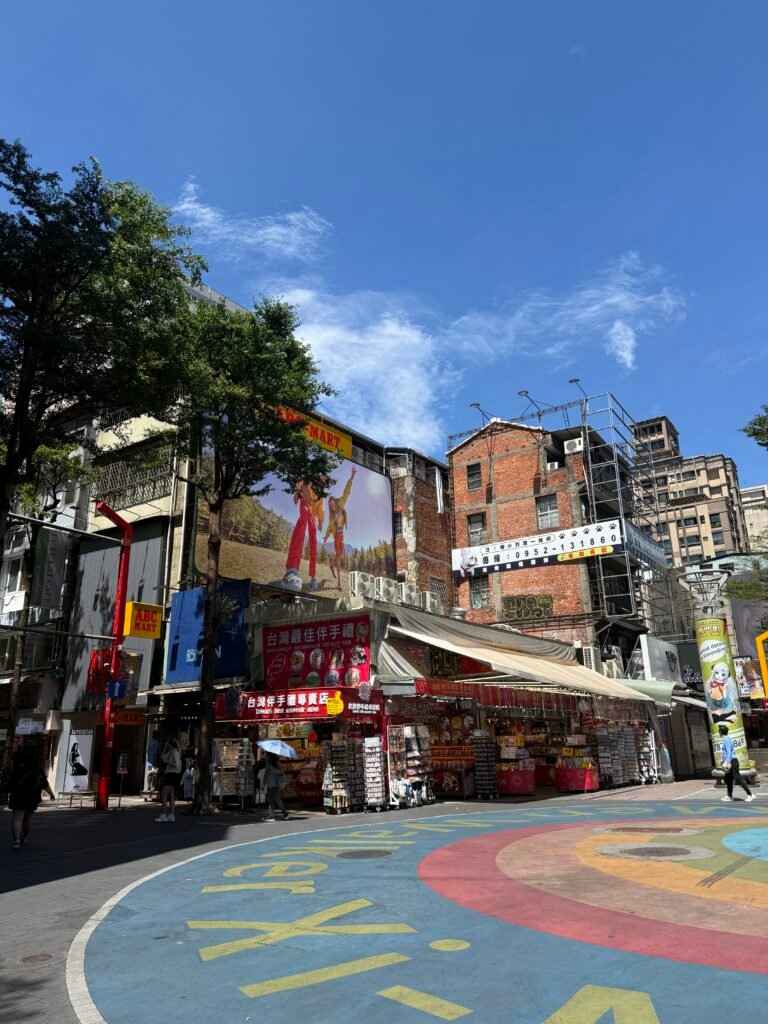
- Ximending: My absolute top pick. It is the city’s most vibrant hub, glowing with neon signs and packed with endless street food, shops, and theaters. It’s incredibly well-connected via the MRT, making it the perfect home base for anyone who wants to be steps away from the action at any hour.
- Zhongshan: This area is the perfect blend of modern cool and historic charm. It’s famous for its leafy alleys filled with minimalist concept stores, hidden cocktail bars, and underground bookshops. It feels more “local-chic” and refined, offering a great atmosphere for those who love exploring quiet, stylish side streets.
- Da’an: Ideal for foodies and those looking for a slightly more relaxed, upscale vibe. This central district is home to the famous Yongkang Street culinary scene and beautiful green spaces. It strikes a great balance between traditional wet markets and trendy specialty coffee shops, making it feel very lived-in and authentic.
Important Points
- Maps: Google Maps is actually quite reliable for walking and the MRT, but it can be a little optimistic with bus arrival times. If you’re doing a lot of bus travel, download Bus+ or Bus Tracker Taipei for real-time accuracy.
- Travel Card: Grab an EasyCard (Yōuyóu kǎ) at any convenience store or MRT station. It is the lifeblood of the city – you’ll use it for the metro, buses, youbikes, and even at 7-Eleven. Just remember to tap both on and off when you’re on the bus!
- Cash: Taipei is moving toward cashless, but cash is still king at night markets, small “mom and pop” eateries, and traditional stalls. Always keep a few hundred NTD on you for those mid-afternoon bubble tea runs.
- Internet: I used an eSIM from Nomad which you can check out here. Easy setup, worked perfectly, ideal for any length of stay.
- Good to know: There is zero tipping culture (and it can actually be awkward if you try), the city is incredibly safe, and people are famously helpful. Also, the “escalator rule” is a big deal: stand on the right, walk on the left.
- Expensiveness: Taipei is wonderfully affordable. Compared to the UK, US, or Australia, your money goes a long way, especially on transport and street food. You can eat like a royal for very little, but if you’re hitting up the high-end cocktail bars in Xinyi or boutique malls, you’ll be looking at London prices.
Sights to See in Taipei
Chiang Kai Shek Memorial Hall
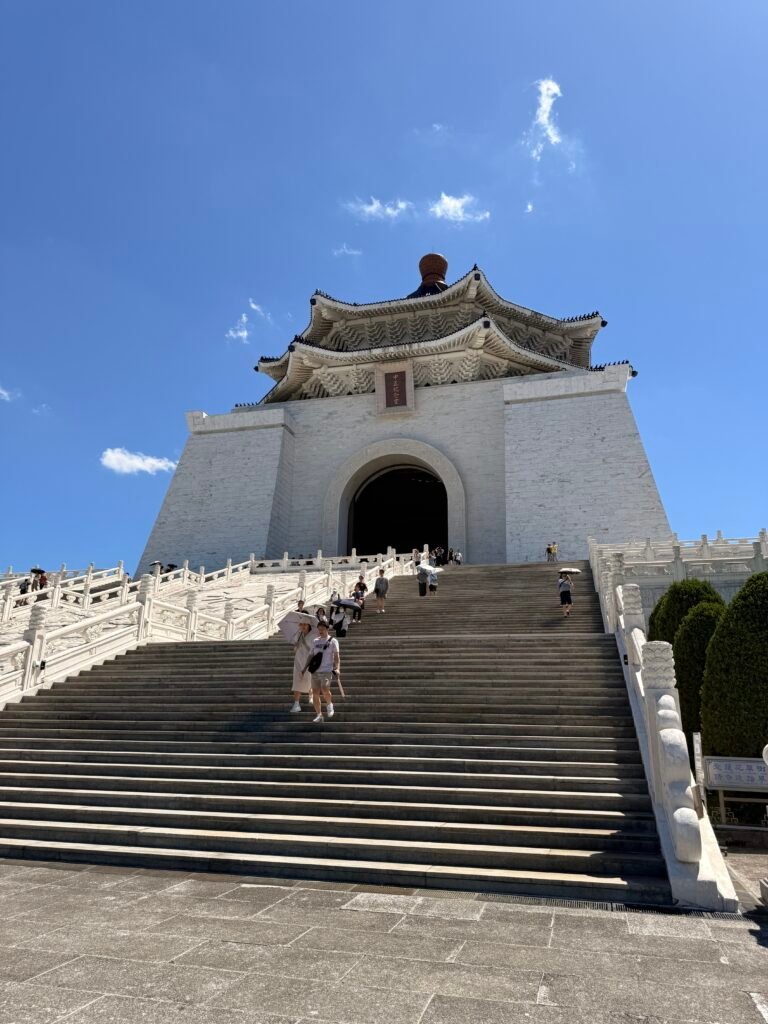
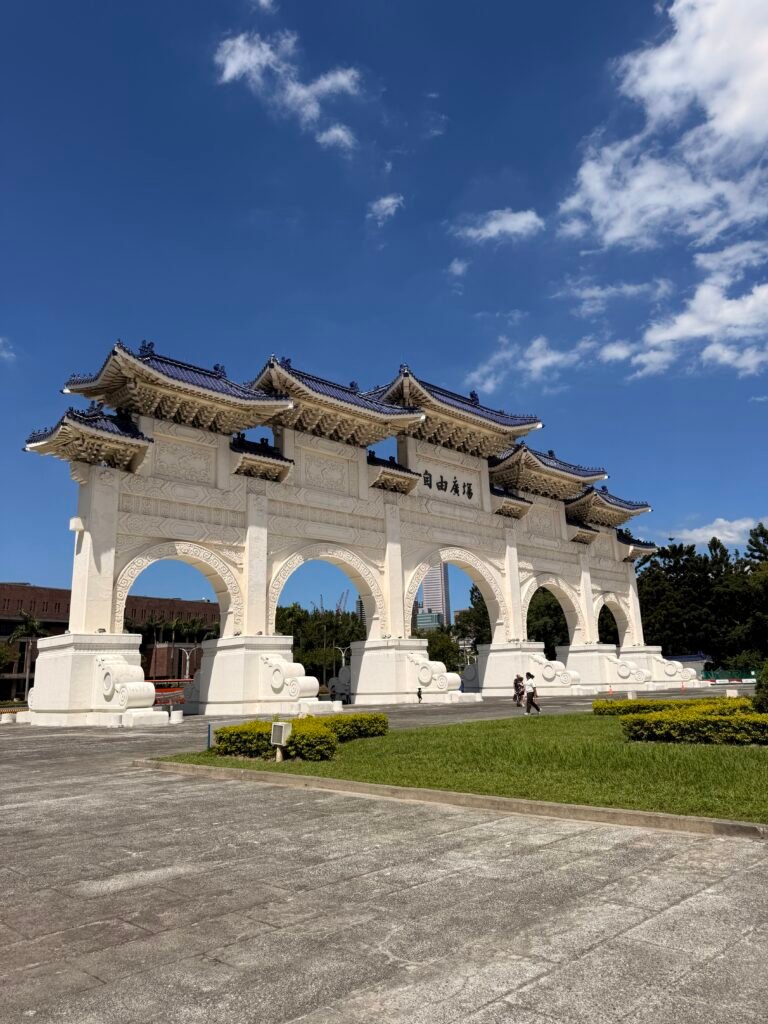
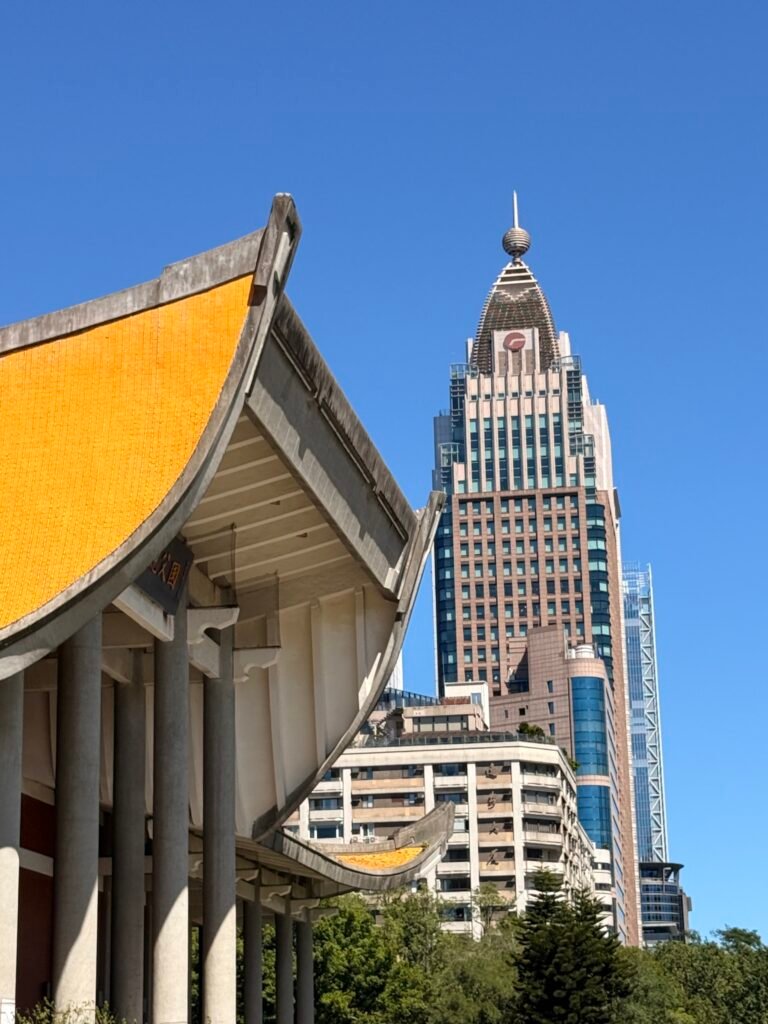
If you visit one landmark in Taipei, make it the Chiang Kai‑shek Memorial (yes, even instead of the Taipei 101 building). Honestly, it’s gargantuan, and experiencing the scale of it as you walk around is worth the trip to Taiwan alone (the pictures don’t really do it justice). There’s the statue, the sweeping plazas, and the guards doing their slow mo march.
A top tip: wander around the gardens and ponds behind the main building. It’s beautifully zen and perfect for photos without 50 other tourists photobombing. Also, don’t go during the midday sun like we did – there’s legit nowhere to hide and it can get uncomfortable pretty quickly.
Taipei 101
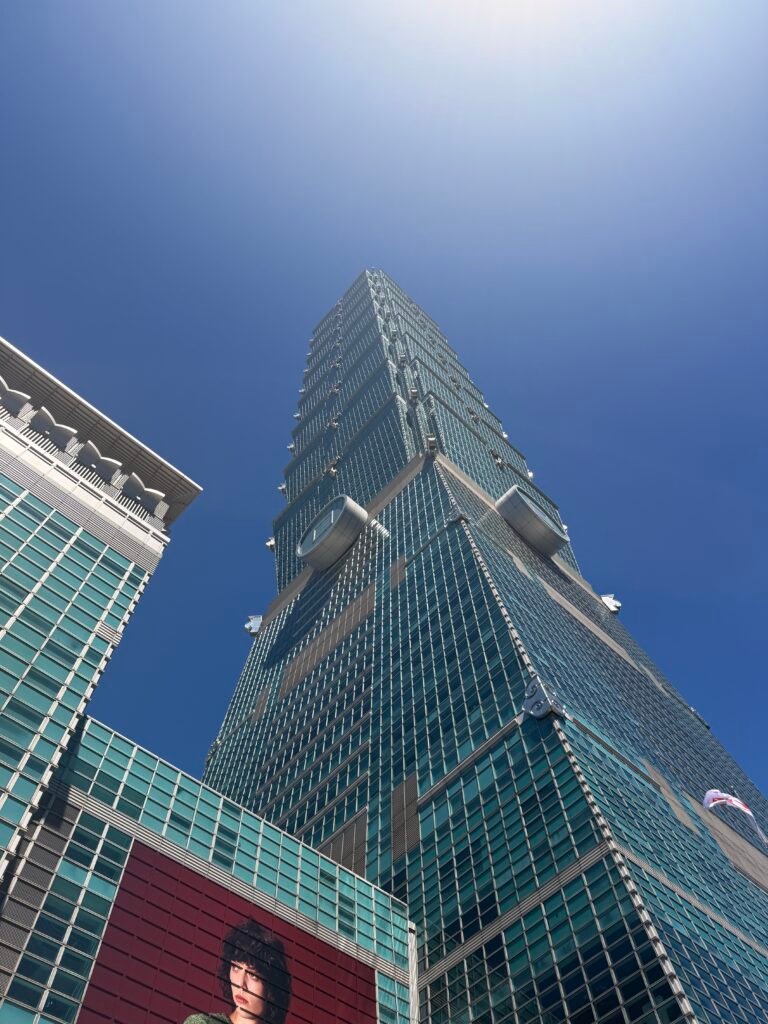
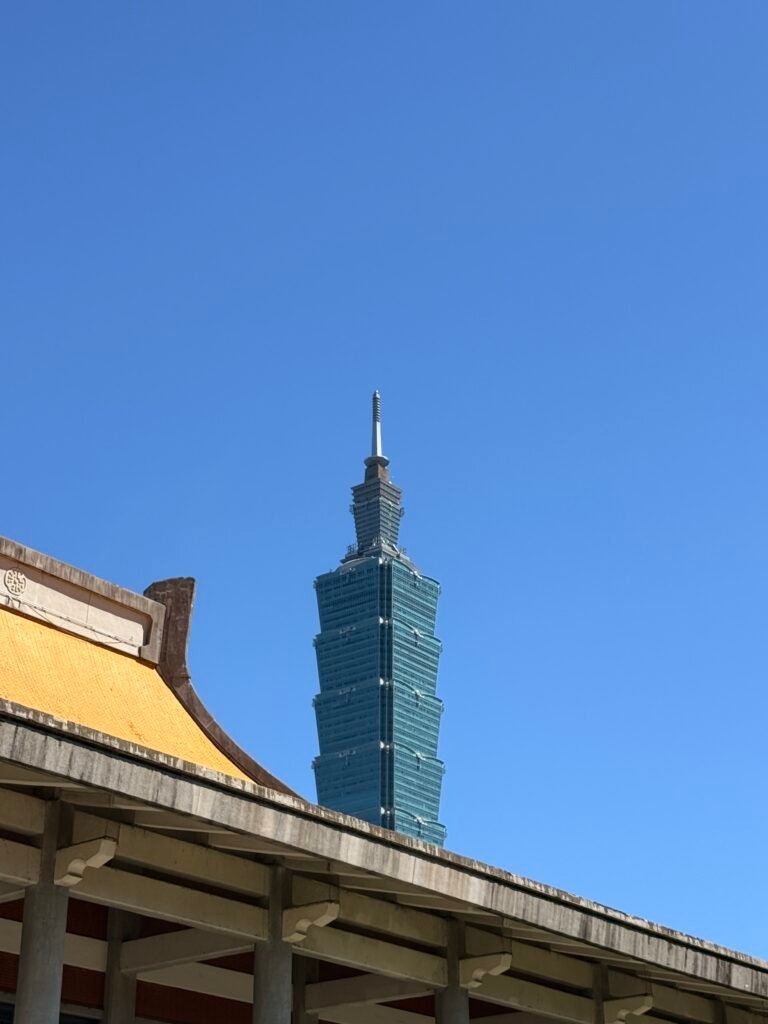
I don’t think I could write a Taipei post without including Taipei 101 because, well, it’s iconic and impossible to ignore. Honestly, it really is impressive. The size alone makes you stop and go, okay, that is ridiculously tall. But at the end of the day, it’s just a very tall building sitting on top of a mall. We didn’t bother going up. I’ve never really been one for peering down at cities from above – after a few dozen skylines, it all starts to feel a bit samey. I’d much rather find a cute local spot where the tall building is part of the view, rather than the view itself (and I’ll explain what I mean about that later). If you do want to see it in action, I’d say go in the morning. Walk around, soak it in, and then hit up Din Tai Fung for some dumplings at around 11 before it turns into a total mob scene.
Lungshan Temple + Bopilau Historical Block
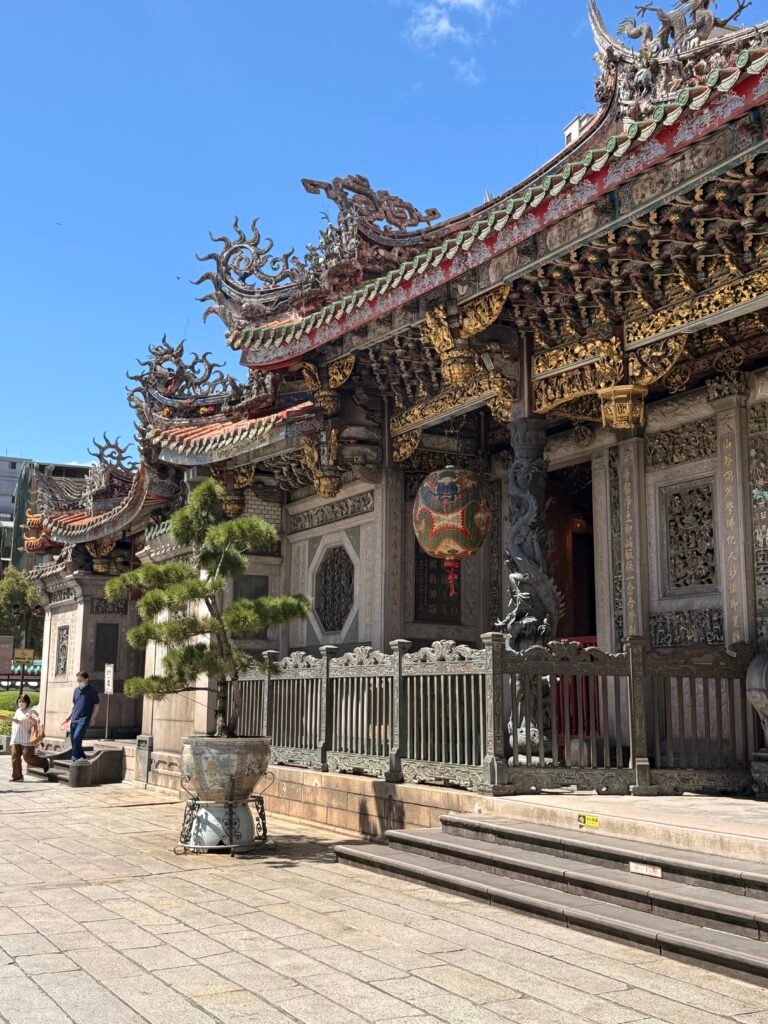
If you want to see the soul of “Old Taipei,” skipping the Wanhua District would be a tactical error, especially since it’s home to the other-worldly Lungshan Temple. Built in 1738, it has survived earthquakes, fires, and WWII bombings – suggesting the gods here have an excellent structural engineer. It’s a wonderful blend of ornate woodcarvings and gold leaf, but more importantly, it’s a living, breathing place of worship.
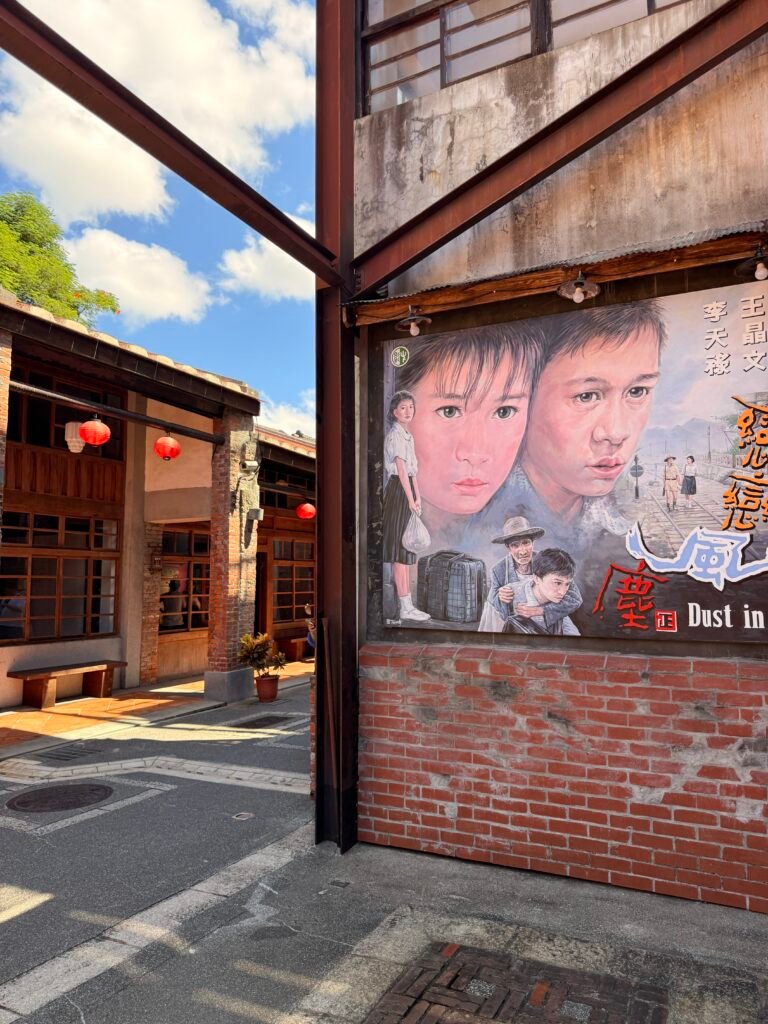
A two-minute stroll away is Bopiliao, a beautifully preserved red-brick slice of the Qing Dynasty. Walking through here feels like someone hit the “mute” button on Taipei’s neon chaos. It looks like a film set – mostly because it often is – and offers a quiet wander through narrow shophouses and art displays. It’s the perfect spot to pretend you’re in a 19th-century period drama while hiding from the humidity.
National Taiwan Museum
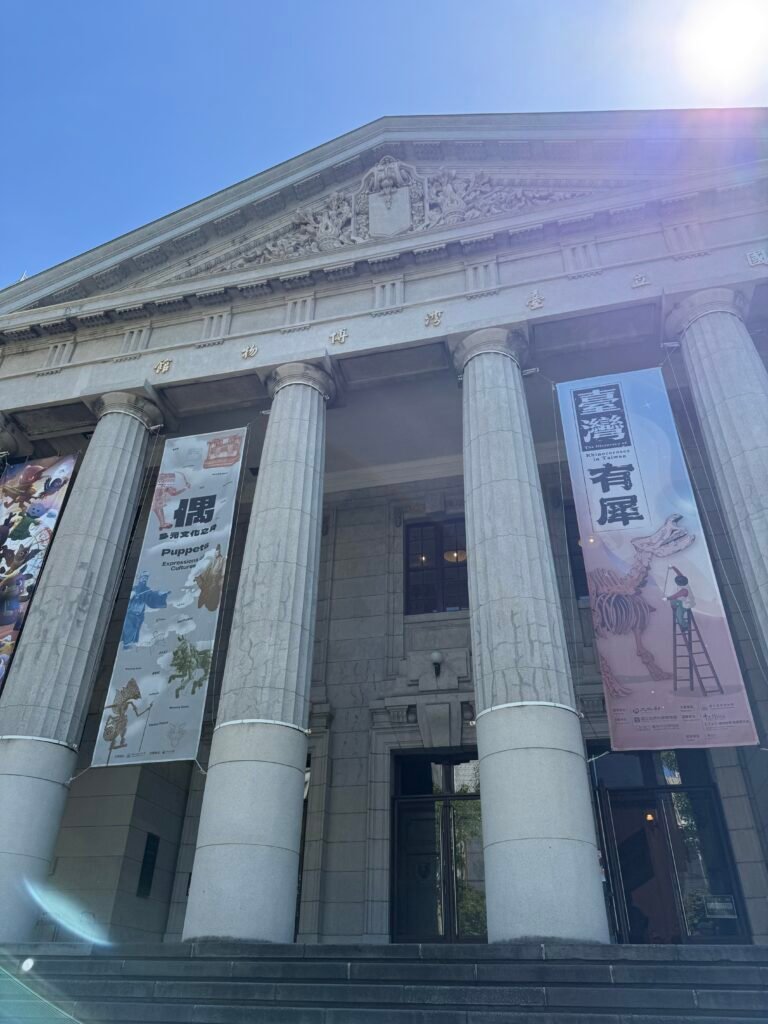
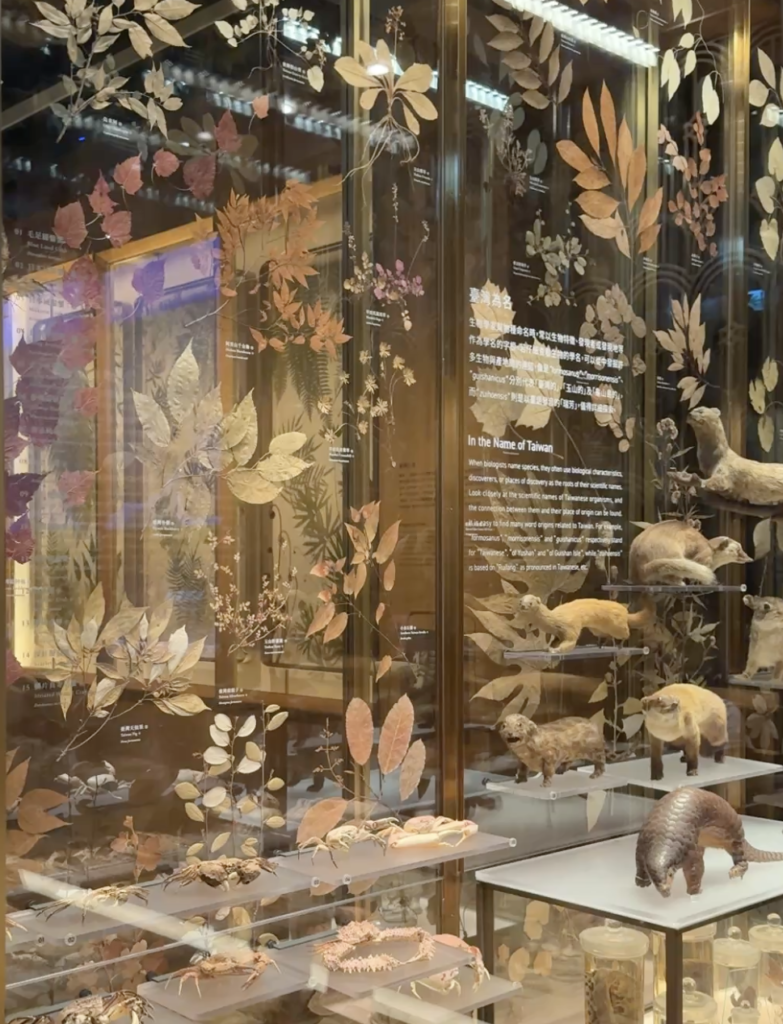
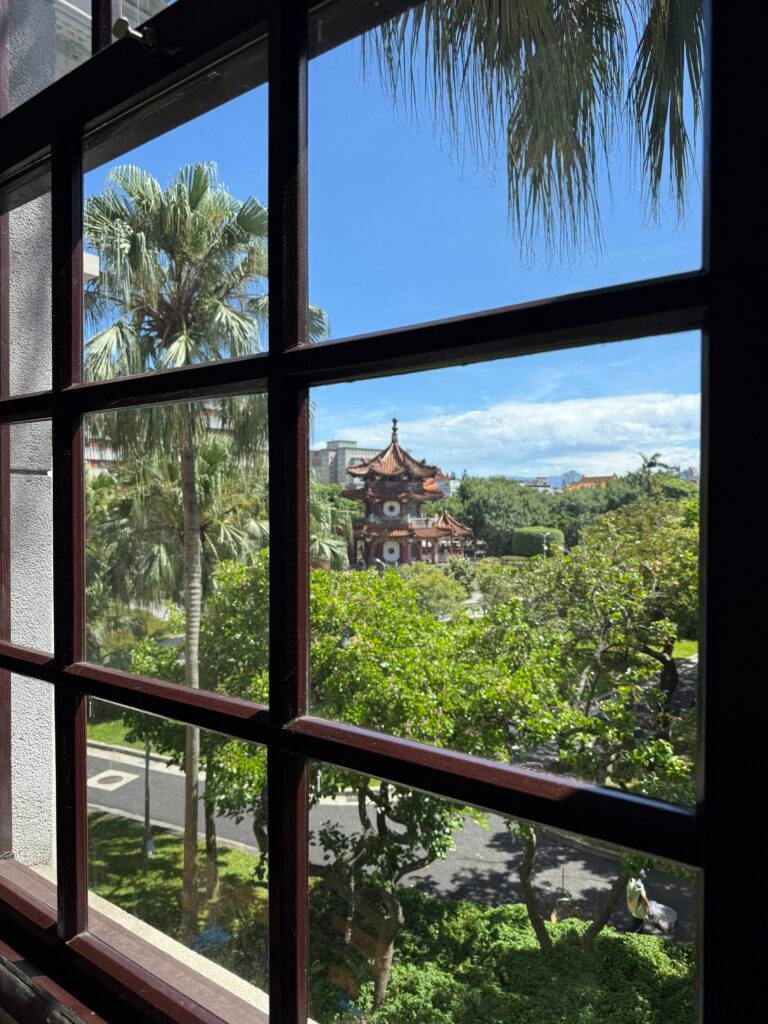
If history nerd vibes are more your jam, the National Taiwan Museum is an underrated gem. It’s old-school in the best way: stately architecture, slightly quirky exhibits, and the kind of place where you learn something without feeling like you’re in a lecture. Bonus points for the building itself — it’s a lovely excuse for a few edgy photo sessions.
Taipei Fine Arts Museum
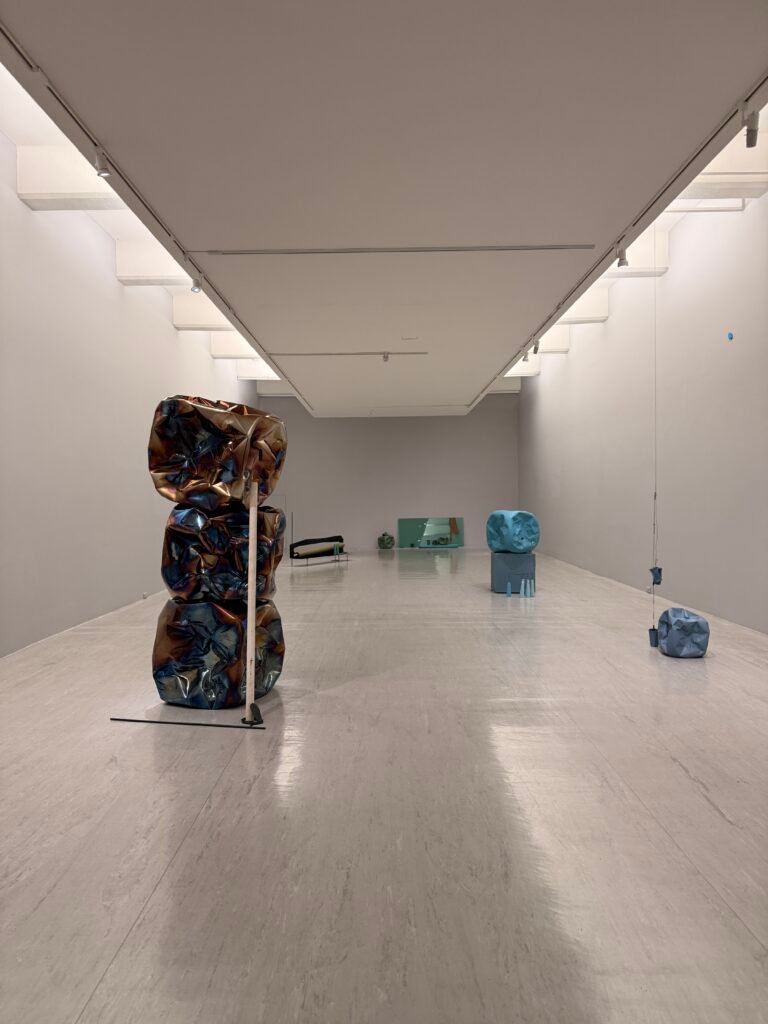
And finally, for a bit of contemporary culture, hit the Taipei Fine Arts Museum. Modern art can sometimes feel a bit ridiculous, especially when you find yourself looking at some smushed metal boxes in a bare white room, but it’s always a good fun. You can spend an hour wandering, laughing at the weird pieces, or being genuinely wowed. Plus, it’s a nice break from temples and skyscrapers – it reminds you that every culture has a fascinating story to tell, be it old or new.
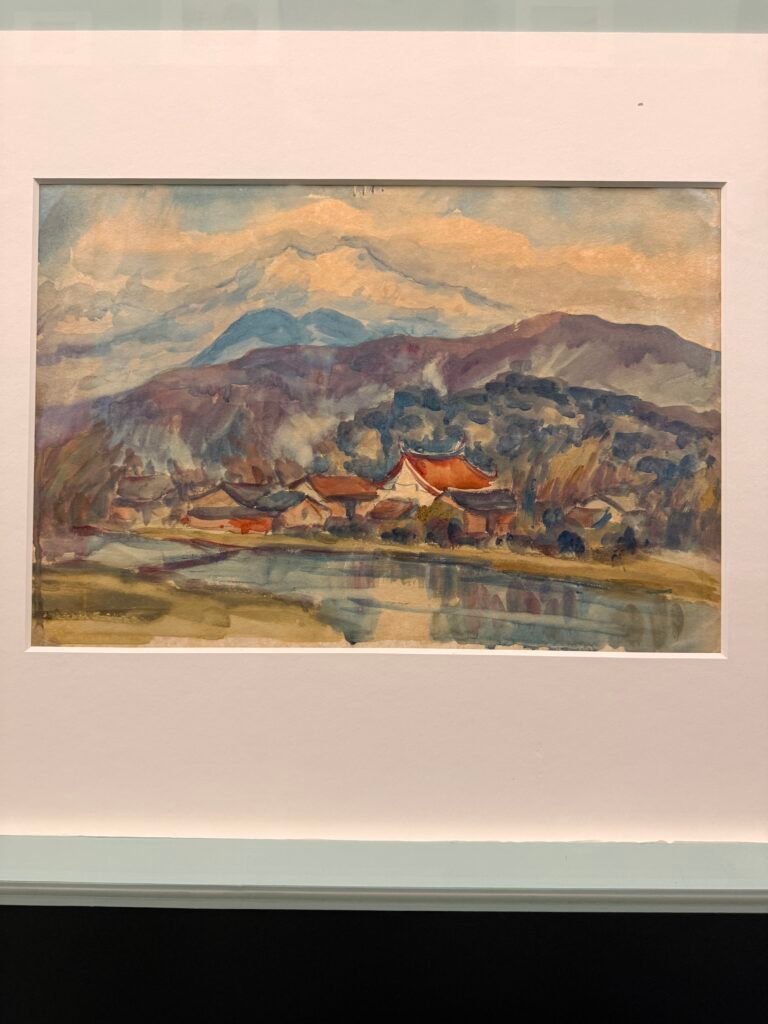
Neighbourhoods to Explore in Taipei
Xinyi District
Best for: iconic sights, shopping, first-time visitors
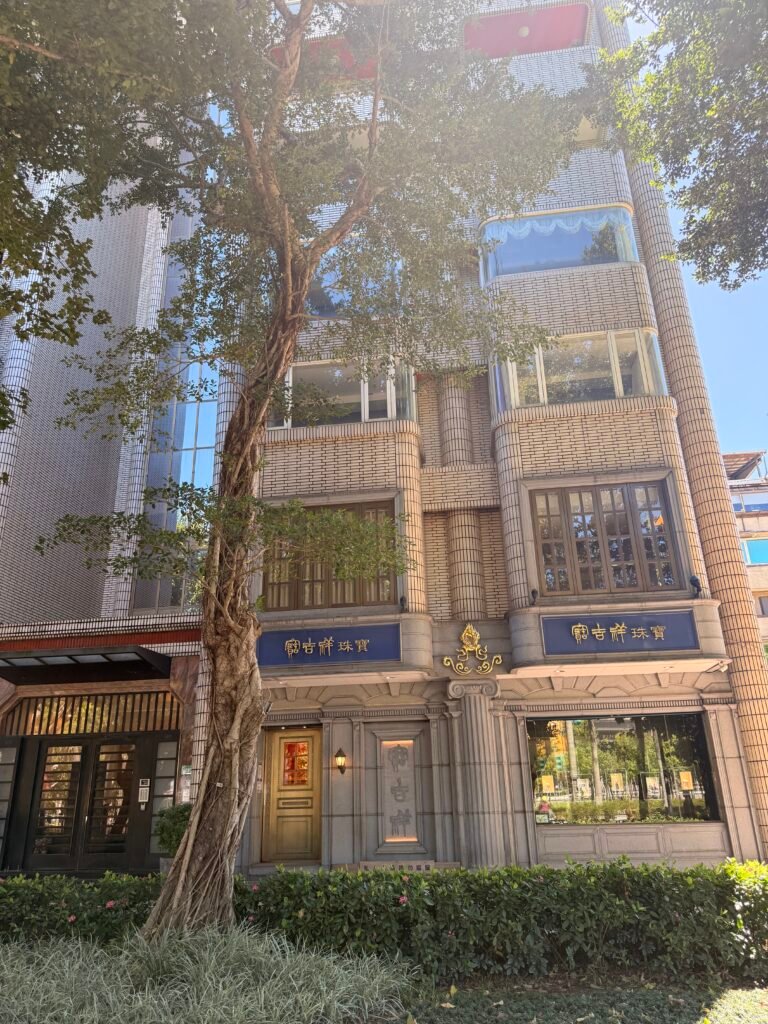
Xinyi is where you go if you want the fancy end of town, and that unmistakable “I’m in Taipei” feeling. Think Taipei 101 dominating the skyline, malls full of every brand imaginable, and plenty of spots for people-watching over coffee. It’s hectic, bright, and very convenient for first-timers. Don’t plan to linger for long walks – this is more “see, snap, shop” territory – but it’s a good hub if you like being in the centre of the action.
Ximending
Best for: practically everything
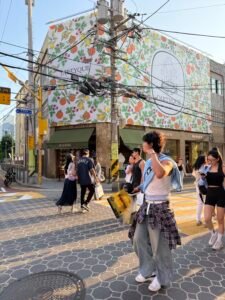
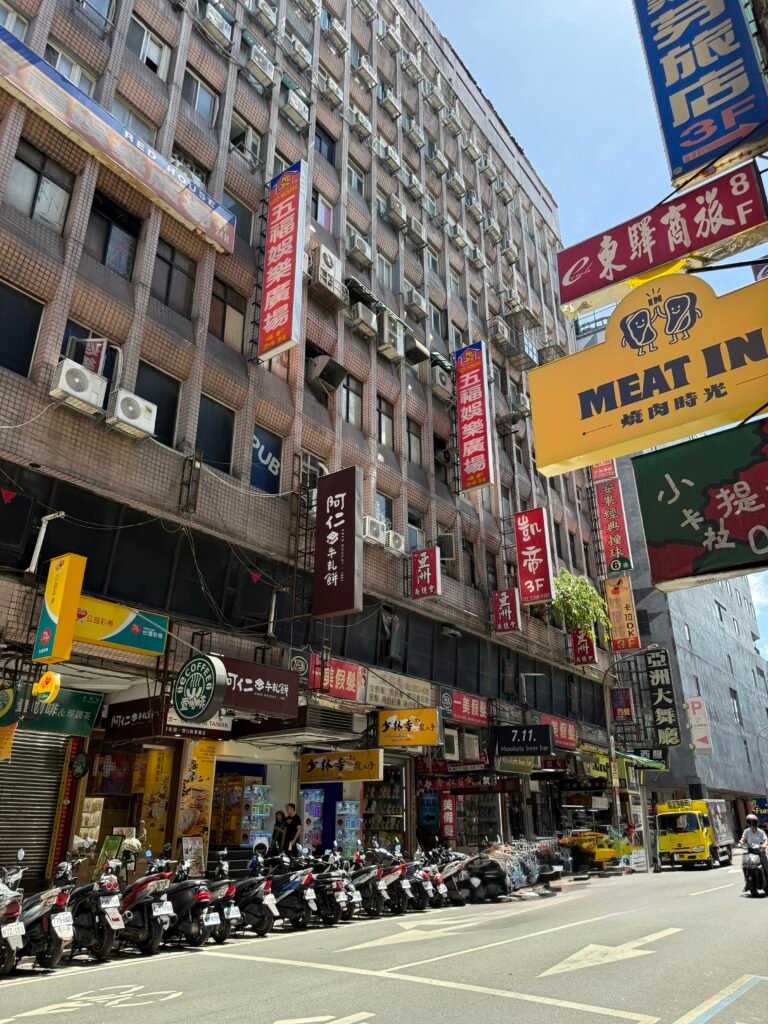
Ximending feels like the perfect neighbourhood. It’s touristy, sure, but that’s part of the charm. You have great food and drink options, edgy architecture, shopping, street food, bars, and more. I’d suggest popping by in the evening for a snack crawl, a quirky shop or two, and to watch the city buzz around you – it’s also surrounded by lush green side streets littered with thrift stores and cafes, so there really is something for everyone at practically all hours of the day.
Zongshan
Best for: cafes, creative spaces, off-the-beaten-path shopping
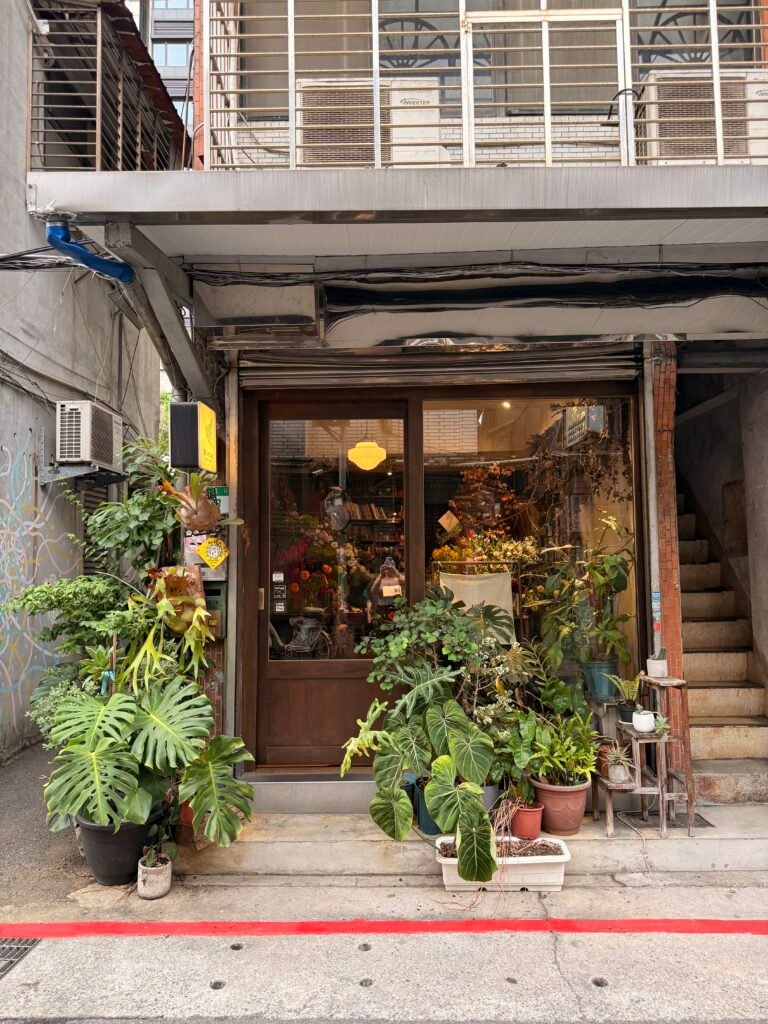
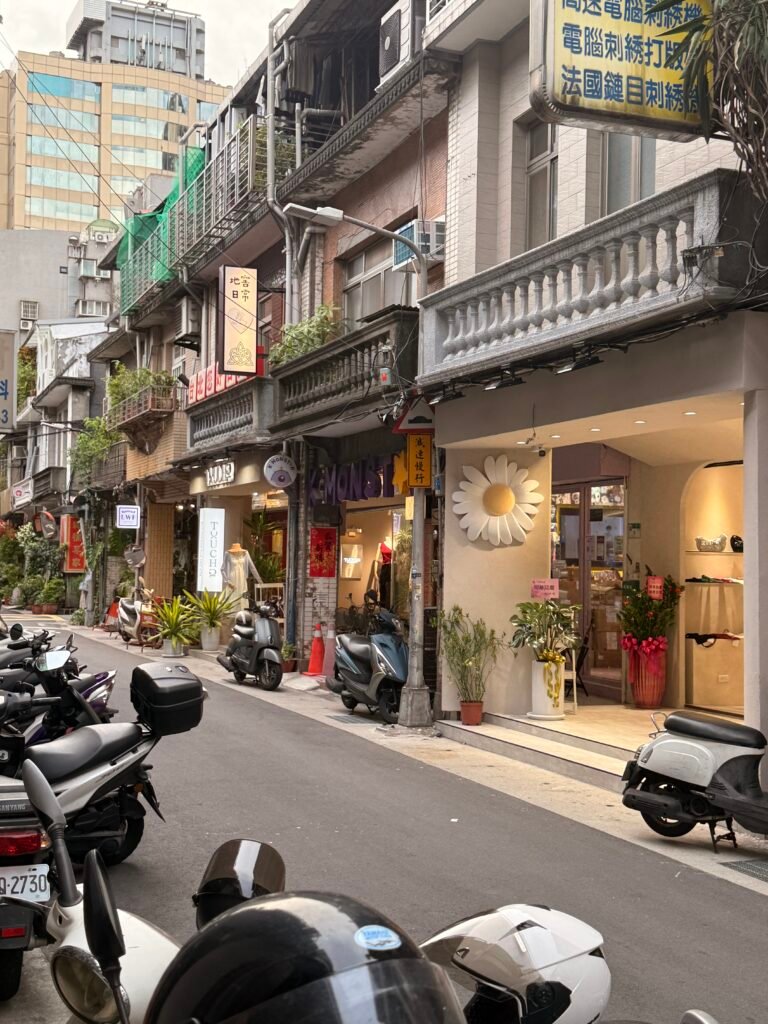
Zongshan has a relaxed, artsy energy that’s easy to miss if you stick to the main tourist loop. The streets are lined with independent cafés, boutique fashion shops, and quirky vintage stores. Chifeng Street (赤峰街) is a not-so-hidden gem here — a tiny laneway full of cosy cafés, unique shops, and thrifting treasures, perfect for a slow wander or a coffee break away from the busier streets. It has gotten a lot of attention recently though, so if seeing the youth take loads of pictures of cute shopfronts is not your vibe, you may want to skip it (I’d say it’s worth it despite the photo-hungry kids).
Dadaocheng
Best for: history, slow walks, tea houses.
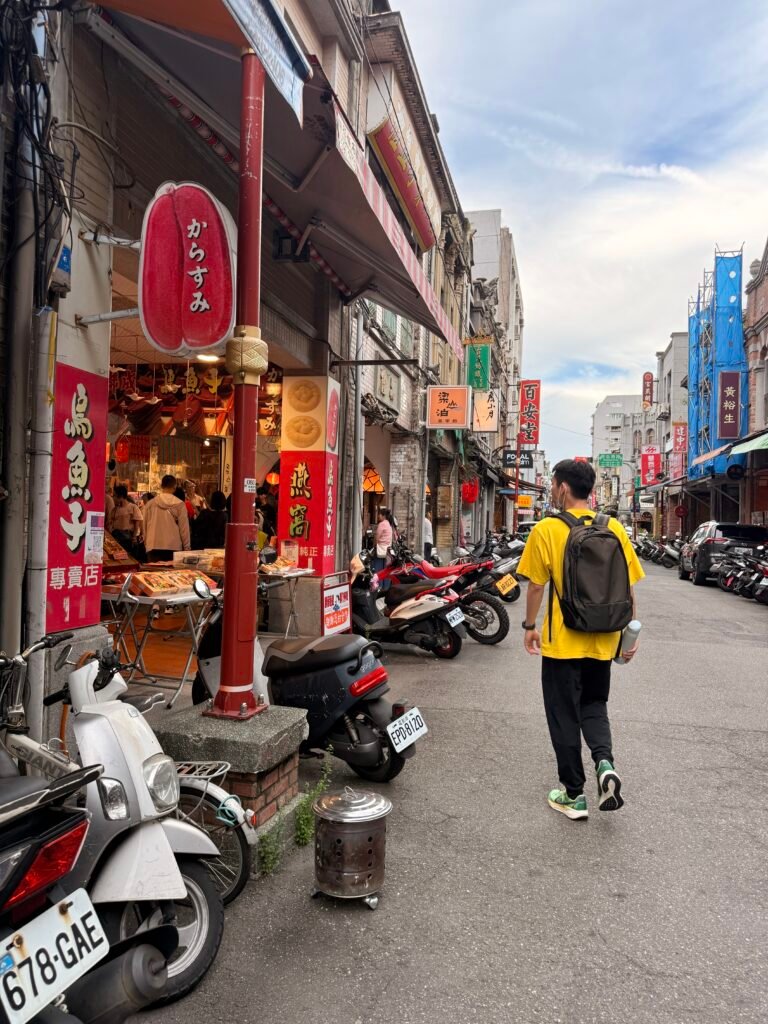
I’m not sure if Dadaocheng is the official historic quarter of the city, but it certainly feels like it! The cobblestone streets are lined with heritage buildings, and riverside views make it feel like a throwback to a different era entirely. There are some gorgeous old tea houses and local shops tucked into every corner and it’s absolutely lovely for wandering without a strict agenda, soaking in both culture and greenery.
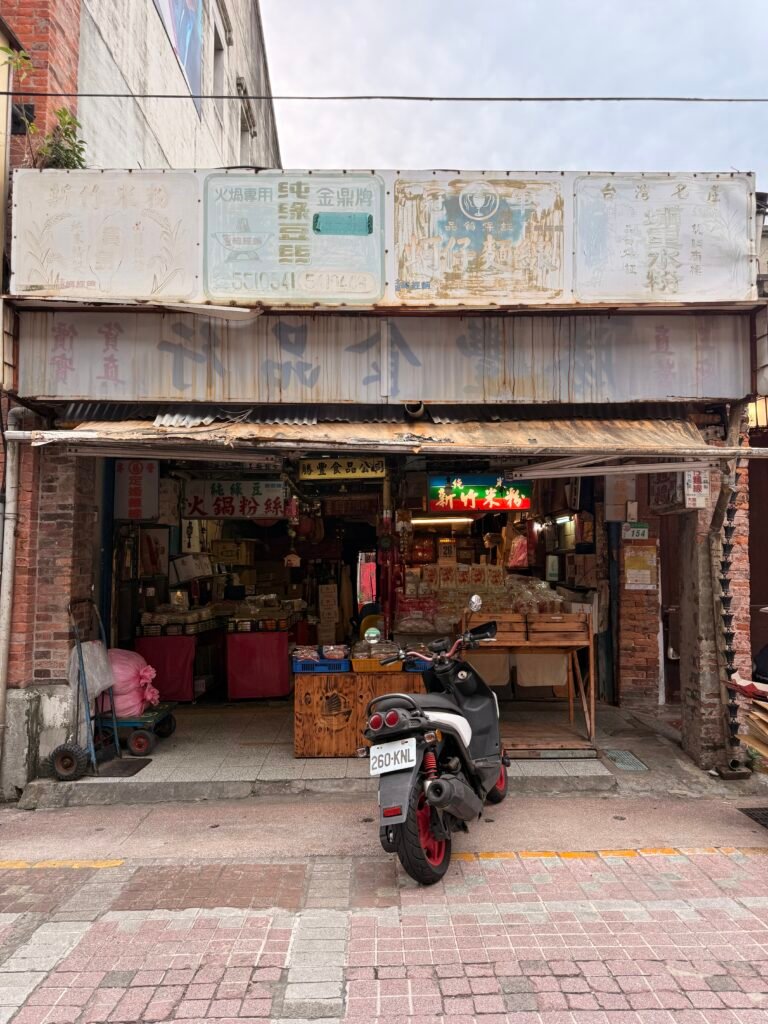
What to Eat in Taipei
I didn’t know all that much about Taiwanese food before coming to Taipei, but I quickly learnt that they are the masters of dumplings and beefy noodle soup. I’ve historically passed on things like gyozas, bao buns and shui mai, mainly because I prefer my meat and veg not minced, but one local restaurant changed my mind on that, and it was the first time in my life I ate a plate of 10 dumplings by myself (and considered getting more).
Taiwanese Dishes to Try in Taipei
Before the resto list, here is a comprehensive list of national dishes to try, which can be found in most traditional spots (to any Taiwanese people reading this, I apologise if the lettering is incorrect… I used Google):
- Xiao Long Bao, 小籠包 (Soup dumplings with delicate skins and rich pork broth—iconic and dangerously addictive)
- Beef Noodle Soup, 牛肉麵 (Slow-braised beef in a deeply savoury broth with chewy wheat noodles—Taiwan’s national comfort food)
- Pork Belly Buns (Gua Bao), 刈包 (Steamed bun filled with braised pork belly, pickled mustard greens, peanut powder, and coriander)
- Braised Pork Rice (Lu Rou Fan), 滷肉飯 (Minced pork belly slow-cooked in soy sauce and spices, spooned over rice—simple, perfect, unstoppable)
- Scallion Pancake, 蔥油餅 (Crispy, flaky pan-fried flatbread packed with spring onions—often stuffed with egg or beef)
- Fried Chicken Steak, 雞排 (Giant, ultra-crispy fried chicken cutlet seasoned with five-spice or chilli powder)
- Taiwanese Fried Chicken Bites, 鹽酥雞 (Popcorn-style chicken fried with basil, garlic, and spice—night market essential)
- Three-Cup Chicken, 三杯雞 (Chicken braised with soy sauce, sesame oil, and rice wine, finished with loads of basil)
- Oyster Omelette, 蚵仔煎 (Eggy, starchy omelette with fresh oysters and sweet-savory sauce)
- Pan-Fried Soup Buns, 生煎包 (Crispy-bottom buns with juicy pork filling and soup inside)
- Dan Bing, 蛋餅 (Taiwanese breakfast crepe with egg, scallions, and fillings like cheese, ham, or corn)
- Minced Pork Noodles (Dan Zai Noodles), 擔仔麵 (Light noodles topped with minced pork, shrimp, and garlic—small bowl, big flavour)
- Taiwanese Sausage, 香腸 (Sweet, garlicky pork sausage—often grilled and eaten with raw garlic)
- Stinky Tofu, 臭豆腐 (Fermented tofu, usually deep-fried and served with pickled cabbage—smells unhinged, tastes great)
- Iron Egg, 鐵蛋 (Over-braised eggs, dark, chewy, and intensely savoury—usually from Tamsui
- Shaved Ice Dessert, 剉冰 (Mountains of ice topped with mango, taro balls, condensed milk, or red bean)
- Mochi (Taiwanese Style), 麻糬 (Soft, stretchy rice cakes dusted in peanut or sesame powder)
- Pineapple Cake, 鳳梨酥 (Buttery pastry filled with tangy pineapple jam—classic souvenir, genuinely good)
- Bubble Tea, 珍珠奶茶 (Milk tea with chewy tapioca pearls—originated here, and yes, it hits different in Taiwan)
- Papaya Milk, 木瓜牛奶 (Fresh papaya blended with milk—light, sweet, and weirdly refreshing after greasy food)
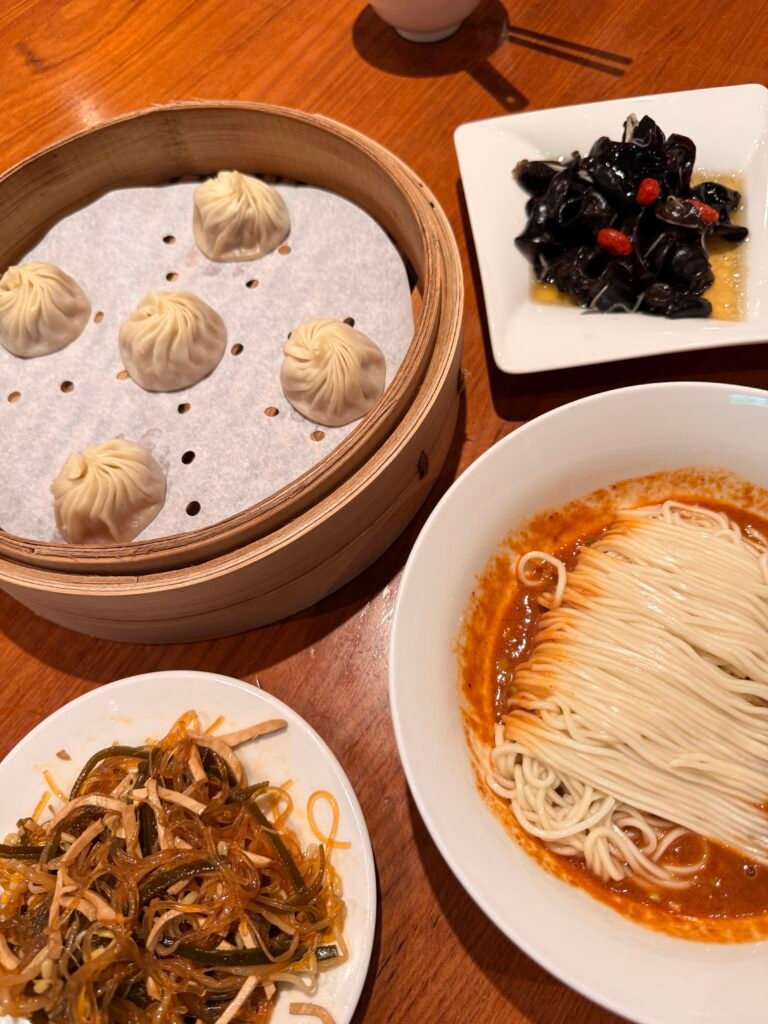
Din Tai Fung
Din Tai Fung is the heavy hitter of the dumpling world, a place so well-drilled it makes a military parade look like a casual stroll in the park. While it’s now a global empire, eating at the source feels like the right thing to do. It’s remarkably polished, and despite the inevitable sea of people outside clutching numbered tickets, it remains the benchmark for a reason. They simply do not miss, and even if you think you’re “above” the tourist hype, one bite of that perfectly pleated Xiao Long Bao skin usually results in a very humble admission that they’ve won.
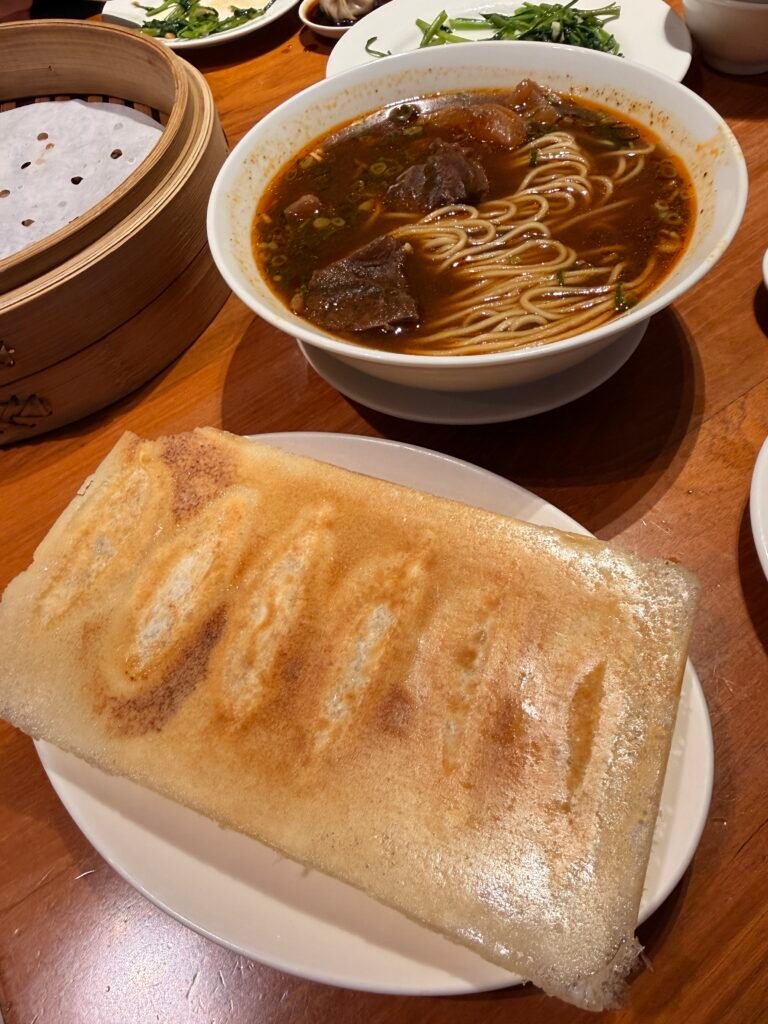
Chang Kee Beef Noodle Shop
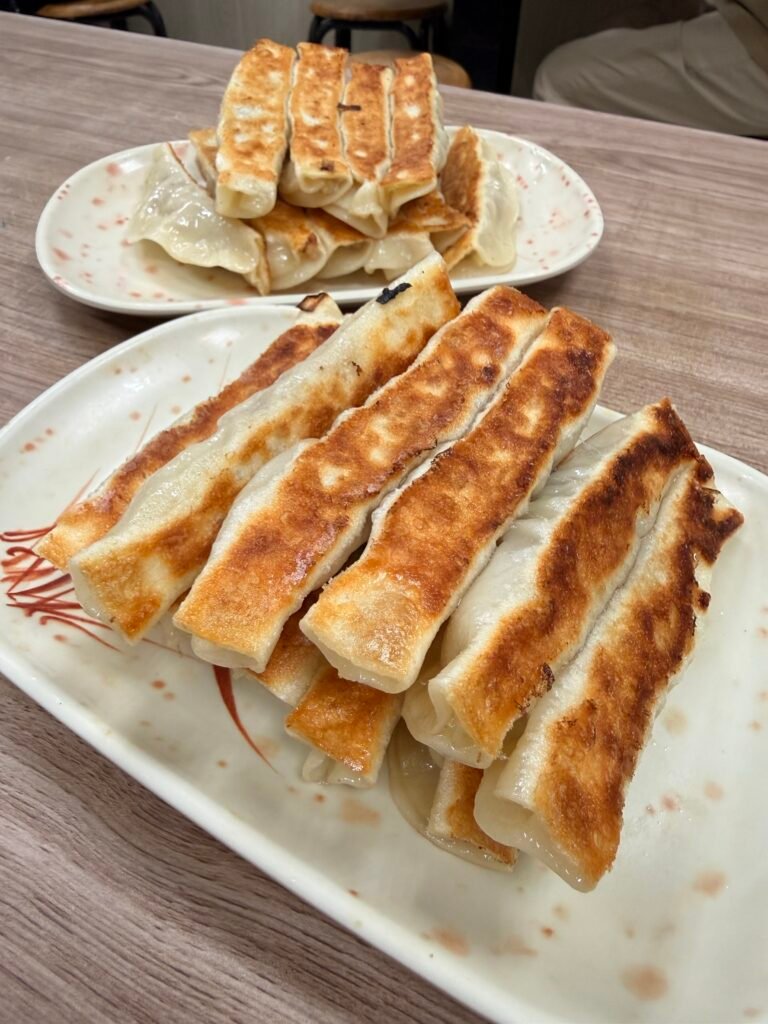
This is the place that ruined me. I walked in looking for a simple lunch and left having essentially joined a cult dedicated to their Guotie – the elongated, pan-fried potstickers you can see in the photos below. They have an incredible, golden-bottomed crunch that gives way to a filling that is actually vibrant and juicy, rather than the grey mystery meat you tend to find elsewhere.
I’m not normally a “dumpling person.” I’ve traversed entire Japanese prefectures for gyoza and hunted down unctuous mandu in South Korea, but this was the first time the dumplings actually felt like the main event rather than a side quest. I managed ten in one sitting, which felt like a massive personal triumph at the time but was, in hindsight, probably considered a light snack by local standards. I now think about them with a frequency that is arguably a bit much for a piece of dough, but here we are.
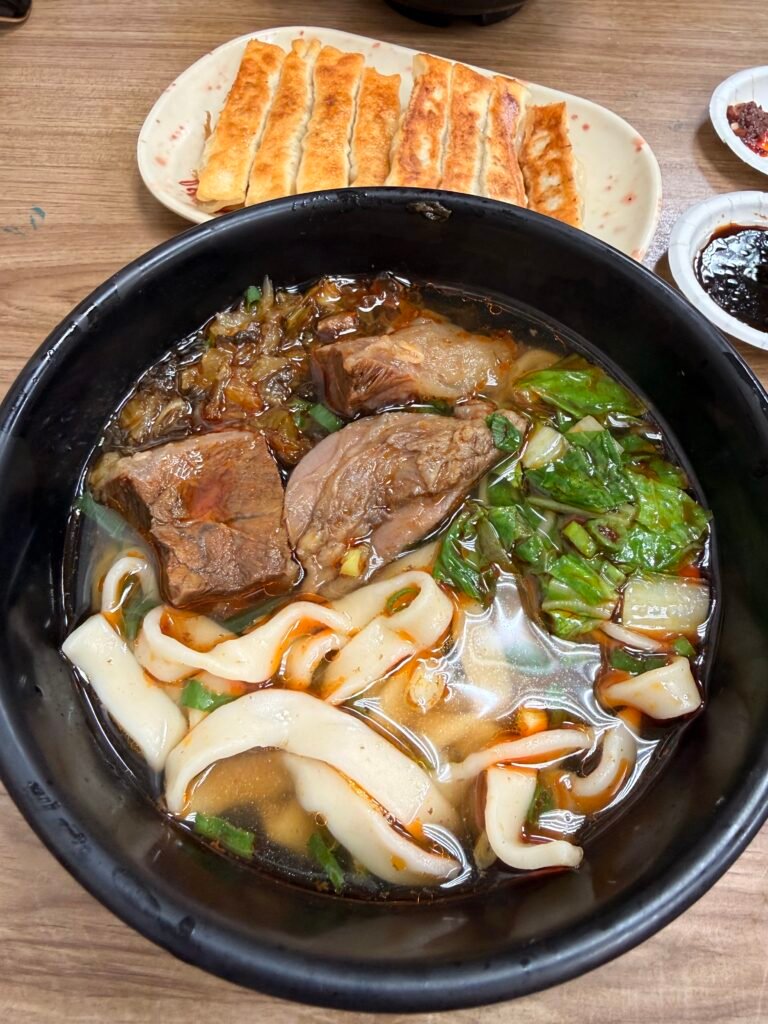
Lao San Dong
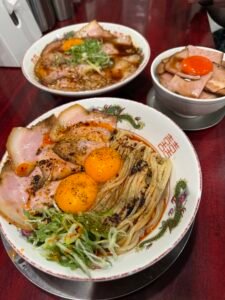
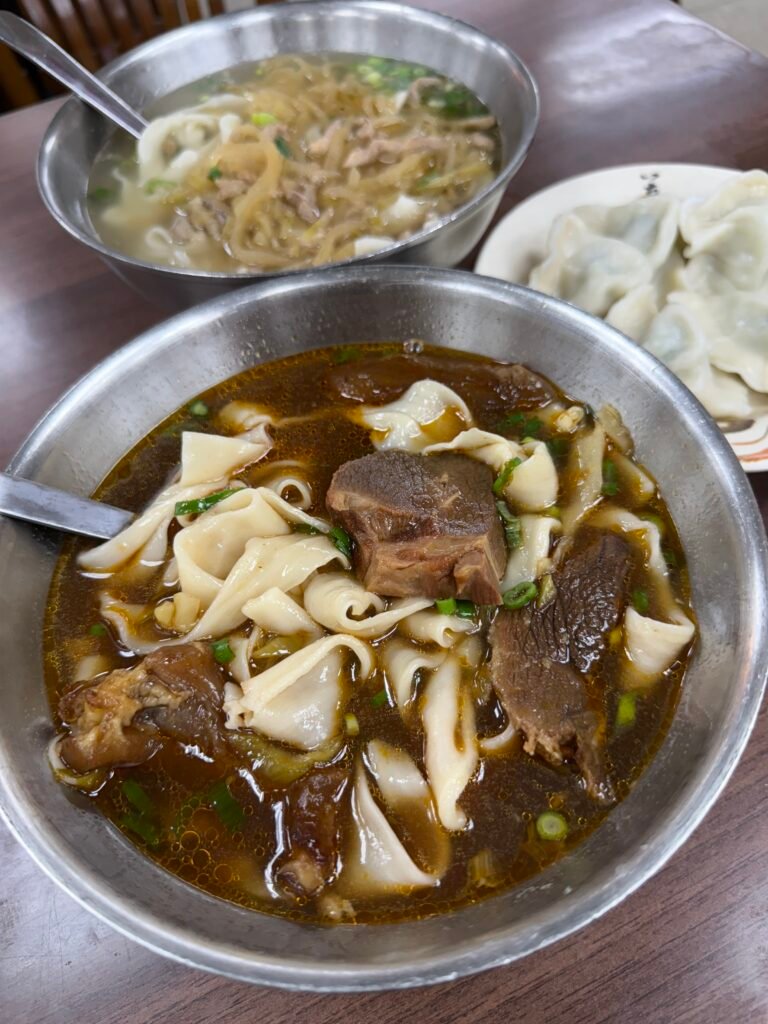
Tucked away in the basement of a slightly aging shopping mall (the Wannian Building), this place is the antithesis of Din Tai Fung’s polish. It’s a Michelin Bib Gourmand winner that feels wonderfully stuck in time, and the encouraging smiles of the locals made it feel like we’d done the right thing to come looking for it. The thick, hand-cut noodles have a fantastic “bite,” and the broth is deep, dark, and rich enough to solve most of life’s problems. It’s really unpretentious, slightly chaotic, and exactly what a beef noodle shop should be.
I would say, though, that the food didn’t feel any more delicious than all the other soup joints we ate at, so don’t feel like you have to chase Western accolades to have a good time. Just peer through the window: if the locals are eating there, it’s going to be perfect.
The Best Food Markets in Taipei
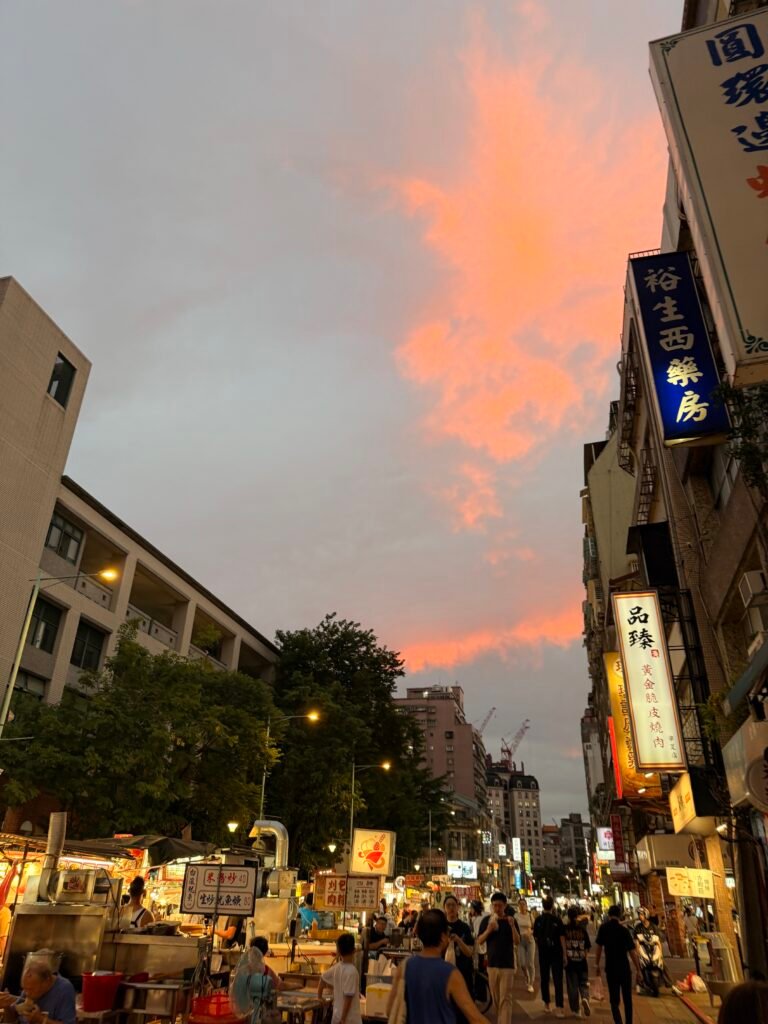
Rao Ho Night Market
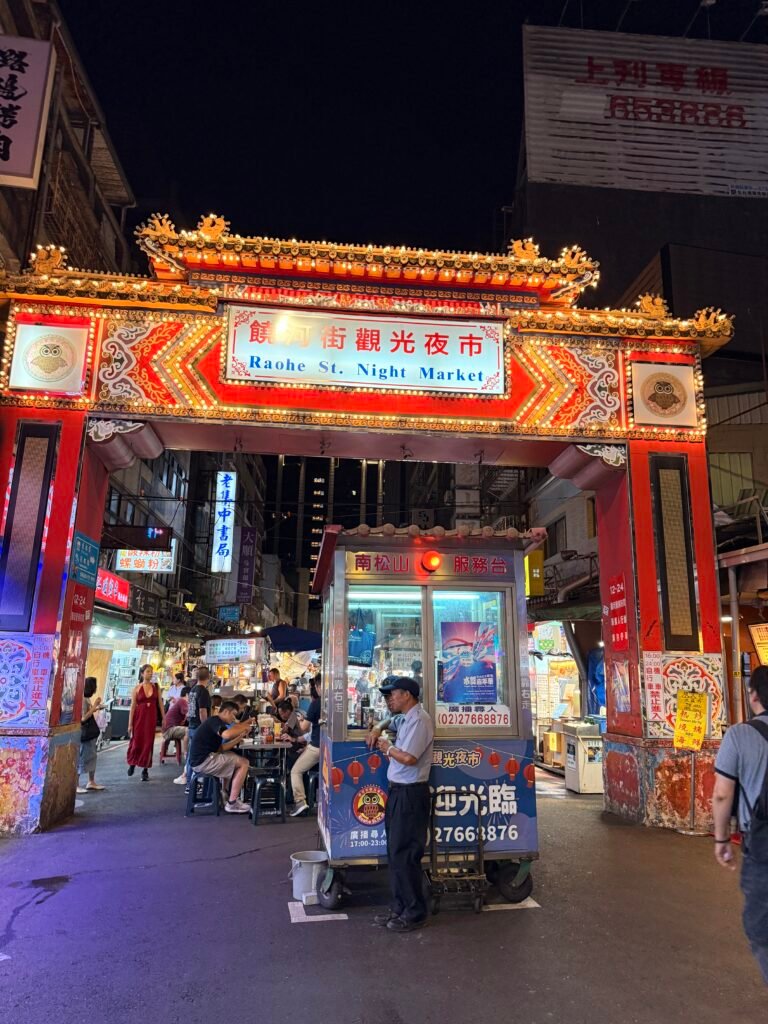
The goldilocks of markets: just the right amount of buzz without feeling like you’re being herded into a pen. It’s got that lovely, slightly more “neighbourhood” feel, punctuated by the spectacular Ciyou Temple at the entrance.
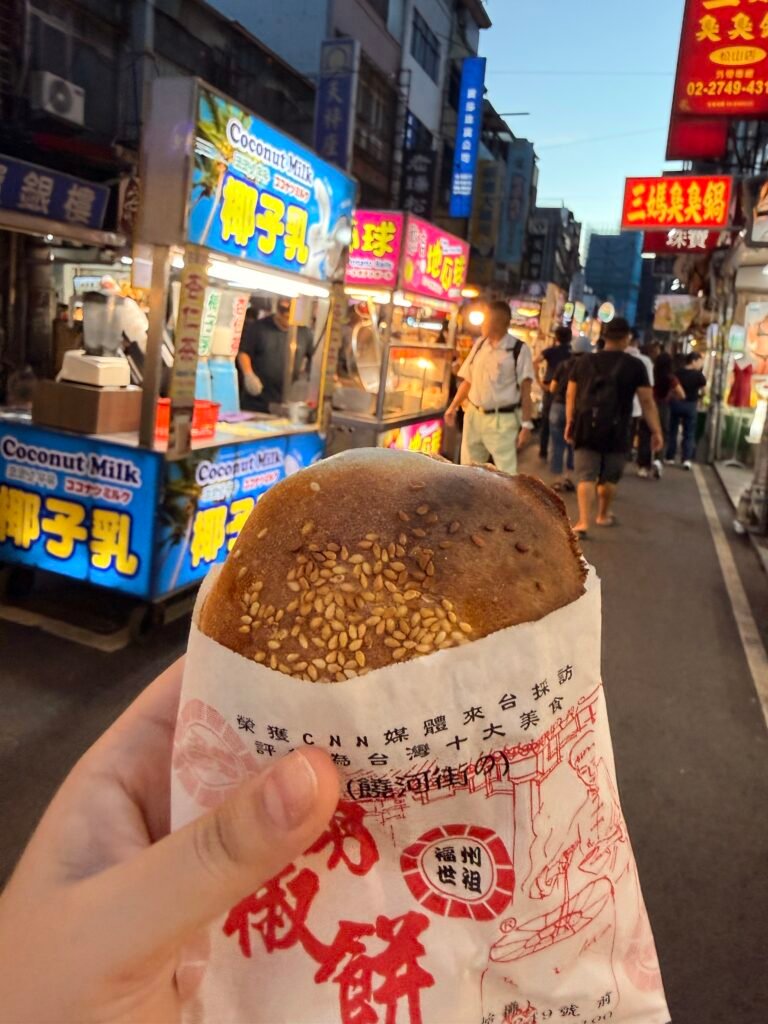
The Fuzhou Black Pepper Buns These are charred in clay ovens until the outside is properly crunchy, housing a piping-hot filling of peppery pork and spring onions. Just mind the first bite—the steam is no joke.
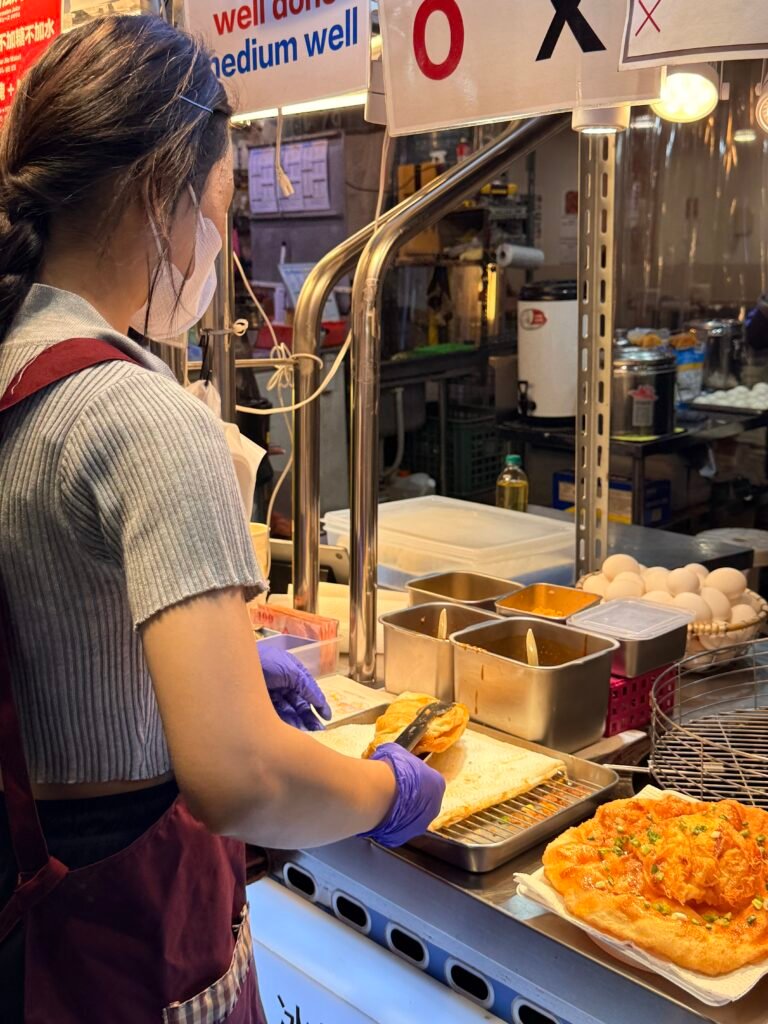
The Bomb Scallion Pancake This is deep-fried carb-on-carb brilliance. It’s a scallion pancake that’s been flash-fried until bubbly and crisp, then united with a fried egg. Pro tip: go for the “medium well” yolk to ensure maximum richness without the structural integrity of the pancake failing entirely. It’s basically a breakfast sandwich that’s had a very exciting night out.
Nanjichang Night Market
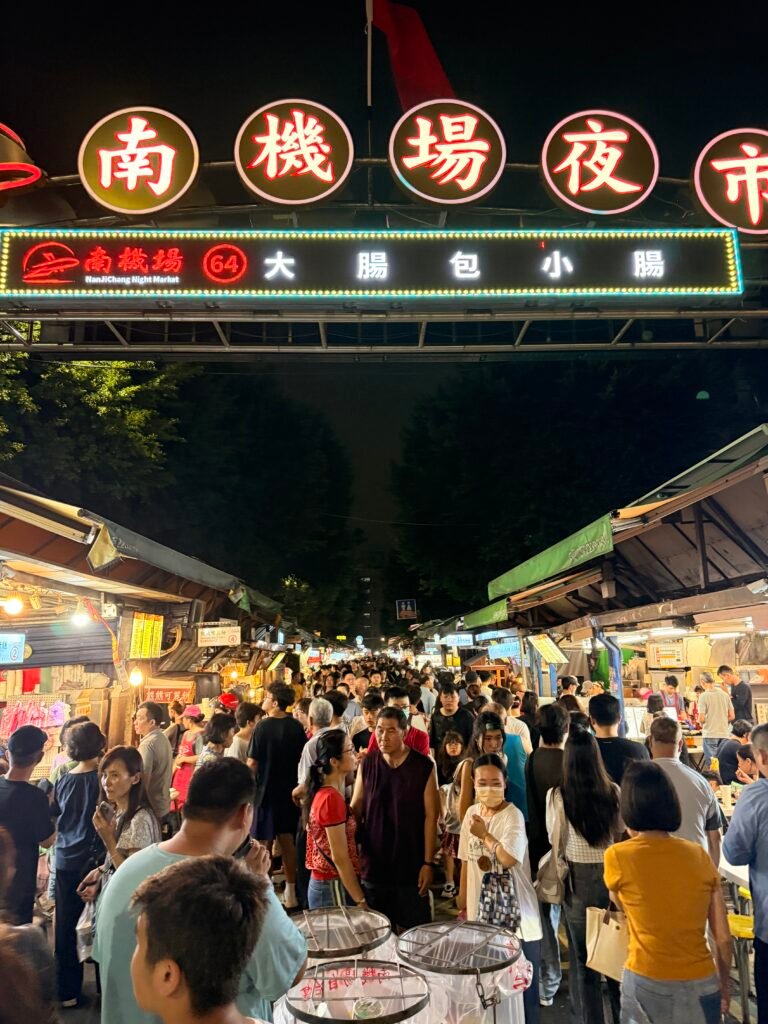
The “insider’s” choice. It’s a bit more repetitive because apparently, Nanjichang believes you can never have enough dumplings or fried chicken, but it’s undeniably authentic and easier on the wallet. It feels less like a tourist attraction and more like a massive, open-air communal kitchen.
The “Unnamed” Clay Oven Rolls (Shao Bing) This spot doesn’t even have a proper name, yet it’s got a Michelin Bib Gourmand, which is the ultimate flex. These rolls are baked in a traditional clay cylinder until they’re flaky and charred in all the right places. Go for the long, sweet version or the round, peppery pork one—both are worth the inevitable queue.
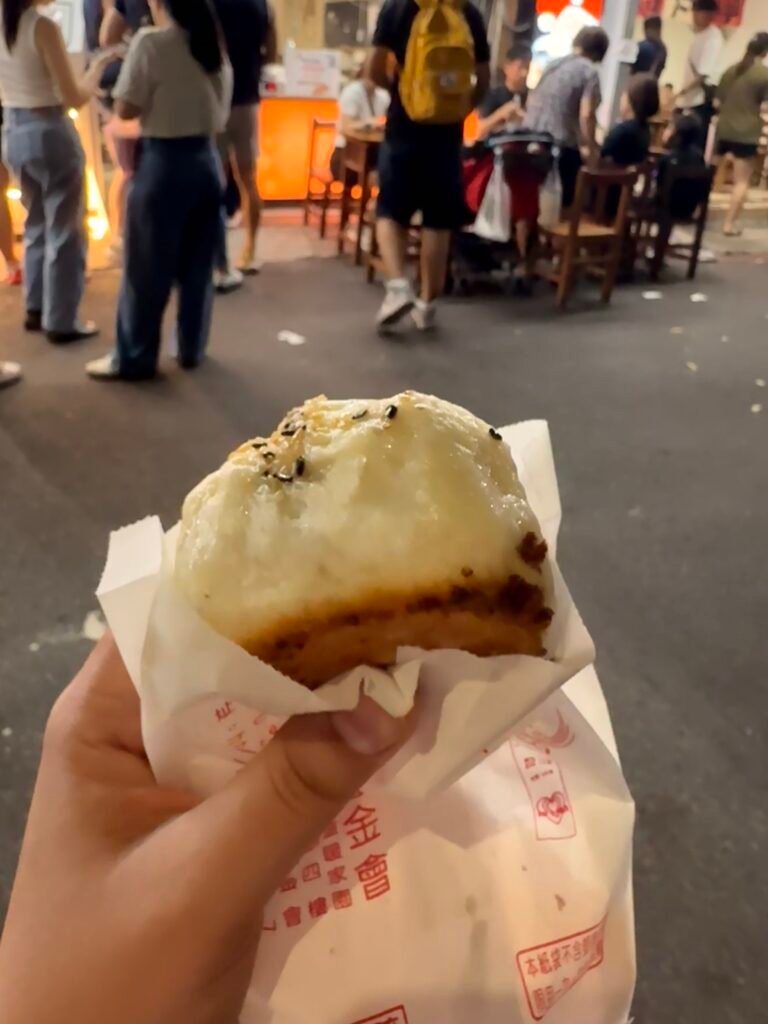
Yu Shi Fu Shanghai Pan-Fried Buns Located right at the entrance, these are the heavyweights of the bun world. They’ve got a thick, chewy top and a bottom that’s been fried to a serious, golden crunch. They are famously good value, meaning you’ll probably end up buying a bag of five and regretting nothing.
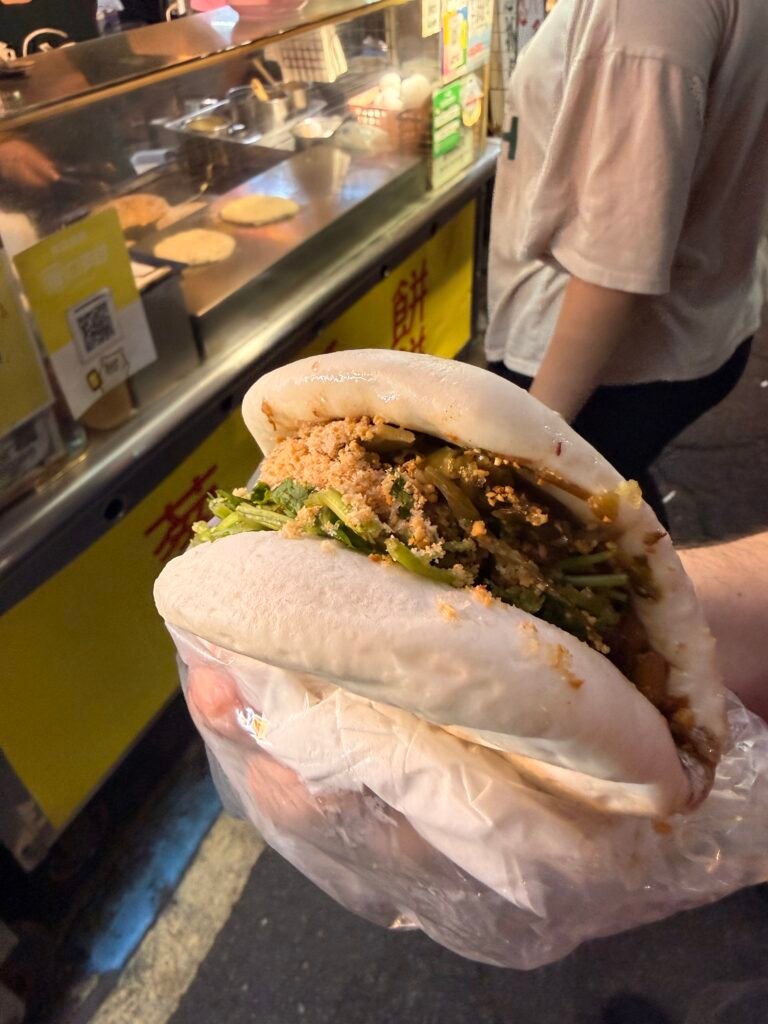
Gua Bao (The Taiwanese Hamburger) A pillowy, steamed cloud of a bun stuffed with braised pork belly that’s been cooked until it’s essentially a liquid. It’s topped with pickled greens, coriander, and a dusting of peanut powder. It’s a messy, sweet, and salty masterpiece that requires at least three napkins to navigate successfully.
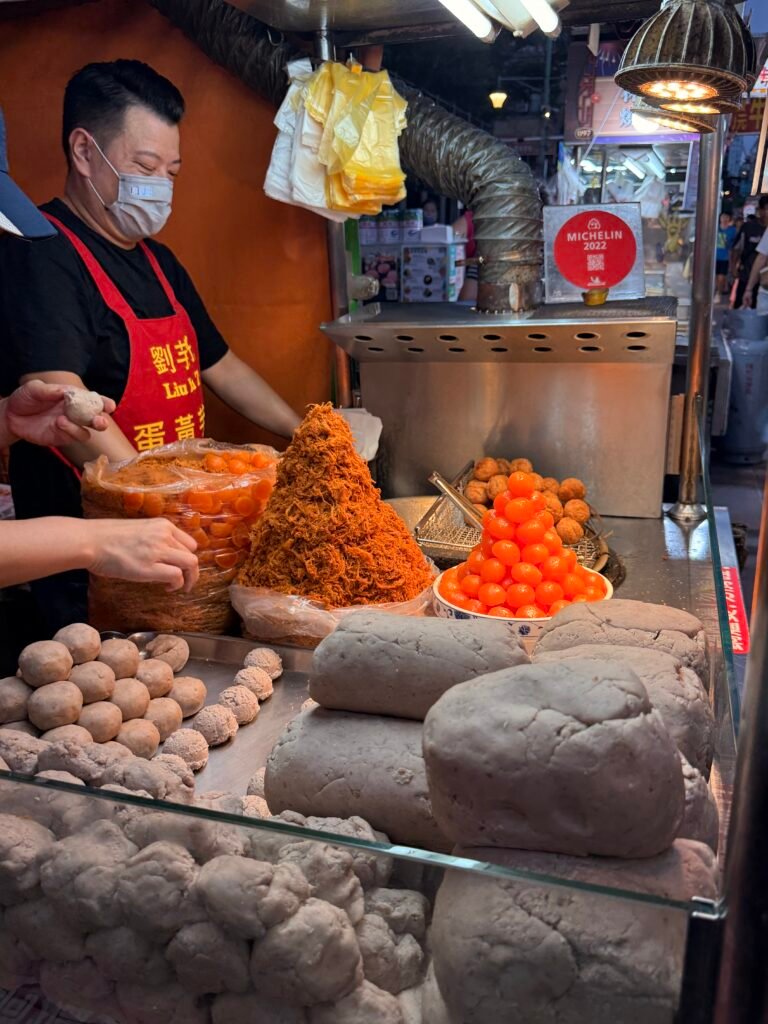
Ningxia Night Market
This one is for the “advanced” eaters who don’t mind getting a bit too close for comfort with their fellow diners. It’s essentially one long, narrow aisle of culinary bravery. If you feel it’s a bit “adventurous,” that’s probably because you’re staring down a bowl of liver soup.
Liu Yu Zi’s Fried Taro Balls These are the ultimate sweet-salty snack. You’ll see them being rolled and fried in giant woks right in front of you. Go for the ones stuffed with salted egg yolk and pork floss; they have a brilliant crunch on the outside and a rich, creamy centre that somehow just works.
Yuan Huan Pien Oyster Omelette A Ningxia institution. This is a masterclass in texture—expect a chewy, slightly gooey starch base packed with fresh oysters and topped with a savory-sweet red sauce. It’s been around since the 1960s, and judging by the queues, they aren’t going anywhere.
Easy Day Trips from Taipei
Taipei’s train system is genuinely world-class, though the buses are still very much a work in progress – let’s just say they’re “finding themselves.” The upside is that escaping the city for the surrounding towns is remarkably easy and affordable!
I’d highly recommend it, too, because Taiwan’s true identity – what really sets it apart from its neighbours – is tucked away in its natural landscapes. There’s something quite special about the way these small towns are nestled right into the scenery and, of course, some spots are unashamedly touristy, but usually for good reason: they really are stunning.
Juifen
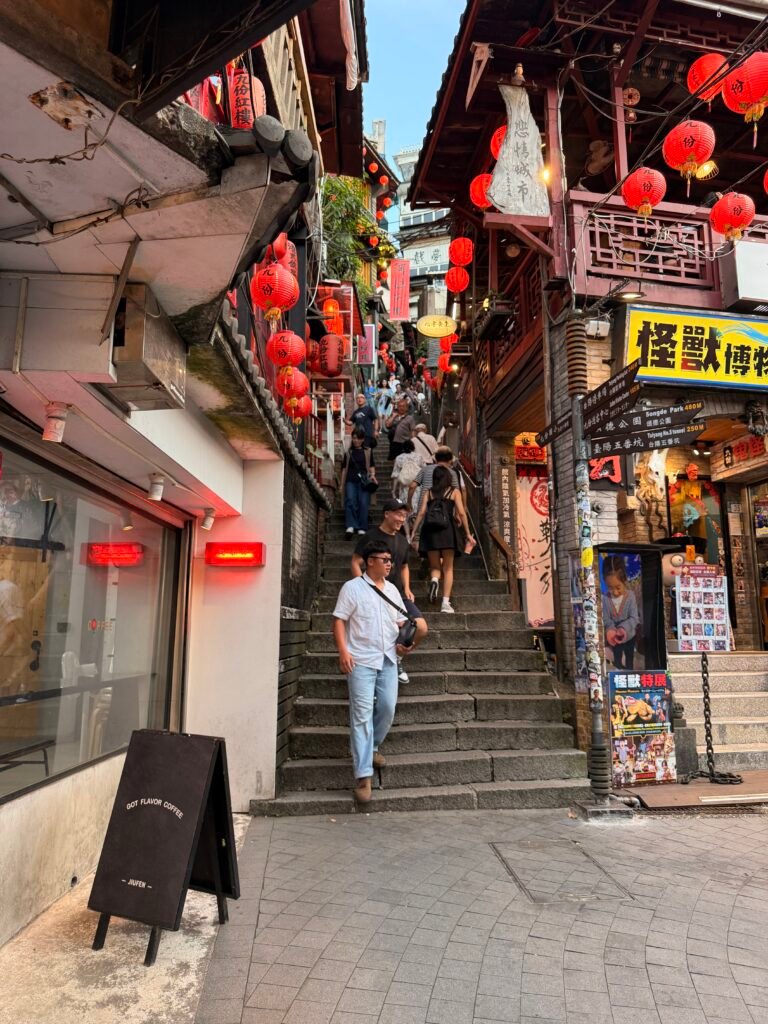
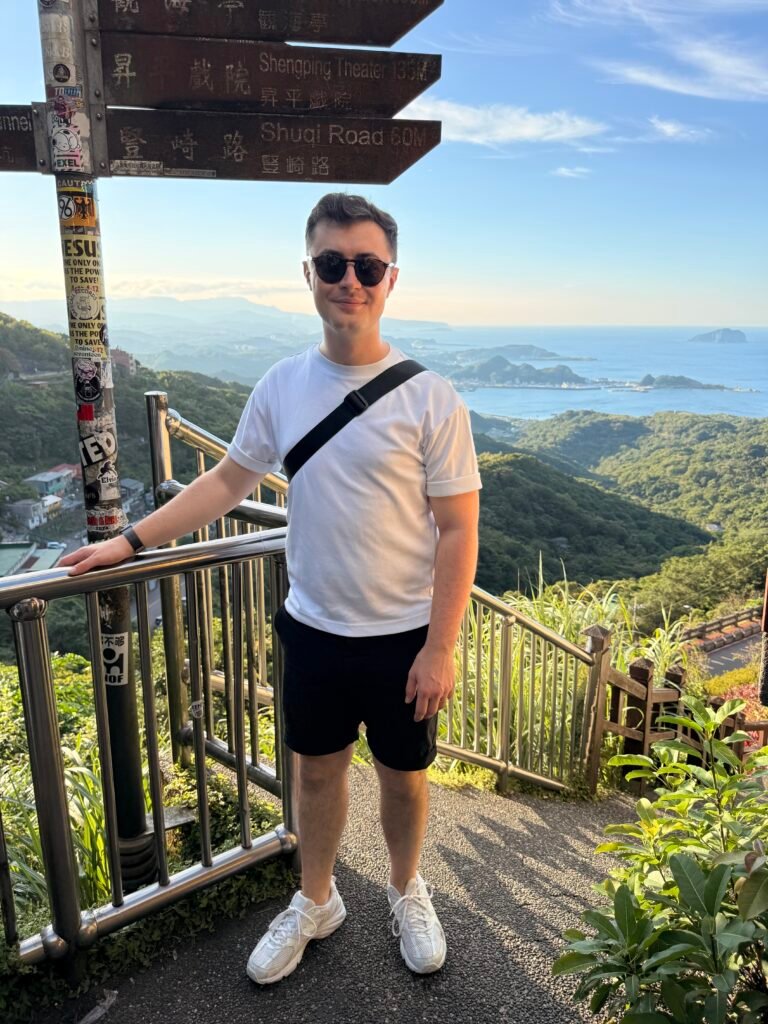
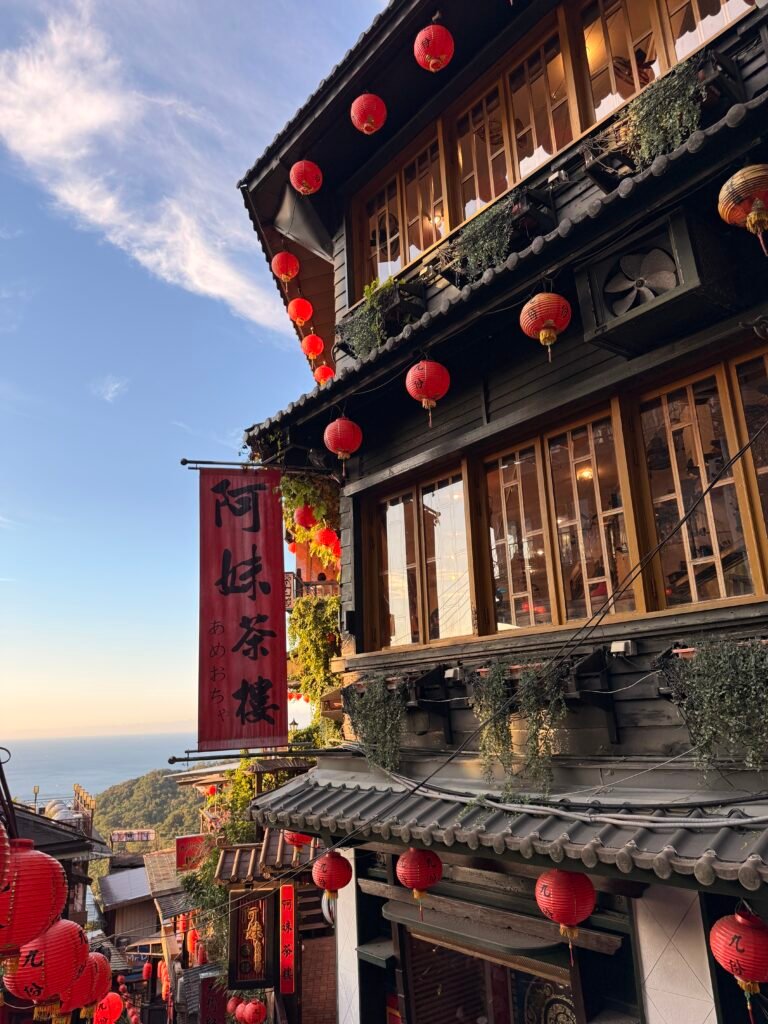
Imagine a seaside mining town redesigned by someone with a penchant for red lanterns and a total disregard for your fitness levels. Jiufen is steep, crowded, and perpetually misty, giving it a sort of “Spirited Away” atmosphere that is undeniably charming once you stop wheezing from the stairs.
- The Vibe: Victorian-era coal miner meets Studio Ghibli movie.
- The Highlight: Strolling through the winding alleyways and spotting glimpses of the sea through the paths.
- Top Tip: Arrive in the late afternoon, around 4pm. You’ll get the sunset, the lanterns, and you can flee just as the last tour bus departs, leaving the narrow alleys much more atmospheric and significantly less like a mosh pit.
Xianghshan
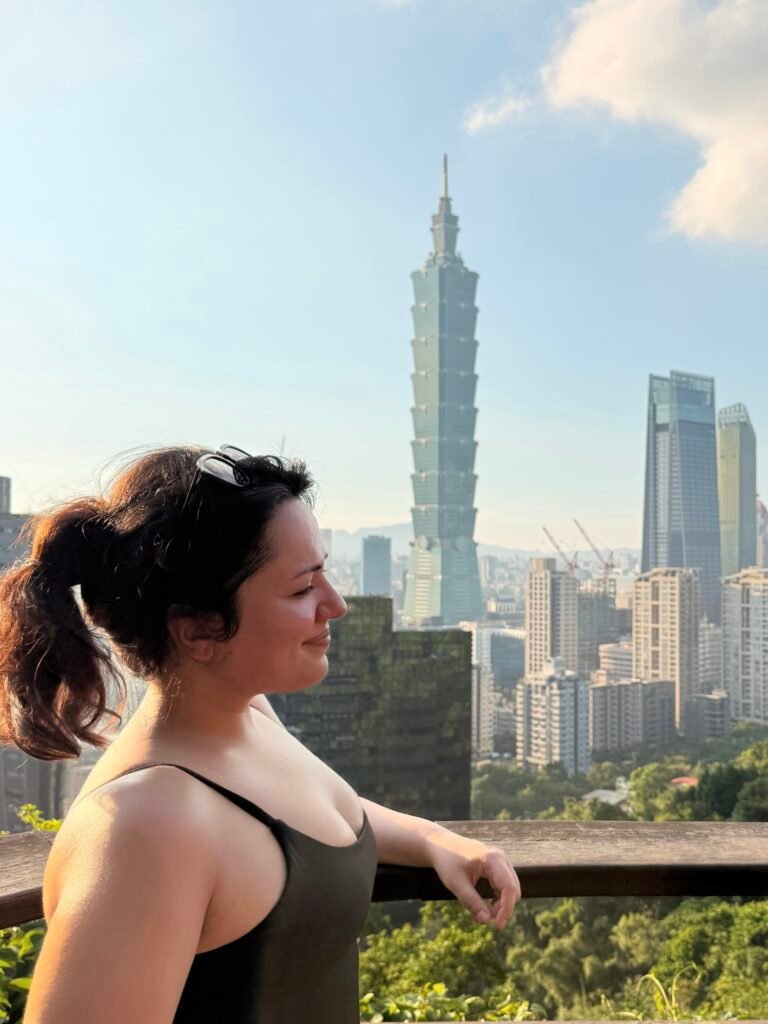
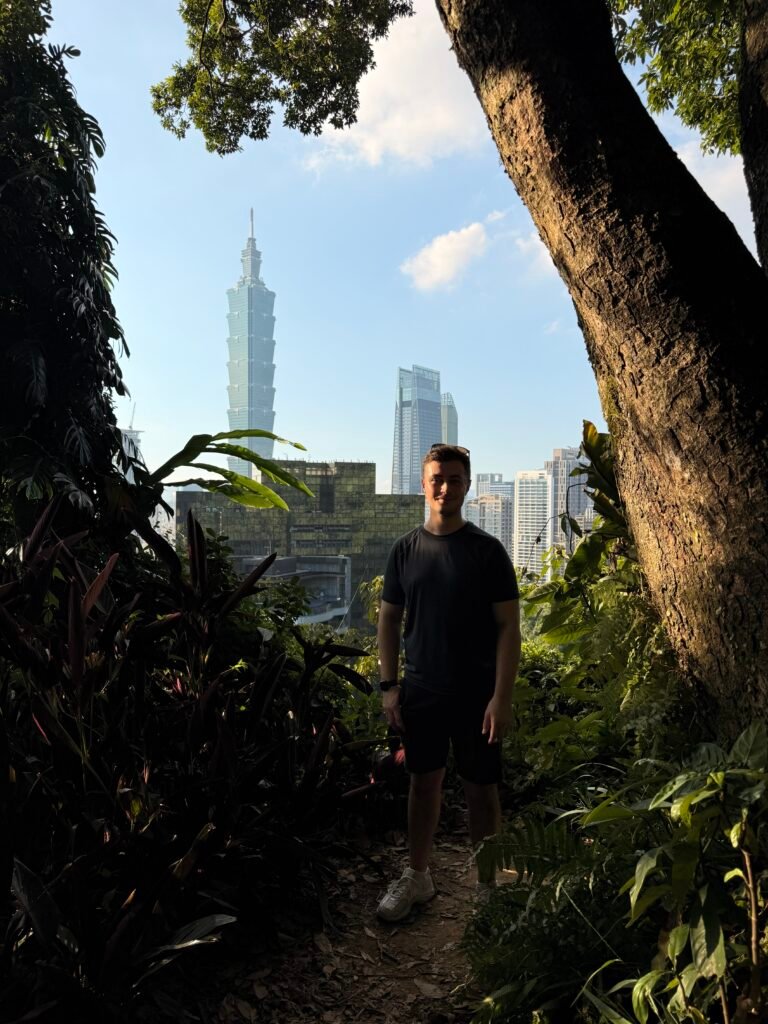
This is the classic Taipei photo op, located just a stone’s throw from the 101 skyscraper. It’s less of a “mountain” and more of a relentless, vertical staircase designed to make you regret every single black pepper bun you ate the night before.
- The Vibe: Aggressive cardio with a spectacular reward.
- The Highlight: The view at every juncture on the way up since it’s the spot for that photo of the Taipei 101 poking through the skyline. I think the best time to to go for that dusky vibe without the crowds is probably starting your hike at 4pm, and if you’re not super fit, getting to the halfway point is more than enough to get the perfect view.
- Top Tip: Do not, under any circumstances, wear your “nice” outfit for the climb because you’ll be a sweaty mess by the time you reach the top. Also, bring water and mosquito repellent (unless you’d like to provide a five-course meal for the local insect population).
Tamsui & Beitou
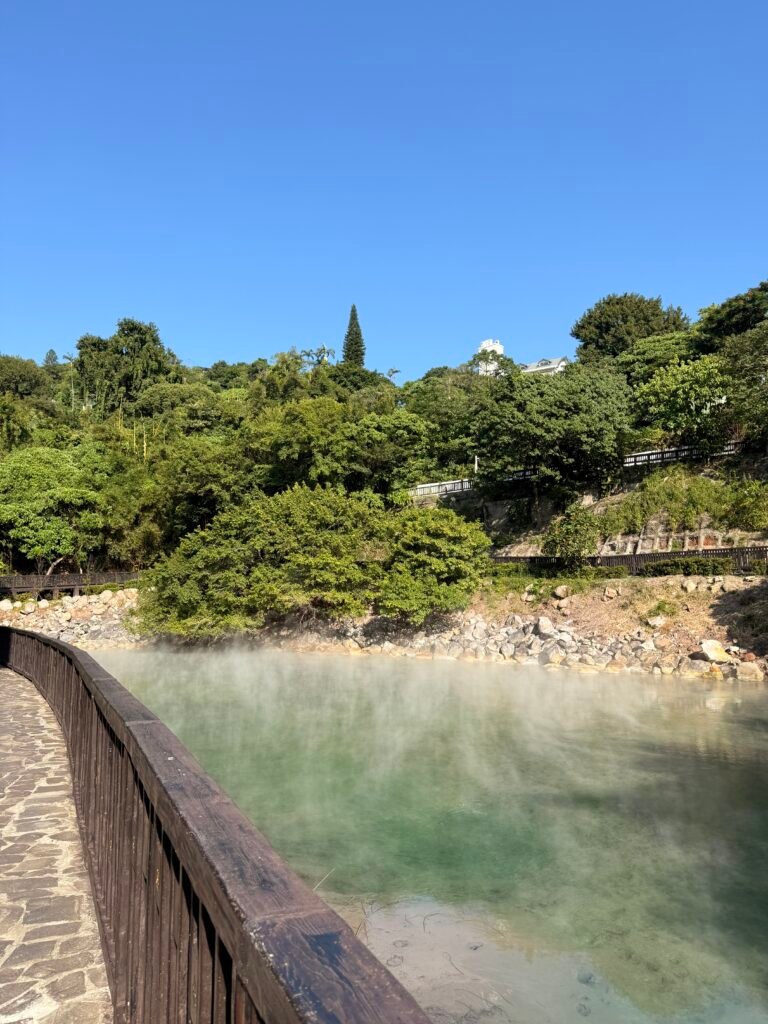
Turning these cute little towns into a combined day-trip is the best way to make the most of your time exploring the outskirts of Taipei. You start in Beitou, which is essentially a giant, sulfurous bathtub where the ground literally vents steam at you, then finish in Tamsui for a stroll along the river at sunset.
- The Vibe: Relaxed, slightly damp, and very nostalgic.
- The Highlight: In Beitou, the Thermal Valley (it looks like a portal to another dimension). In Tamsui, the Fisherman’s Wharf and Fort San Diego at sunset. It’s romantic, breezy, and a great place to get a feel for local life.
- Top Tip: In Beitou, if you’re going for a public soak, remember that the “cold” spring is usually just “less boiling.” In Tamsui, take the ferry across the river to Bali (the Taiwanese one, not the Indonesian one) for a bit of cycling to work off the street snacks.
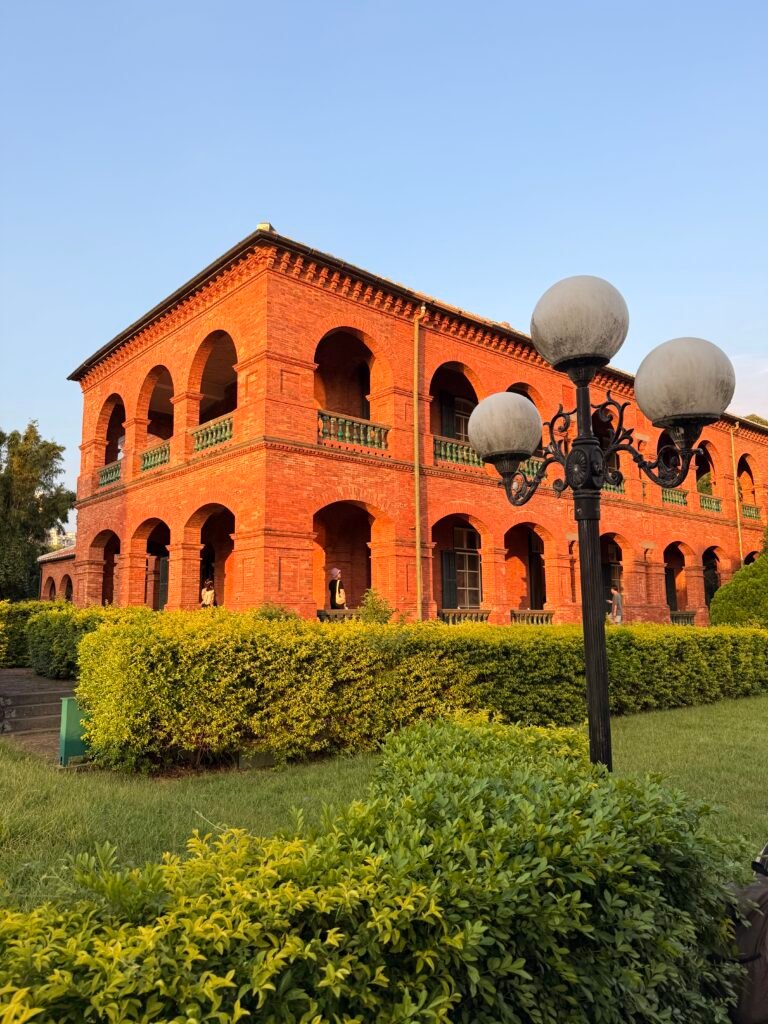
The Best Bars in Taipei
If you thought Taipei was all about peaceful tea houses and queuing for dumplings, you’ve clearly been looking in the wrong alleyways. The city’s cocktail game has evolved into a sort of high-stakes liquid alchemy that makes a standard London G&T look a bit, well, pedestrian. It’s a scene that thrives on a “mad scientist” energy – think less ‘pub around the corner’ and more ‘subterranean laboratory where the bartenders have more tweezers than your local surgeon.’ The drinks aren’t just beverages; they’re adventurous, slightly edgy experiences that manage to be incredibly complex without being too pretentious.
- To Infinity & Beyond: The undisputed heavyweight champion of the trip. This space-themed sanctuary takes the “futuristic” brief and runs with it, serving up cocktails that feel like they’ve been beamed down from a much cooler galaxy. It’s the best of the bunch for a reason: the precision is terrifying, the vibes are immaculate, and the drinks are genuinely out of this world.
- Bar Lab: If “clinical chic” wasn’t a category before, it is now. This is where you go if you want your drink served by someone in a lab coat who takes liquid deconstruction more seriously than most people take their mortgages. Being in the land of boba, I tried the Bubble Tea cocktail, and the whole time I wished it was socially acceptable to order a litre of it.
- The Floating Taipei: Moving away from the shakers and into the taps, this spot is a masterclass in local craft beer. It’s got that “effortlessly cool” atmosphere that makes you want to settle in for several pints of something hop-heavy and locally brewed. The delicious Taiwanese Fried Chicken and crispy chips were the icing on the cake.
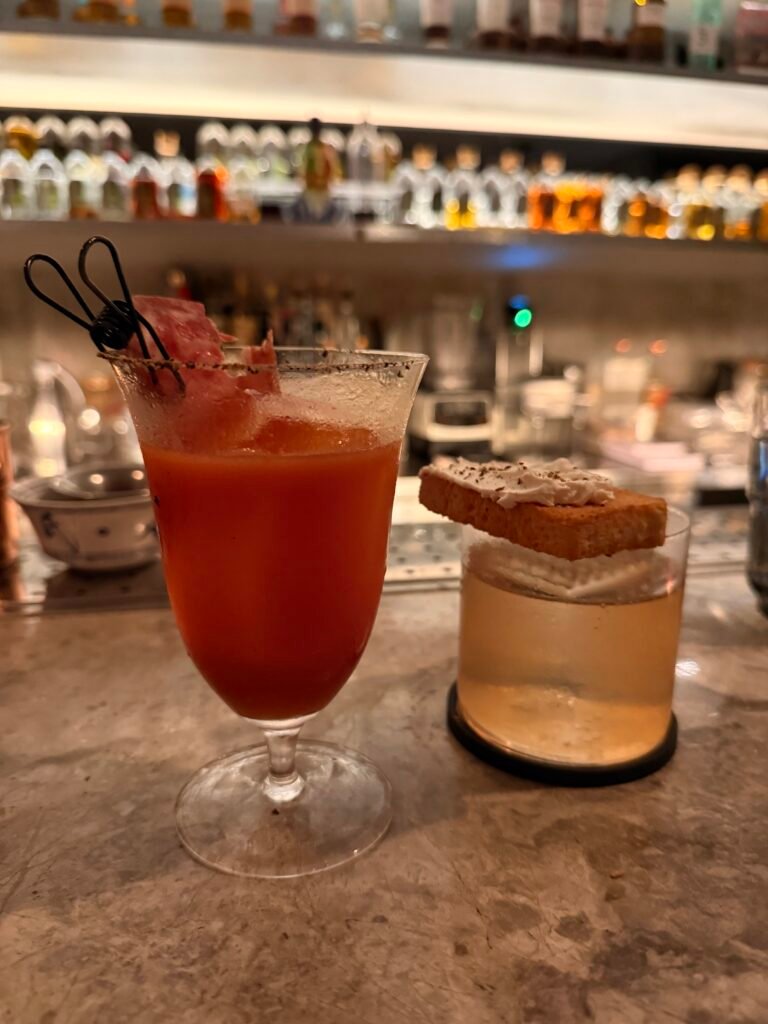
To Infinity & Beyond
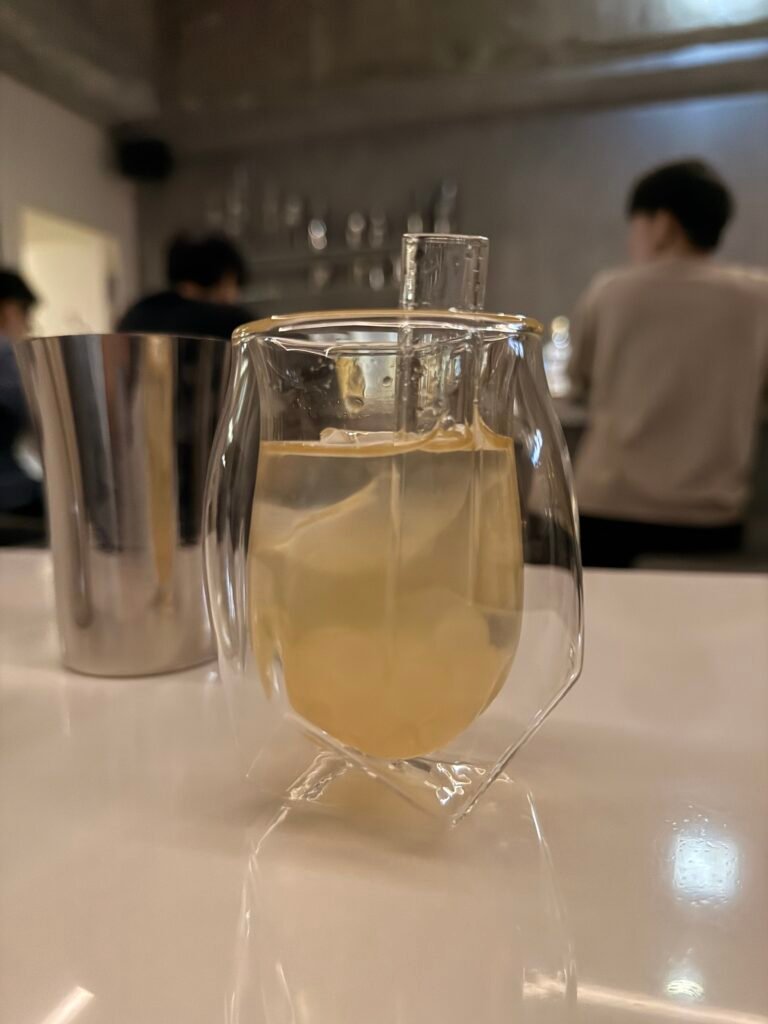
Bar Lab
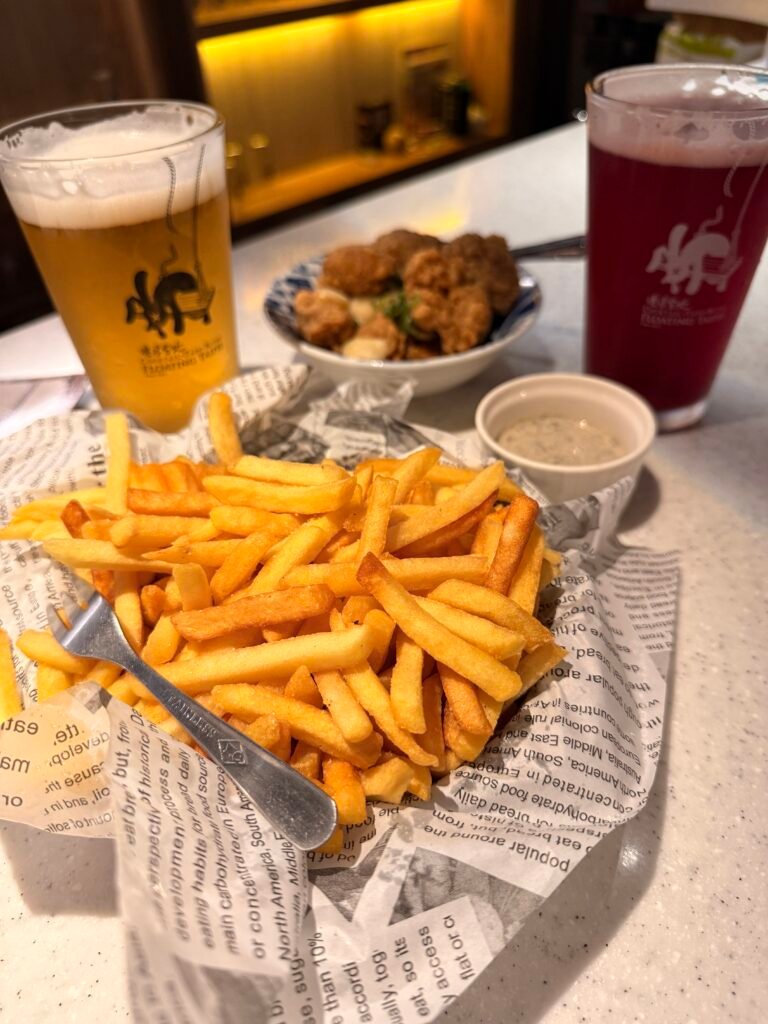
Floating Taipei
Can you be a Digital Nomad in Taipei?
Taipei seems to be a little “road-less-travelled” when it comes to the digital nomad scene, and maybe it’s because places like Thailand and Bali just seem easier to whip up an itinerary for, but I think it’s definitely worth incorporating into your trip at least once.
Food-wise, it truly is amazing – but bear in mind the variety is a little more focused than in some other Asian cities. You’re mainly choosing between Taiwanese and Japanese cuisine, both done very well, but with fewer international options compared to places like Tokyo or Bangkok. That’s not a bad thing at all, just something to bear in mind if you’re the kind of person who likes lots of global variety over a longer stay.
Where Taipei is slightly less strong is the café working scene. There are cafés everywhere, but they’re not always set up with laptop work in mind. Seating can be limited, WiFi isn’t always reliable, and power sockets definitely aren’t a given. It’s not really a “grab your laptop and café-hop all day” kind of city in the way places like Chiang Mai or Da Nang are, at least that was the case in the dozen or so cafés we visited.
Because of that, Taipei works best if you’ve got a good apartment you’re happy to use as your main work hub, and then head out to explore once the laptop’s shut. That rhythm suits the city much better because you can spend your afternoons thrift shopping and enjoying bubble tea, or your evenings wandering night markets, eating well, and soaking up the chaotic buzz.
Overall, Taipei is a great city to experience. Walking around Chiang Kai-shek Memorial Hall and seeing Taipei 101 towering over the city from Xiangshan will truly live on in my mind forever – both buildings are architectural feats that are wondrous to look at.
However, despite the charm, I probably wouldn’t recommend it for a multi-month stint. It’s a brilliant holiday destination, but for me, it lacked the density to keep me hooked long-term. It is best treated as a high-intensity short-term stop. Give it a dedicated week, or slot it neatly into a larger Asia itinerary as a two week pitstop like we did, and it’s absolute perfection.
A Final Note
Who, What & Why
If you’ve made it this far — hello, I’m Aila! I walked away from a decade in corporate tech to redesign my life around the things that I actually care about: creative work, slow travel, and being generally helpful to other humans. These days my husband and I split our time between London (caring for my mother) and various spots across Asia.
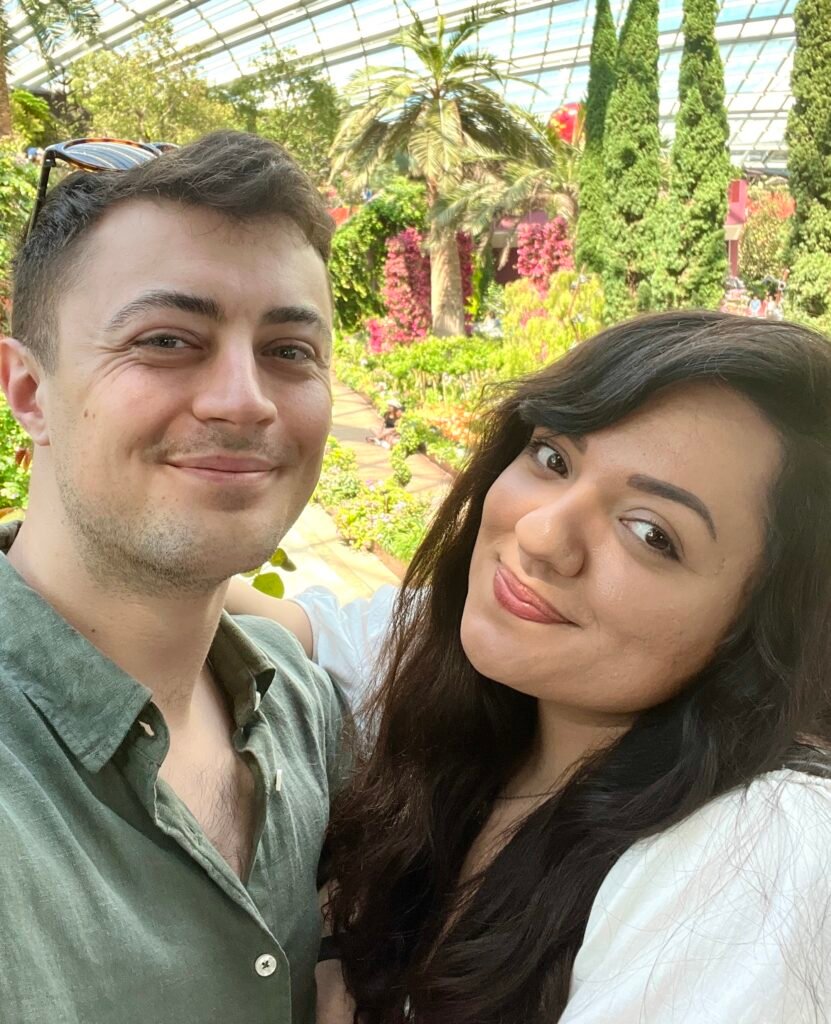
Whether I’m strolling through markets in Bangkok, systematically eating my way through Japanese ramen shops, testing skin treatments in South Korea or documenting what it actually looks like to leave a stable career and build something new — the goal is always the same: share the real version of our travels so you can make the most of your trip. If you ever find any of it useful and want to support my work to keep the site ad-free, you can do that here. 🙂
If you prefer watching over reading, most of what I cover here also lives on YouTube — the entrepreneurship side of things, travel, and the honest version of building a fulfilling life.
Explore the Archives
If you’ve enjoyed reading this blog post, there’s plenty more where that came from! Have a wander through the sections below:
- Food: I’m a firm believer that you get the best feel for a city through its food and drinks. Check out my archives for deep dives on food all over the world and, if you’re going to Japan, start with my pride and joy: 29 Ramen Better Than Ichiran.
- Travel & Nomadic Life: Whether you’re planning a one-week holiday or a total life pivot into digital nomadism, I’ve likely written a guide for it. Dive into the archives for my unfiltered take on what to see, eat, drink, and — perhaps most importantly — skip. You can start with the Seoul edit if you like!
- Health & Beauty: Beyond trying to be a functioning human, I do deep dives on health (PCOS, Visual Snow) and the reality of beauty (make-up, skincare & treatments). You’ll find my honest results on everything from non-invasive laser treatments to long-term wellness.
If you end up trying any of my recommendations, let me know in the comments section or reach out – I’d love to hear what you thought.
The Essentials
A couple of things I use on every trip that keep me functional:
- Connectivity: Nomad eSIM — easy setup, works everywhere, no SIM card stress.
- Privacy: NordVPN — for public WiFi and keeping my Netflix region exactly where I want it.
Want to stay “in the know”?
Every month I share a newsletter with a round-up of all my content, as well as other handy resources. Sign up below to receive it so you don’t miss anything – from thorough travel guides to organisational systems that actually make life easier.