
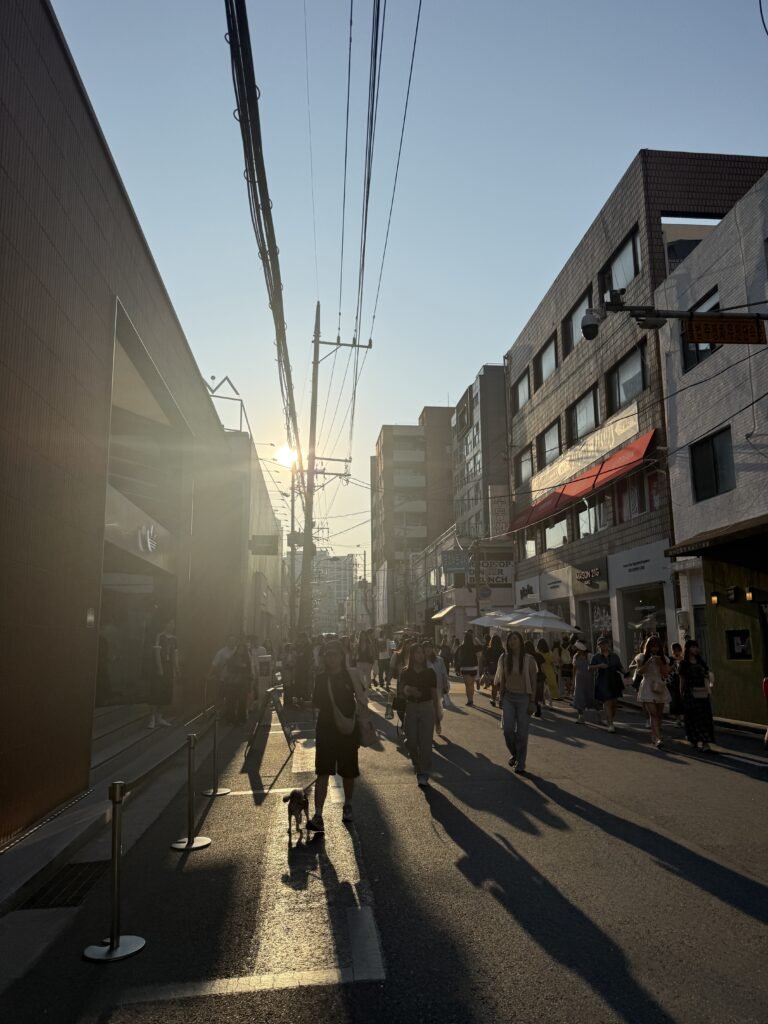
I didn’t really know what to expect from Seoul, but after spending two weeks there in June, I fell in love. It’s kinda like Tokyo meets Bangkok with a bit of Copenhagen sprinkled in, which is perfect if you like variety and contrast in a city. At first, it can feel massive, busy, and slightly intimidating, but once you figure out Naver, hop on the metro, and eat something genuinely life-changing at 11pm, you realise it’s actually one of the greatest cities in the world, and seriously underrated.
This article isn’t a perfectly optimised Seoul itinerary or a “48 hours in Seoul” power march. It’s a realistic, honest round‑up of my Seoul highlights, focusing on what to see, eat, and drink in Seoul, what I loved enough to recommend without hesitation, and what I’d happily skip next time.
It’s basically the Seoul travel guide for first‑timers, food lovers, digital nomads, and anyone planning a trip to Seoul who wants real opinions and hates social media hype (though I do thank the algorithmic Gods for directing me to a few real gems too).
Logistics in Seoul
Where to Stay in Seoul
- Hongdae: my absolute top pick. It’s lively, has a great deal of shops and restaurants and, most importantly, it’s well connected.
- Insadong / Ikseon-dong: this area is central, traditional, and ideal for first-timers who want to be close to major sights.
- Seongsu: it’s a bit further out East, but it’s so edgy that your heart will melt. Think LA meets Tokyo, with spacious concept stores, beautiful cafés and a great mix of restaurants (not an ideal location for short-term stays, however, as it’s a bit far from the main attractions, although quite close to Gangnam).
Important Points
- Maps: download Naver Maps – it’s a bit of a pain, but Google Maps is completely useless here.
- Travel Card: buy a T-money card at a convenience store and use it for the metro and buses. Seoul’s public transport is amazing, but you need this card.
- Cash: cards are accepted in most places, but bring some Korean Won for older restaurants, markets and street food.
- Internet: I used an eSIM from Nomad. Easy setup, worked perfectly, ideal for any length of stay.
- Good to know: there’s no tipping culture, it’s a very safe city, you’ll definitely walk more than expected, massive cups of black iced coffee in summer are heavily encouraged and please, for the love of God, don’t skip the street food.
- Expensiveness: honestly, Seoul is surprisingly cheap, especially if you’re coming from the US, UK, Western Europe or Australia. Transport, food and activities cost very little, but if you’re going for cocktails over beers and soju and fancy shopping over underground markets, then it’s London prices.
Sights to See in Seoul
Gyeongbokgung Palace & Bukchon Village
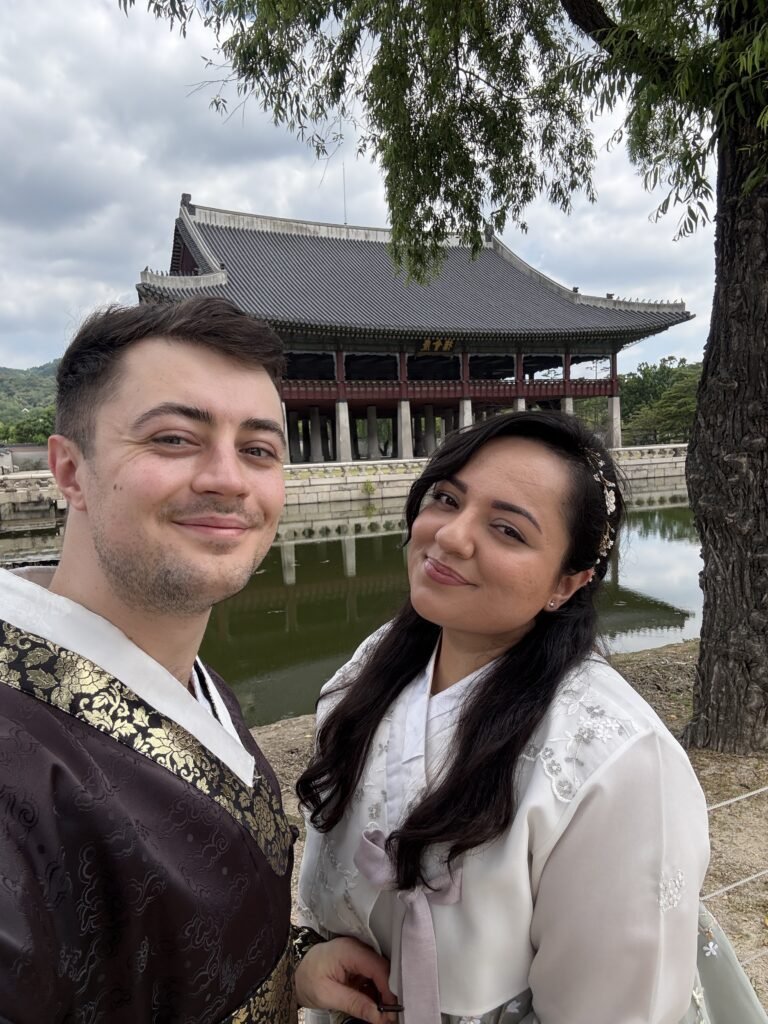
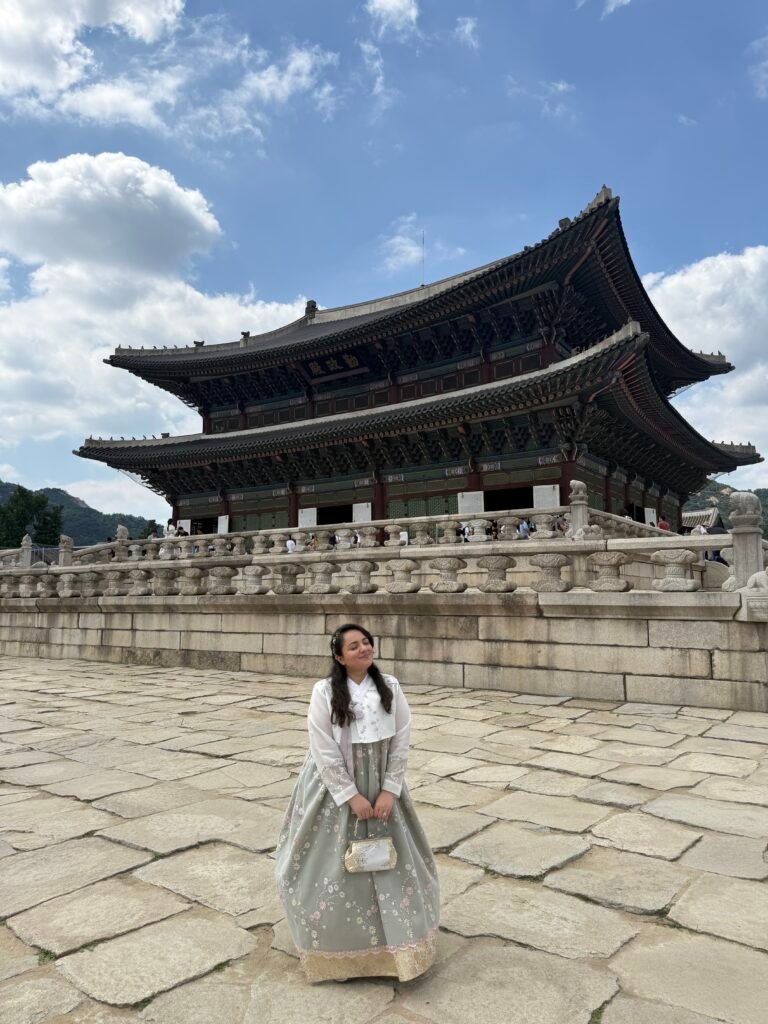
If you visit one palace in Seoul, make it Gyeongbokgung Palace, with a little walk to the historic Bukchon Village either before or after. It’s probably obvious if you’ve done a bit of research, but it’s a gorgeous architectural feat, and surprisingly calming once you’re inside. If you’re even slightly considering renting a hanbok, please do it. You get free entry, it’s fun, and everyone else is dressed like they’ve time‑travelled too, so it’s not embarrassing at all. I’m more a jeans and t-shirt gal, and even I felt magical – hah! It’ll end up being a core life memory, I promise.
Jongmyo Shrine
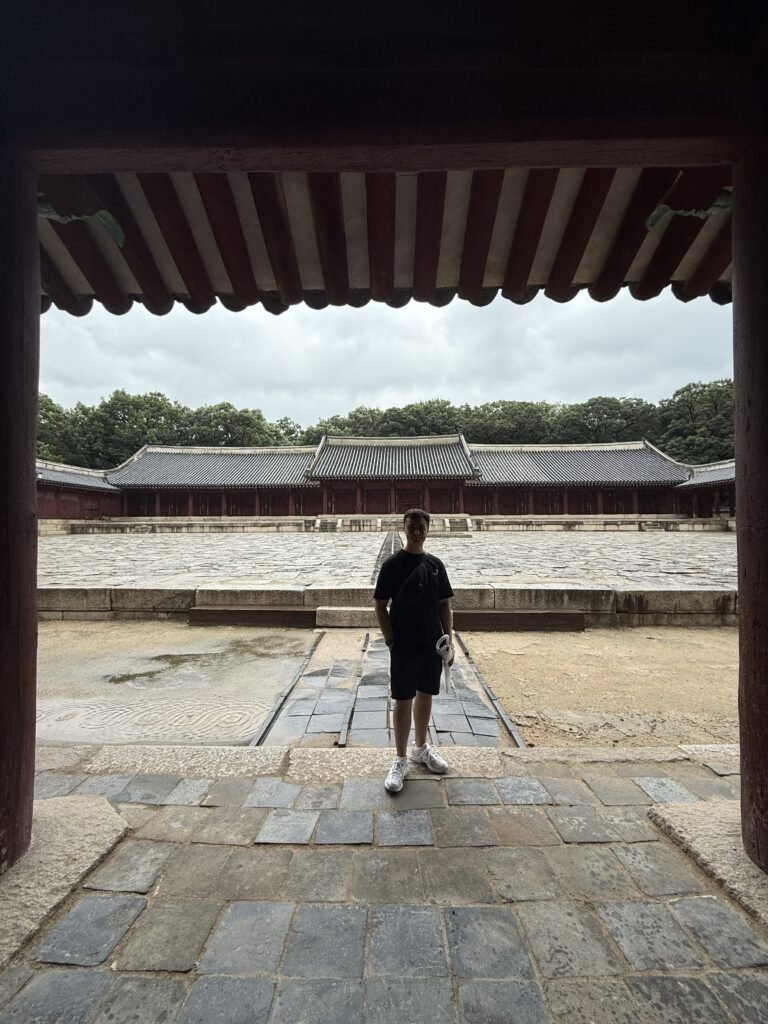
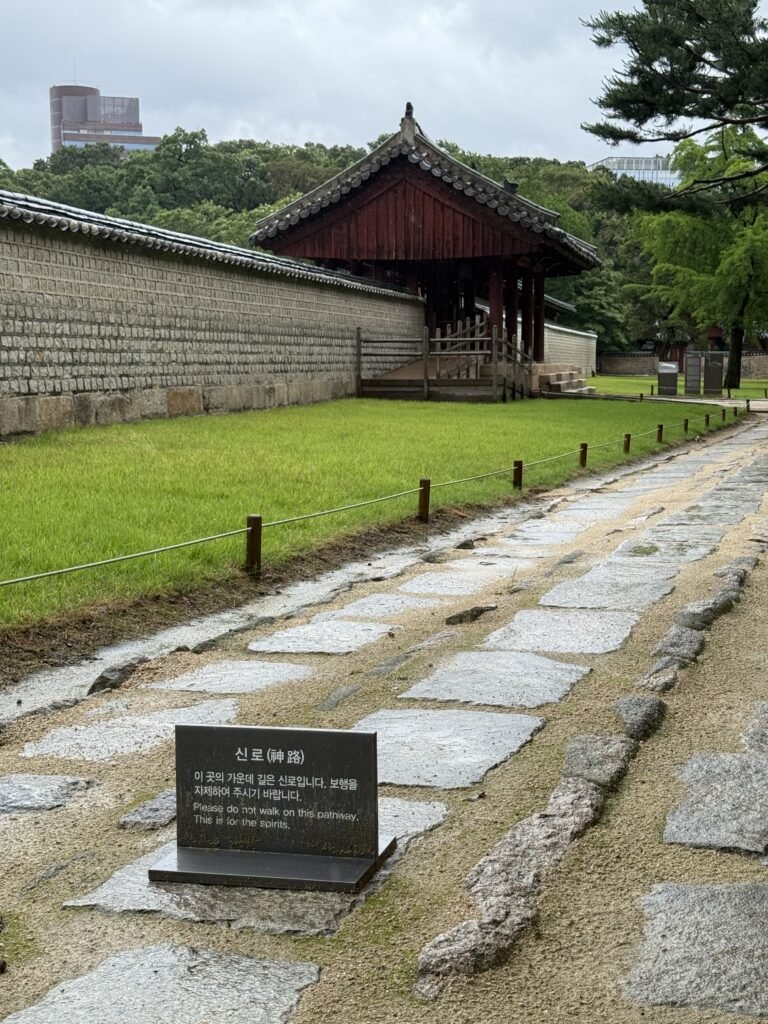
Much quieter and more understated than the palaces, Jongmyo Shrine feels calm in a way that’s quite rare in central Seoul. It’s an easy win if you want something cultural without crowds, and pairs perfectly with a slow coffee afterwards. It was raining when we went, but weirdly it felt all the more serene that way.
National Museum of Modern & Contemporary Art
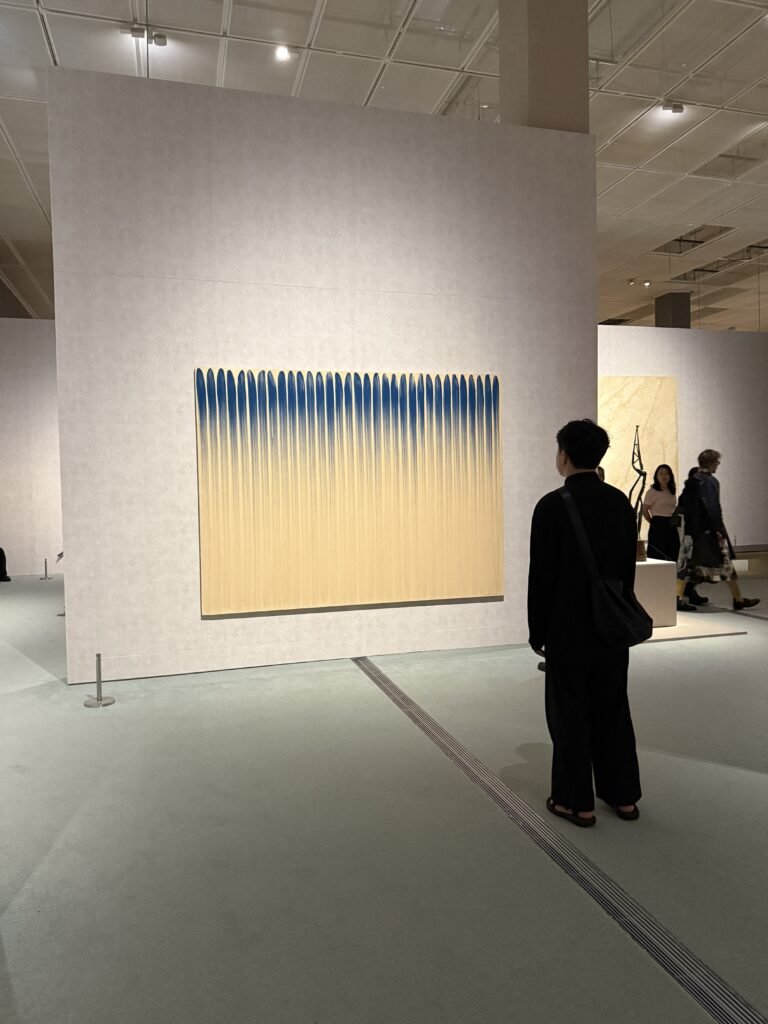
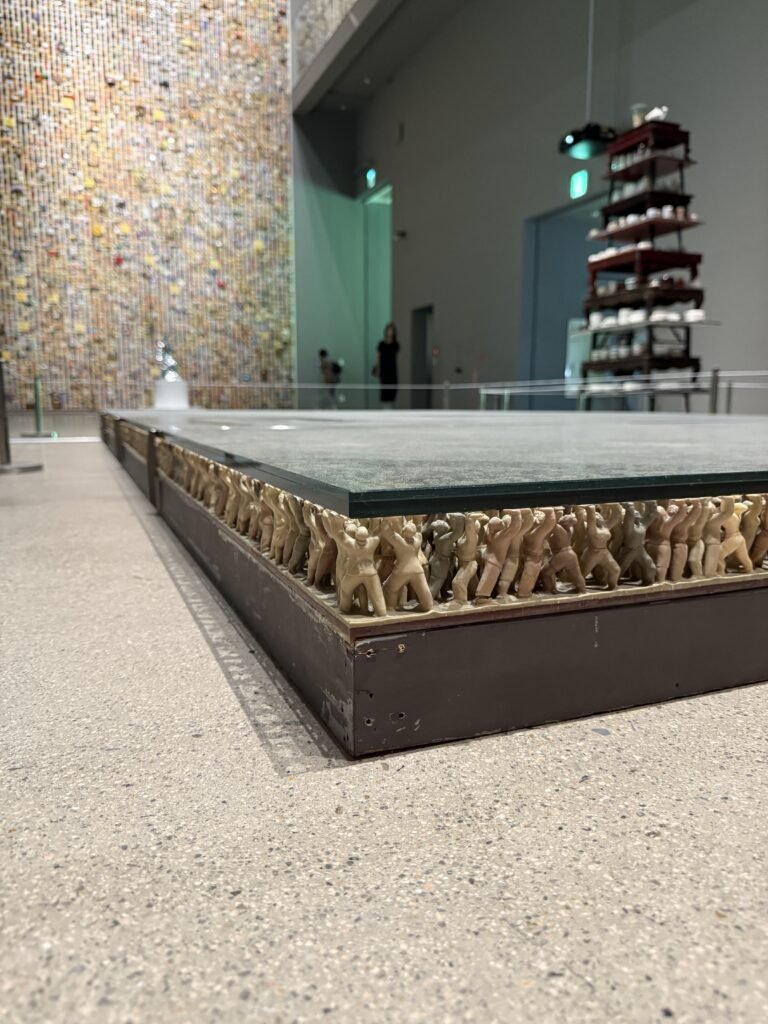
If you’re interested in modern Korean culture, design, and contemporary art, this is a really solid stop. The exhibitions are varied and thoughtfully put together, and while not everything fully landed for me, enough of it did that I’m genuinely glad I went. It gives a good sense of how Korea sees itself now, rather than just historically, and it’s a great way to balance out all the palace hopping!
North Korea DMZ Tour (via GetYourGuide)
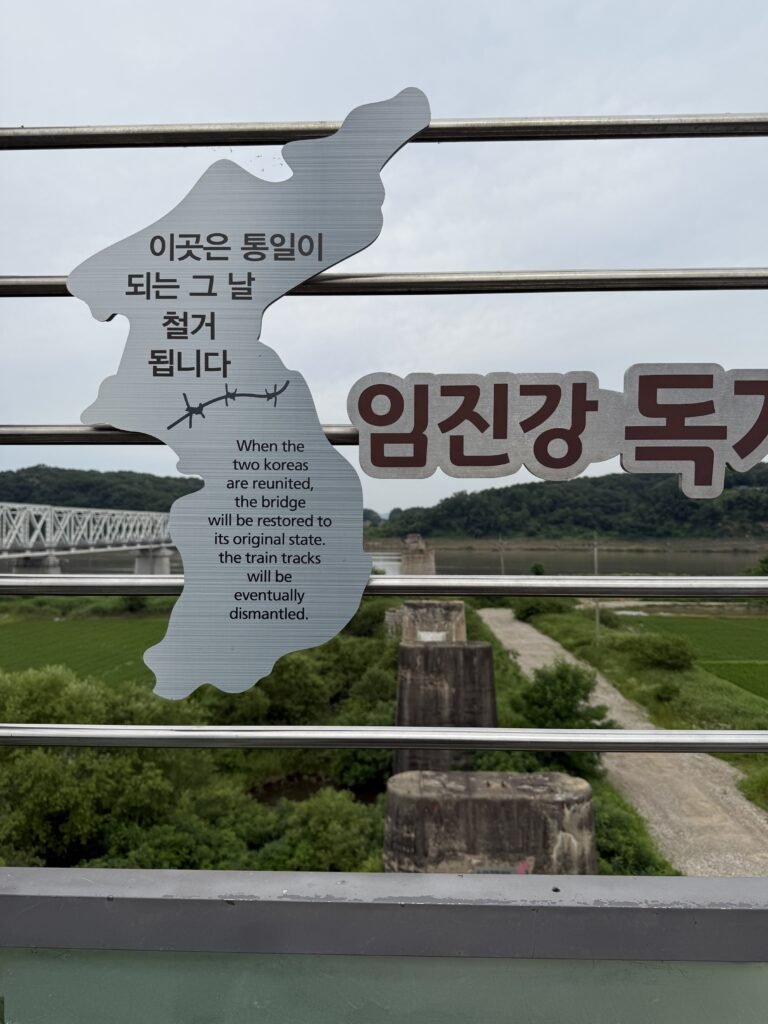
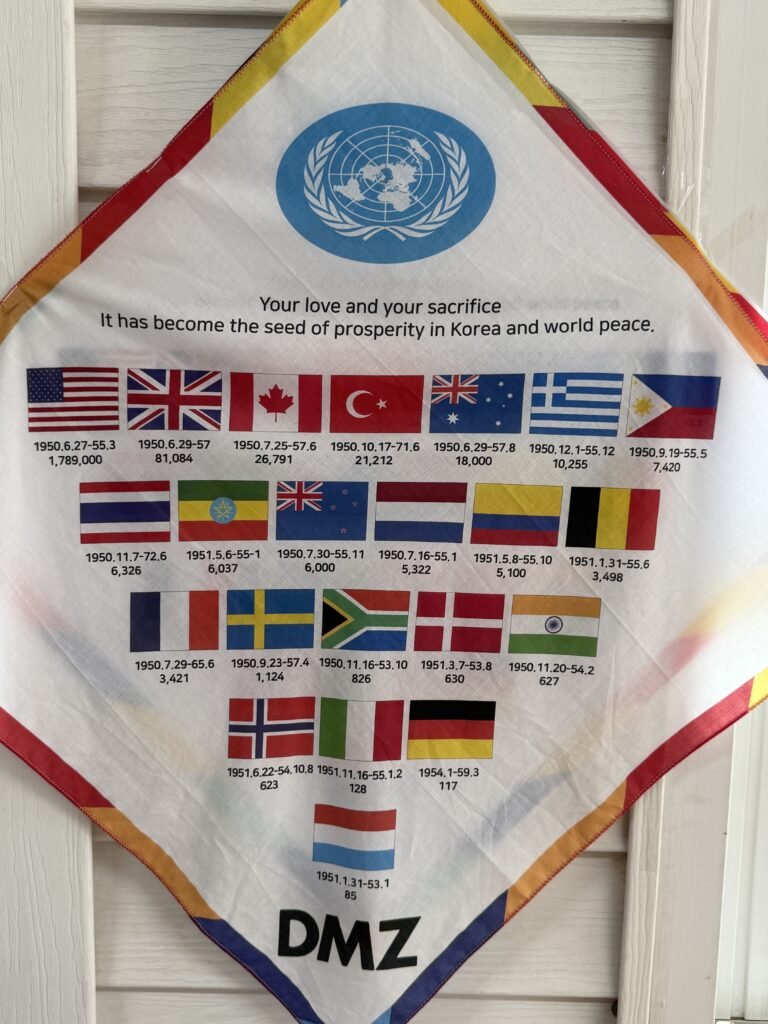
If you’re even vaguely interested in Korean history, a North Korea DMZ tour is absolutely worth doing. I booked this tour through GetYourGuide and it ended up being one of the most memorable things I did in South Korea. It’s fascinating and sobering in equal measure, and the particular tour I did struck the right balance between informative, respectful, and actually engaging. It gave far more context on the North Korea / South Korea divide than any museum, and actually seeing a North Korean town with my own eyes was a wild experience.
Seoul Neighbourhoods to Explore
Myeongdong
Best for: convenience, shopping, first-time visitors.
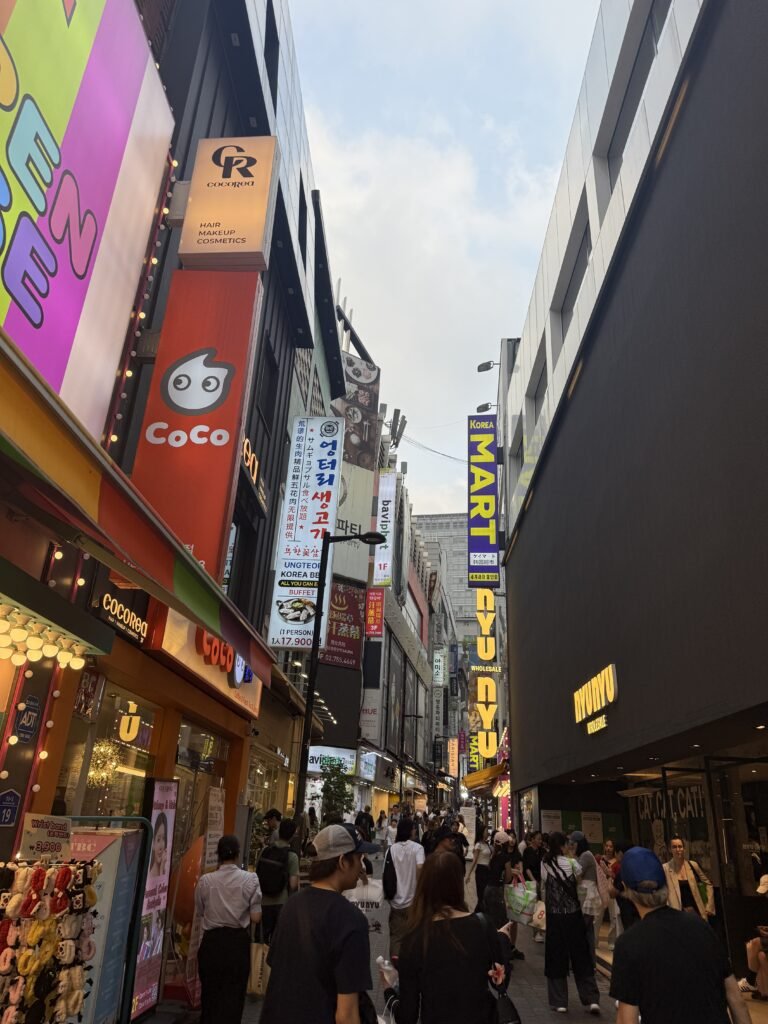
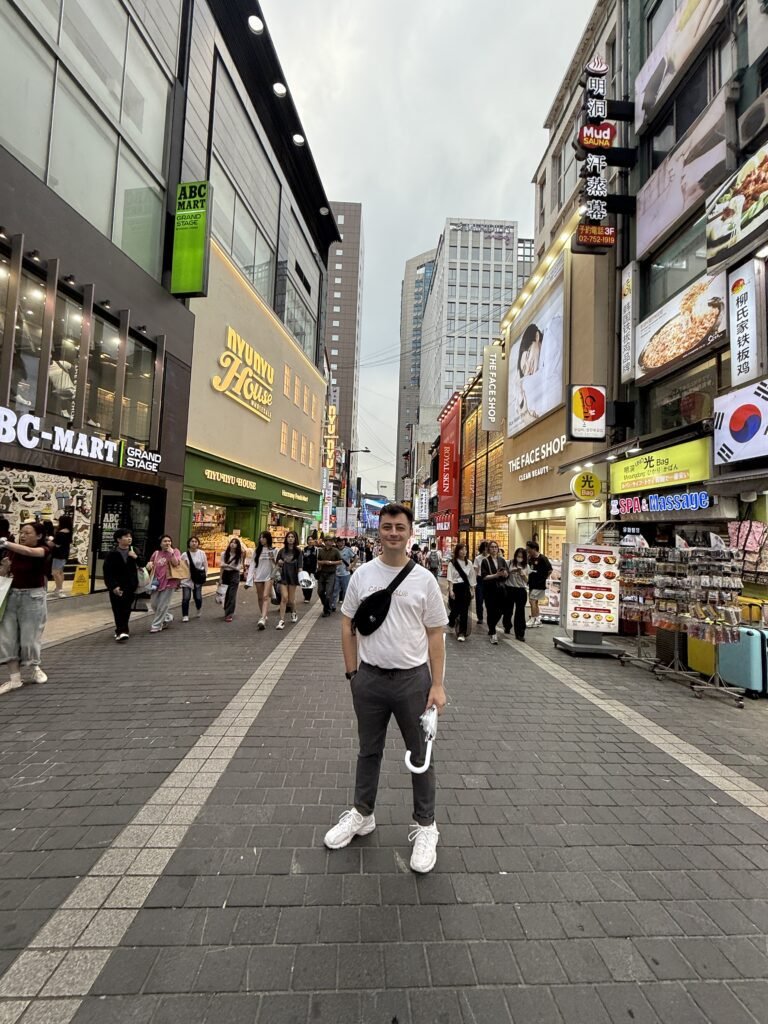
Myeongdong is busy, bright, and unapologetically touristy. That said, it’s very convenient, especially if it’s your first time in Seoul. There are loads of food options, varied shopping spots, and excellent transport links. I wouldn’t linger all day, since it can be quite intense, but it’ll give you a great flavour of what’s to come. You could also use here as a base since it’s so central, but be warned, it’s busy all the time.
Ikseon-dong
Best for: evening walks, hanok cafés, atmosphere.
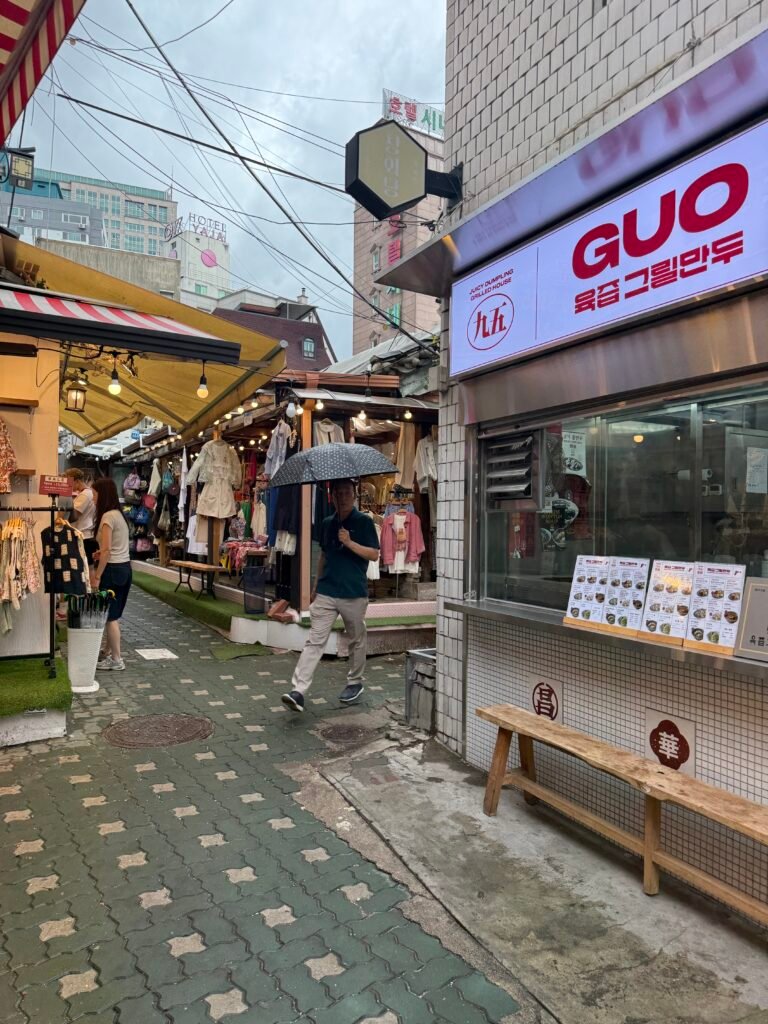
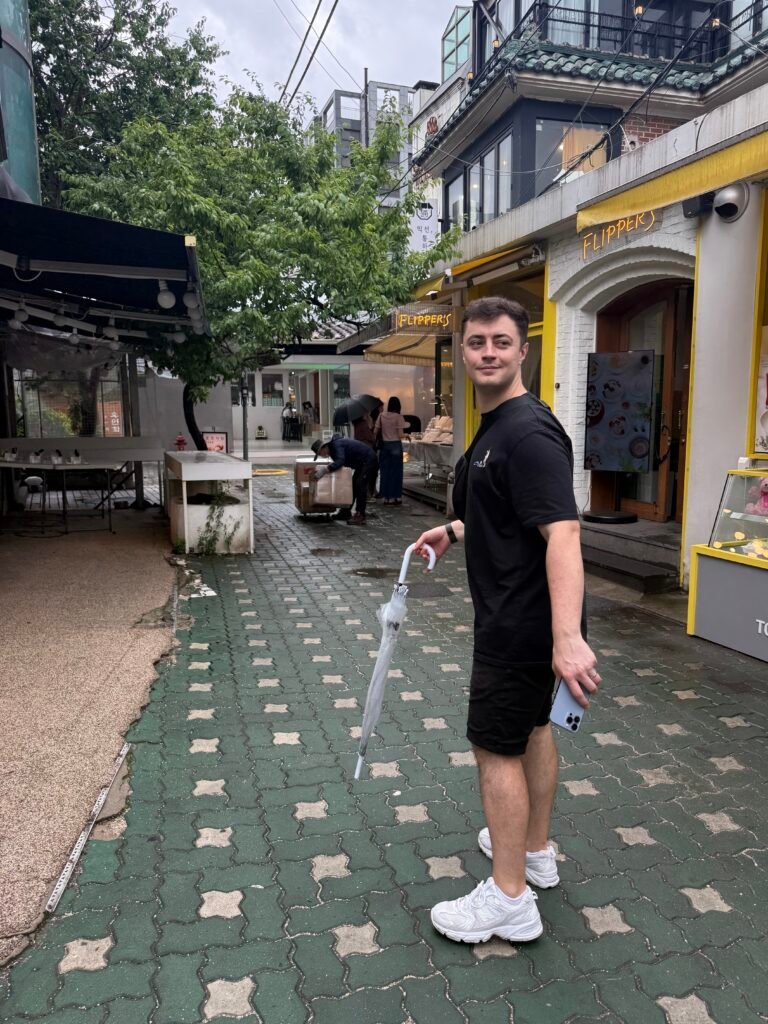
Ikseon-dong is small but charming, with narrow streets full of cafés, bars, and restaurants tucked into traditional hanok buildings. It’s central, adorable, and great for a relaxed wander. It can get busy, but it’s still worth seeing, especially if you go a little earlier.
Hongdae
Best for: staying, food, shopping, nightlife, great transport links.
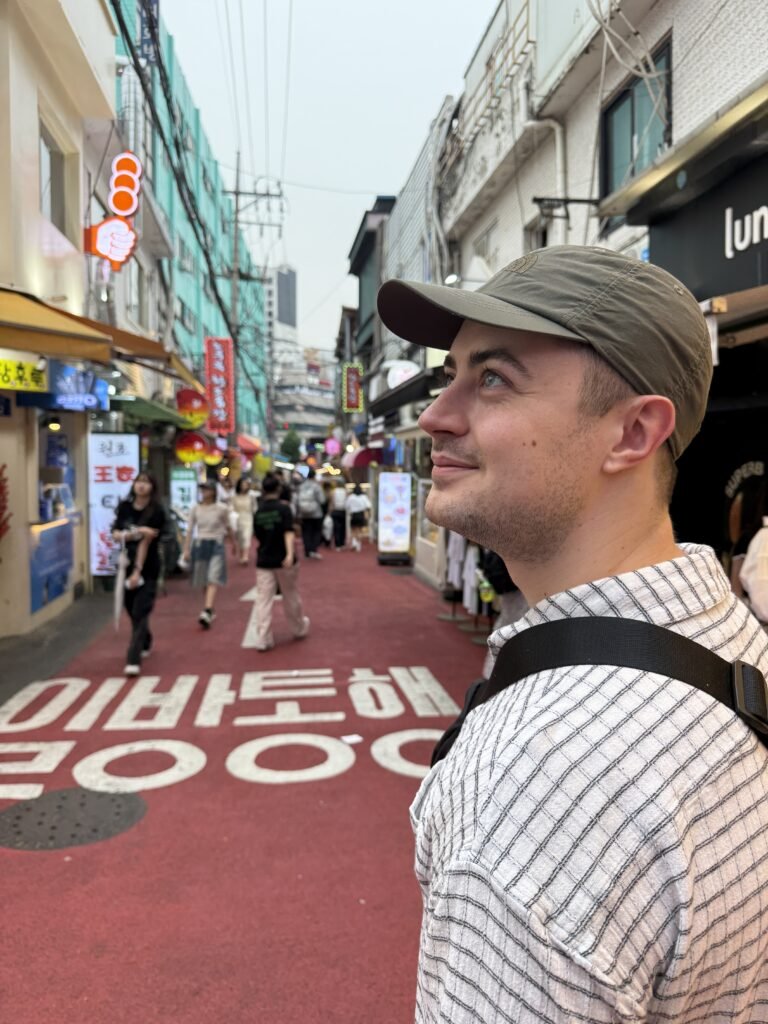
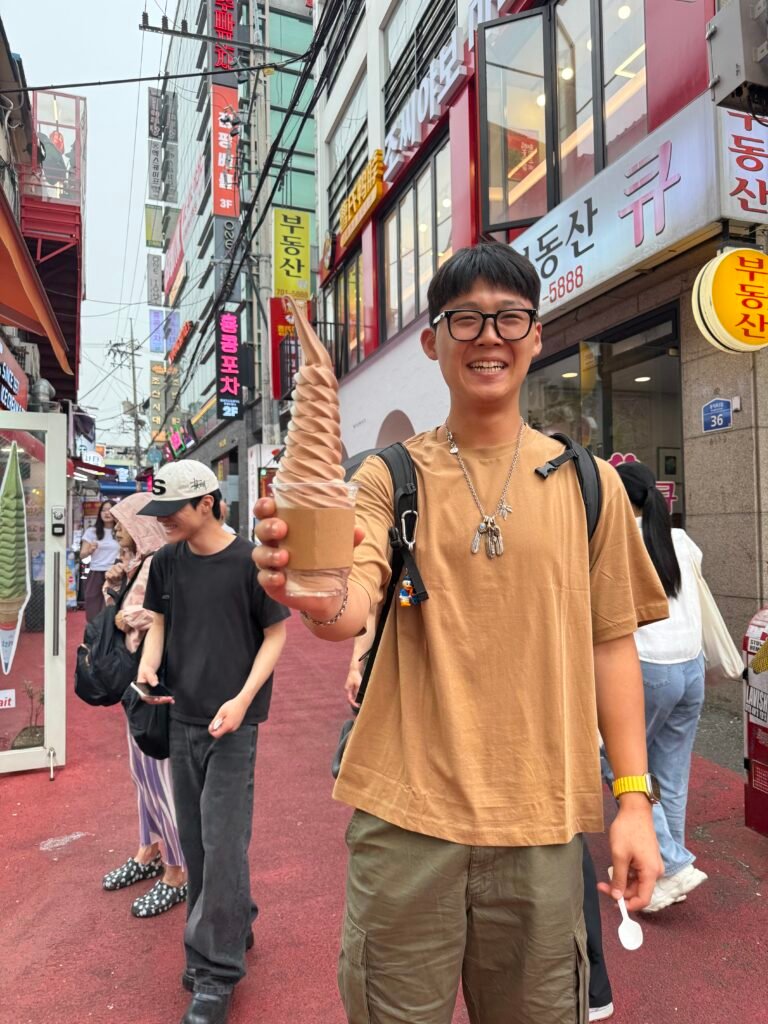
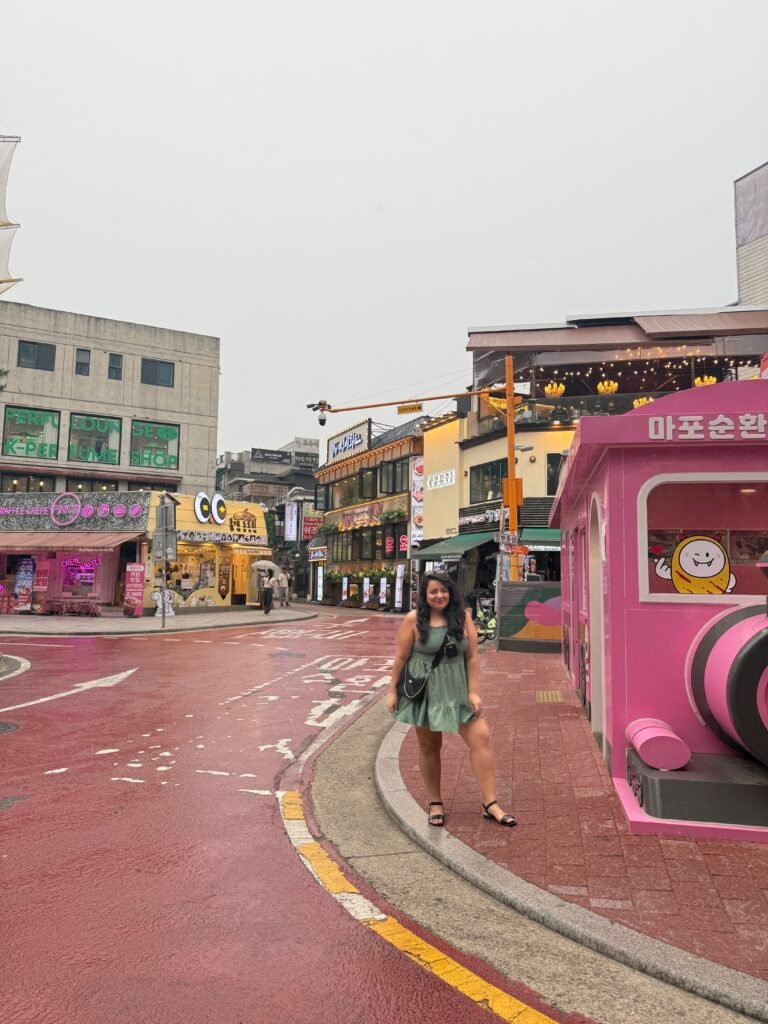
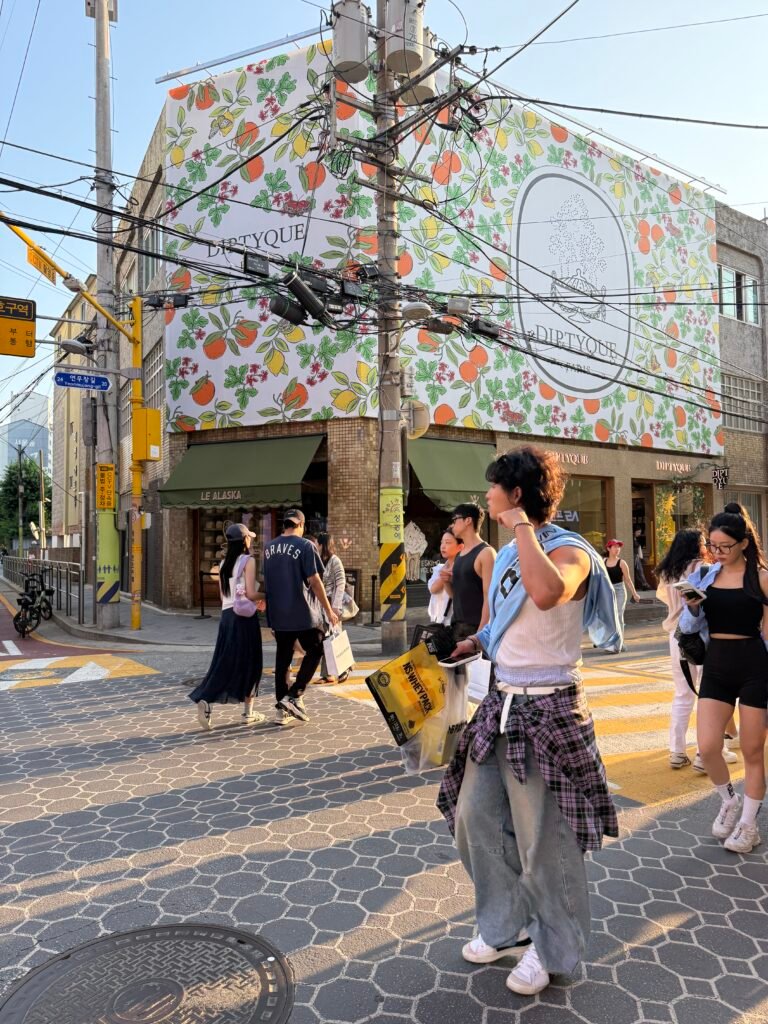
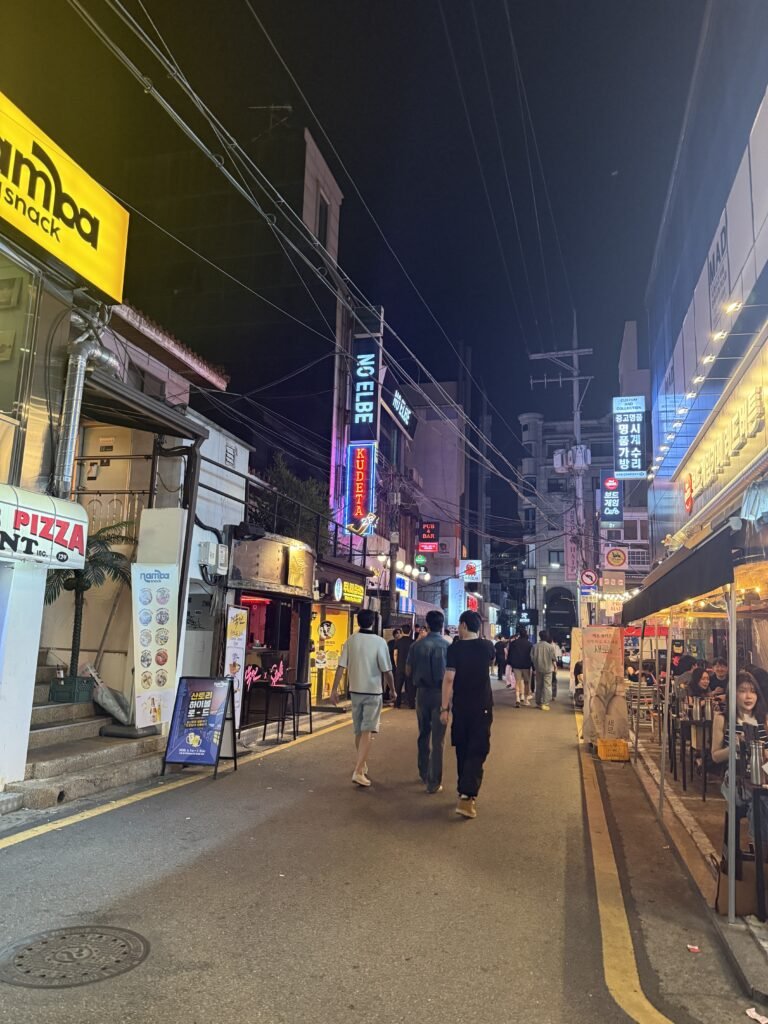
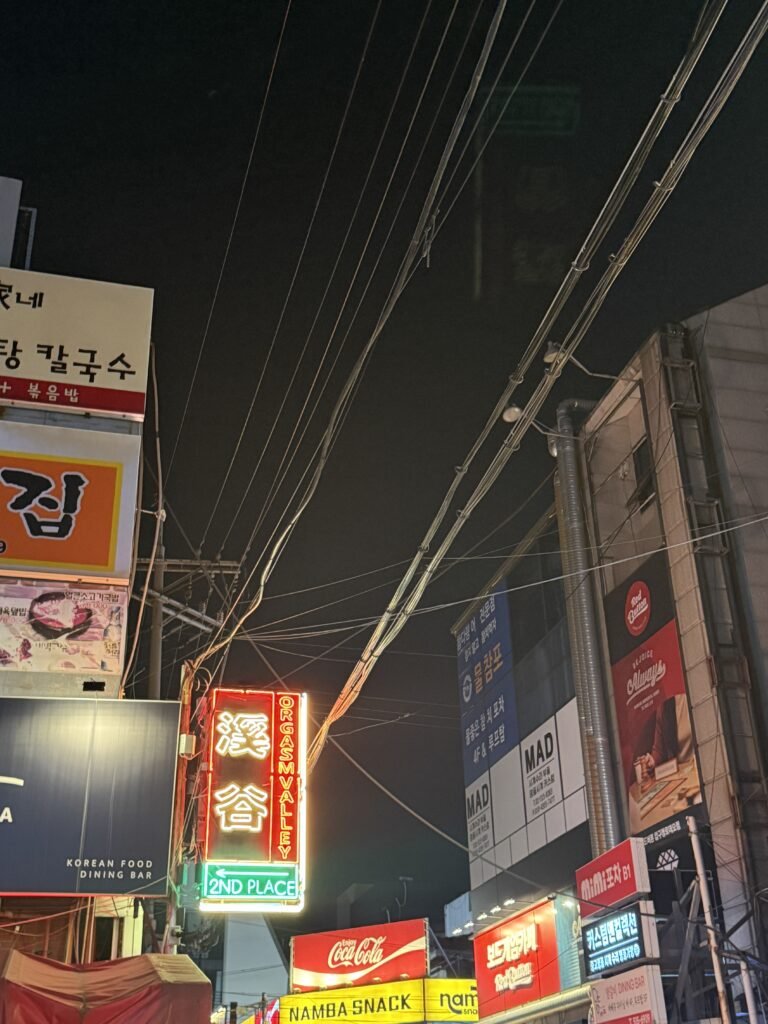
Hongdae is lively, youthful, and full of great food, bars, and shops, with brilliant connections to the rest of the city. It’s busy, but because of the excellent attention to spacial design, it never felt overwhelming, and we were there on a weekend! This was my favourite area to hang out since it did everything so well. Also, this random dude saw me filming the ice-cream and cutely said, “here, you can take a picture of mine!” Needless to say, I didn’t hesitate.
Yeonnam-dong
Best for: cafe hopping, shopping, and strolling through the greenery.
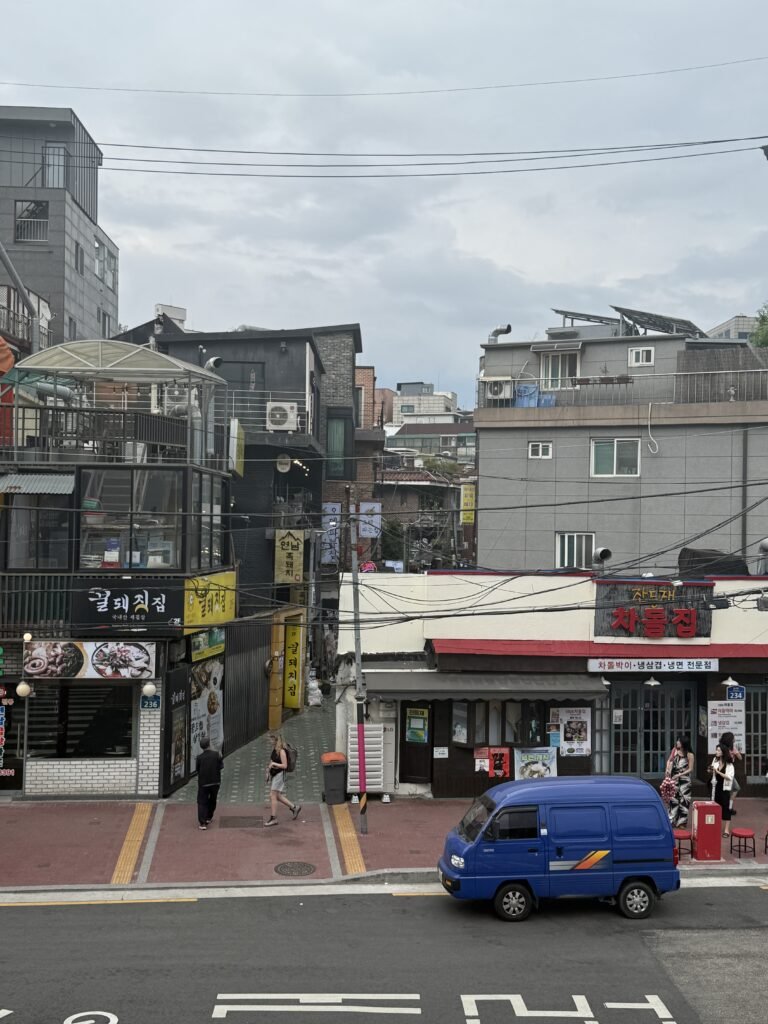
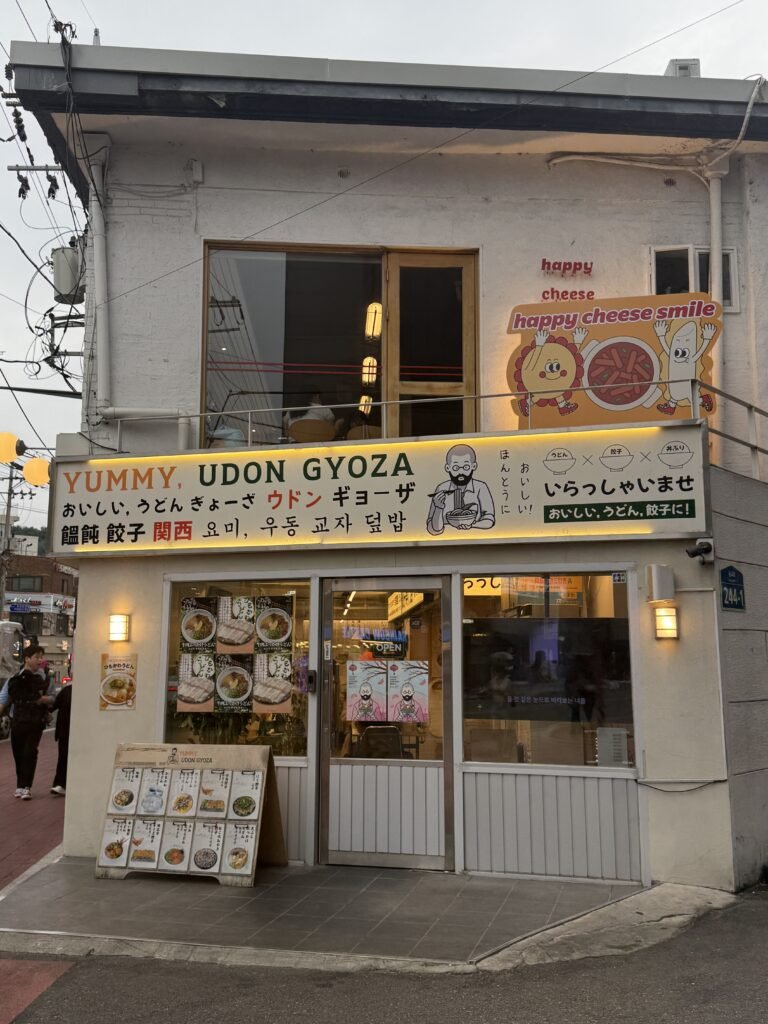
Yeonnam-dong is genuinely beautiful. It’s close enough to Hongdae to benefit from the food and transport links, but far enough away that it feels calmer and more lived-in. Think leafy streets, aesthetic cafés, small restaurants, and a general sense that people actually live here rather than just pass through. It’s a lovely area for a slow wander, especially if you want to see a bit of green.
Seongsu-dong
Best for: cafés, bakeries, walking, creative energy.
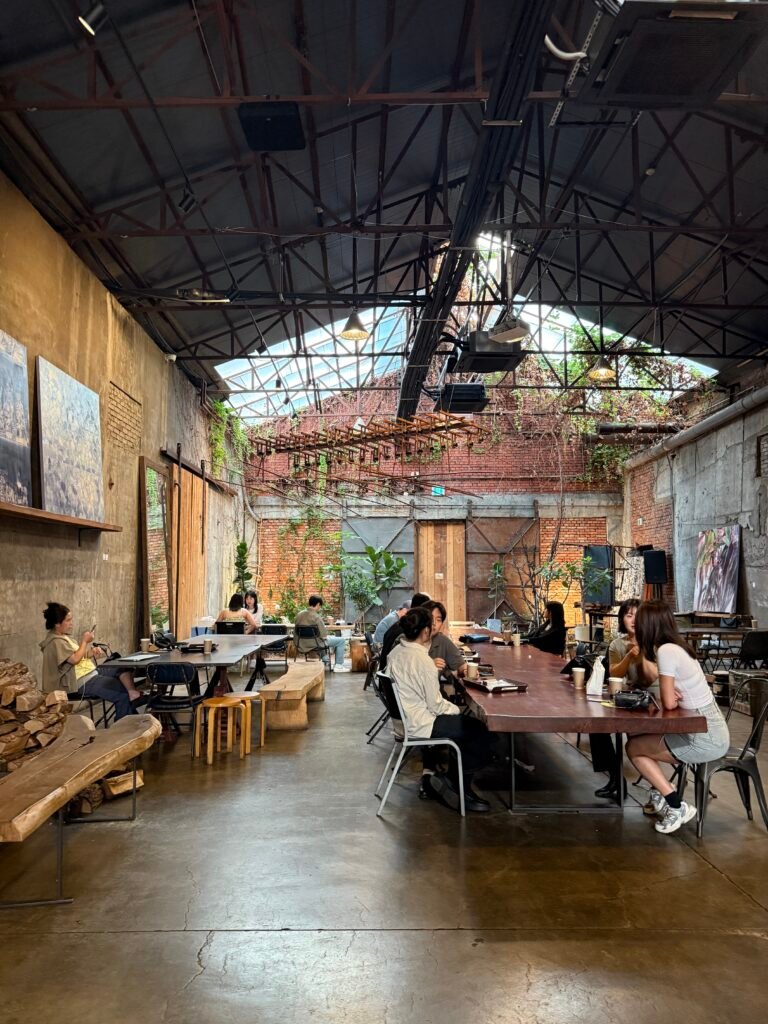
Seongsu-dong was one of my favourite areas in Seoul. It’s often described as Seoul’s Brooklyn, which is a bit lazy but quite true. Think warehouses turned cafés, excellent bakeries, independent shops, and fewer people filming themselves. It’s slightly out of the way but absolutely worth the journey. I went more than once all the way from Hongdae, which hopefully says a lot.
Hannam-dong
Best for: stylish wandering, galleries, edgy shopping.
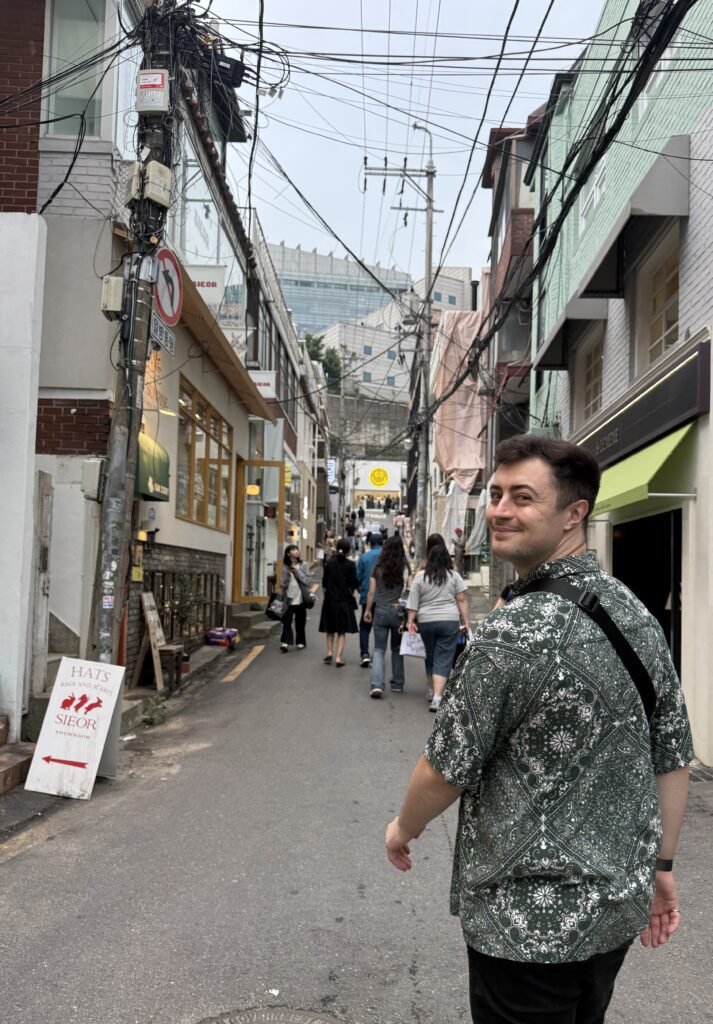
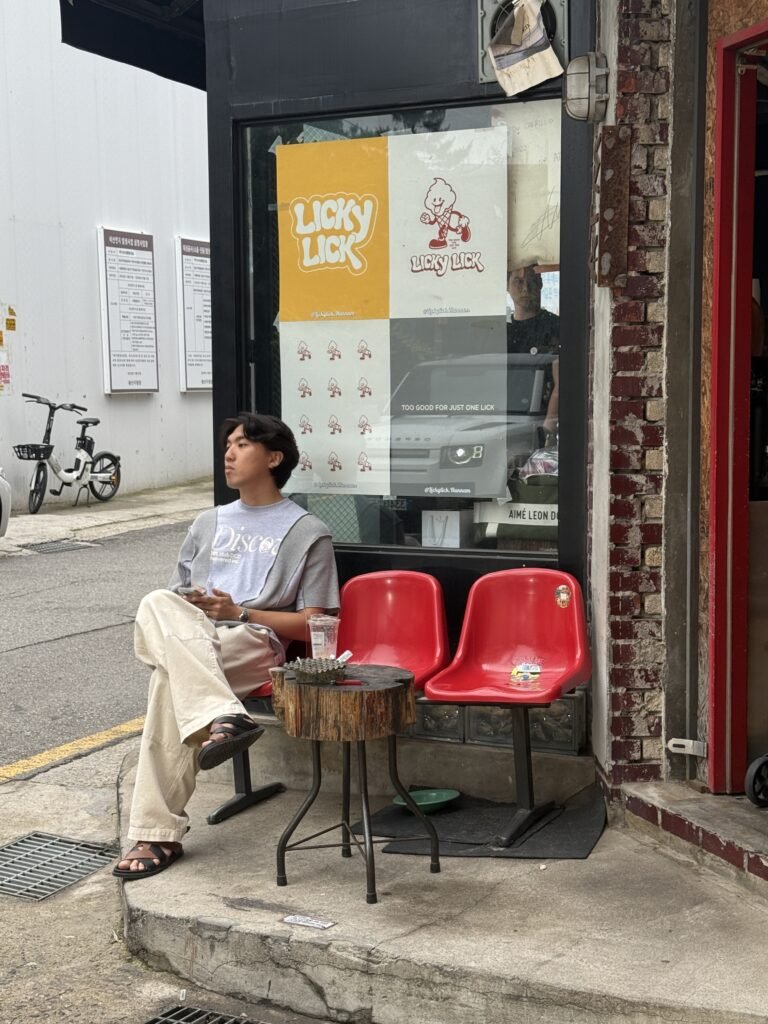
Hannam-dong feels polished but calm, with a more grown-up energy than some of Seoul’s trendier areas. It’s home to great restaurants, interesting boutiques, and feels luxurious without being flashy about it. If you want somewhere chic that doesn’t feel overbearing, this is a great area to explore.
Rodeo Street, Cheongdam-dong & Sinsa-dong (Gangnam)
Best for: people-watching, luxury shopping, glossy Seoul vibes.
Gangnam is massive – it’s almost like a city in itself, so when someone says check out Gangnam, you can be cool and say, which part? Nonetheless, most of it is shiny and fancy: it’s chock full of designer stores, high-end cafés and scarily well-dressed people. Really great for wandering, people watching and photo-taking, even if you’re not buying anything. A lot of the cool nightlife too, if that’s you’re thing.
What I’d skip in Seoul
I think being honest here is helpful, so:
- National Museum of Korea: I make it a point to go to every National Museum in major cities I visit, but sadly the one in Seoul let me down. The curation was confusing in terms of chronology, and much of the exhibitions focused on early modern history, which might be quite disappointing for anybody wanting a deep dive on the South Korea/North Korea divide (me lol).
- COEX Mall: I love shopping as much as the next girl, but this mall is just enormous, which makes navigating the stores a real pain, and deeply lacking in character. Also, there’s loads of people flocking to take pictures in the Starfield Library, so it can get annoying. If you want a fun Seoul shopping experience, go to Myeongdong, Hongdae, Hanggangjin and Seongsu instead – each place has a flavour of its own.
- Gangnam Statue: honestly? This is just a sad, lonely statue in the middle of a wide, bare street among some malls. Unless you’re a super fan or you’re right by COEX Mall, I’d skip it.
- Itaewon: this will divide opinion, but the main buzzy area felt a tiny bit trashy and soulless to me. If you’re under 25 and looking for a wild party then it’s probably good fun, but I left quickly and didn’t look back lol. Hannam-dong isn’t far, and it’s much cooler.
What to Eat in Seoul
If you’re coming to Seoul and food isn’t a priority, I’m not sure what to tell you. Korean food alone justifies the flight, and I sit here at my desk in London salivating over the memories of gorgeous eats I had. If you’re not sure where to start, this list is perfect for you:
Jaengbanjib 8292
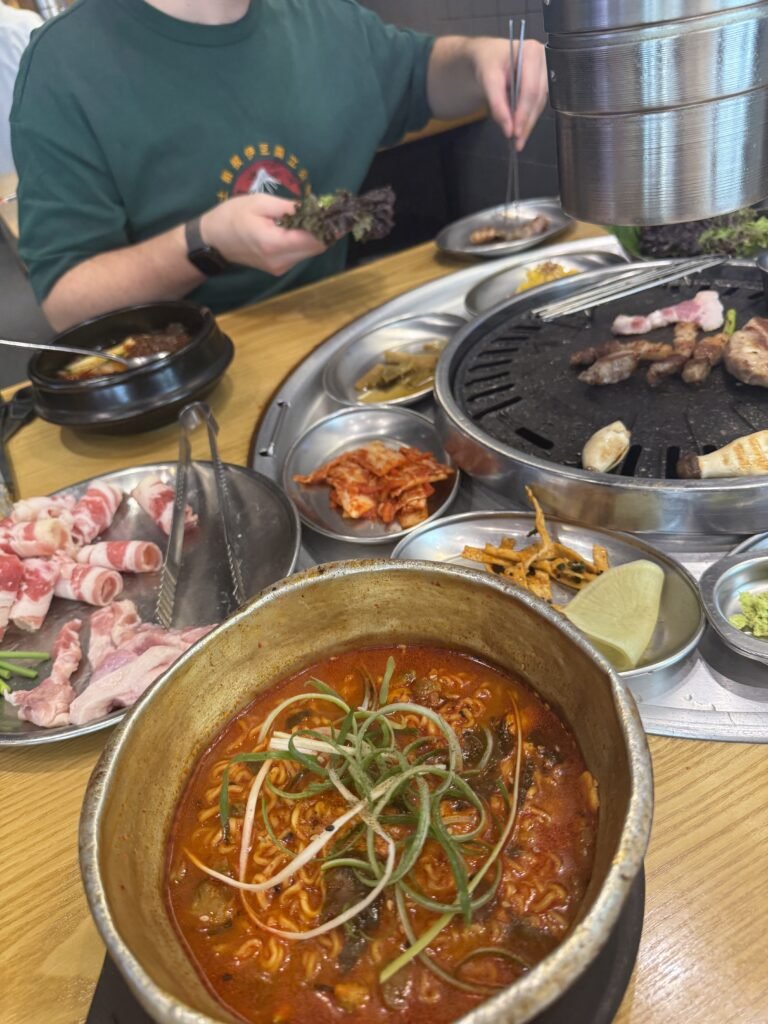
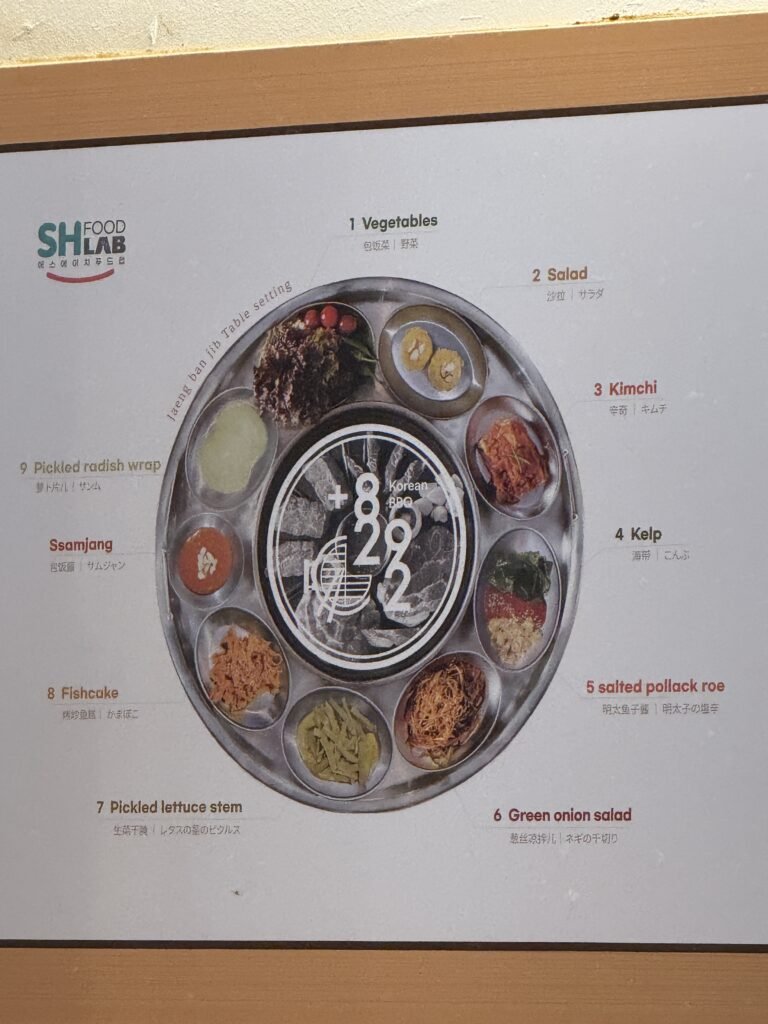
If KBBQ has ever felt confusing or like you’re missing context, Jaengbanjib 8292 is the place where it’ll makes sense. The banchan comes arranged around the grill, and there’s a simple, labelled poster on the wall that explains what each side dish is and how it fits into the meal. It sounds small, but it completely changes the experience. Instead of just eating things you don’t quite understand, you’re given the context as you go, and you get that very satisfying ohhh, this is how it works moment. Add in iPad ordering (which removes language stress), affordable prices, and genuinely good food with generous portions, and it becomes the ideal first KBBQ experience.
Mongtan
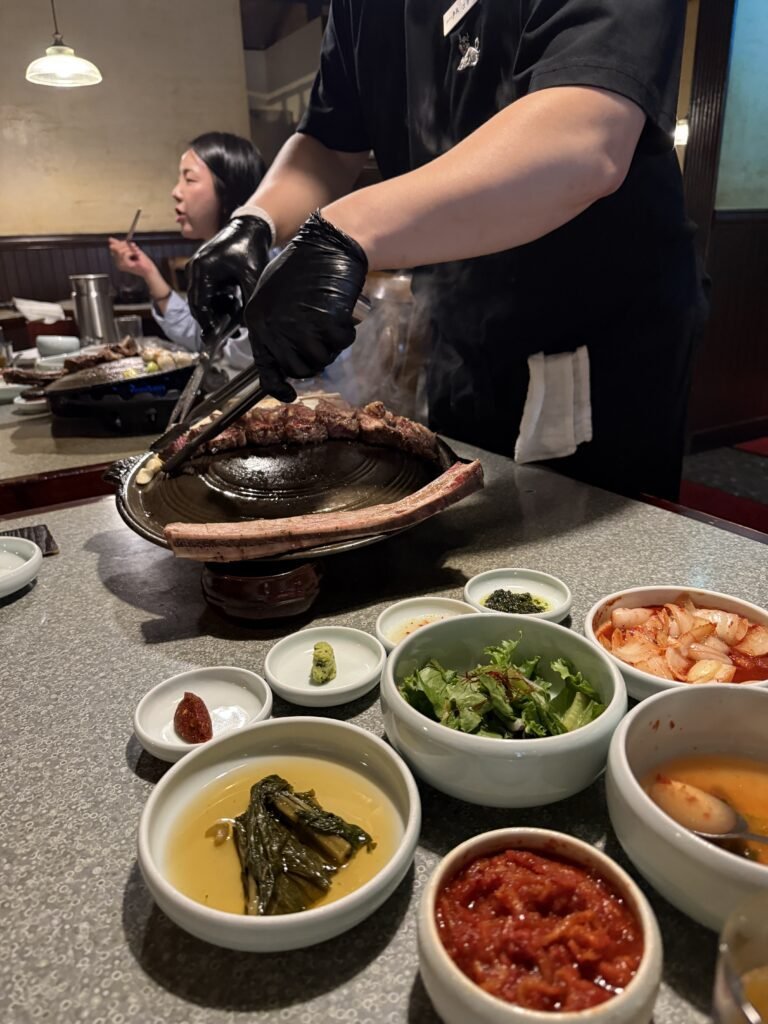
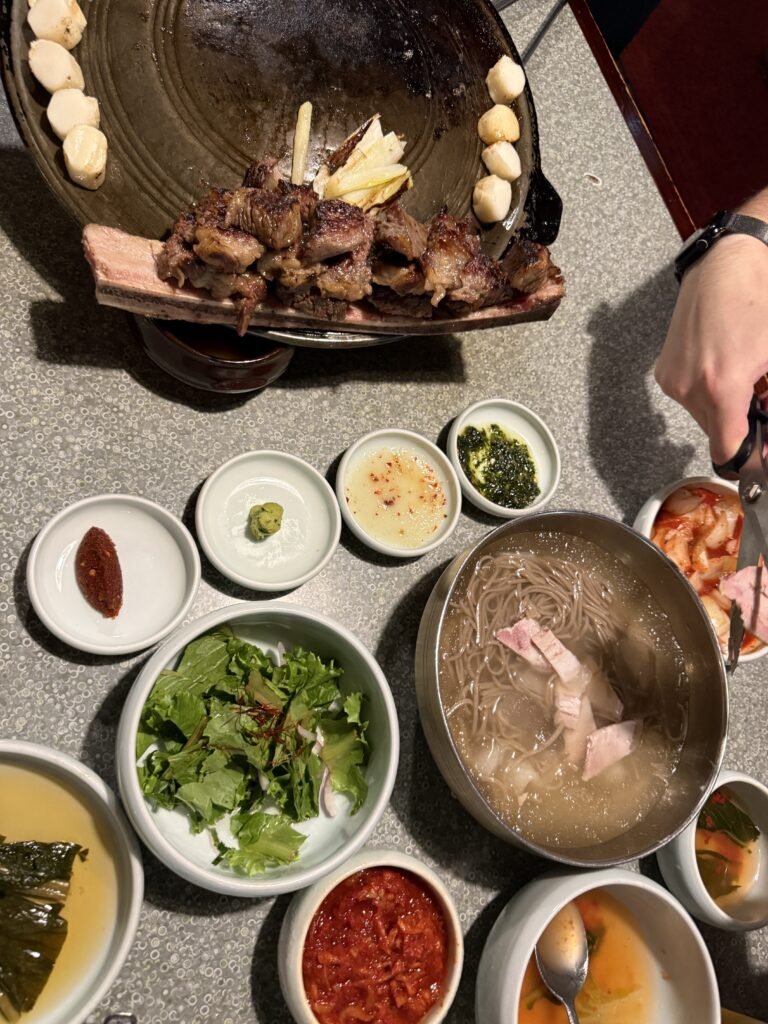
If you like meat, Mongtan is non‑negotiable. Famous for its big dino ribs (which Mark Wiens made a lovely video about), this was hands down one of the best Korean BBQ restaurants in Seoul. It’s a little different in that they cook it for you, but that’s not the worst thing because you can focus on the eating. Everything was rich, smoky, and deeply satisfying, and I can confirm that I seriously overate. If someone asks me which one restaurant they’d recommend in Seoul, this is the one I always mention first.
Sinjindo Ganjang Gejang
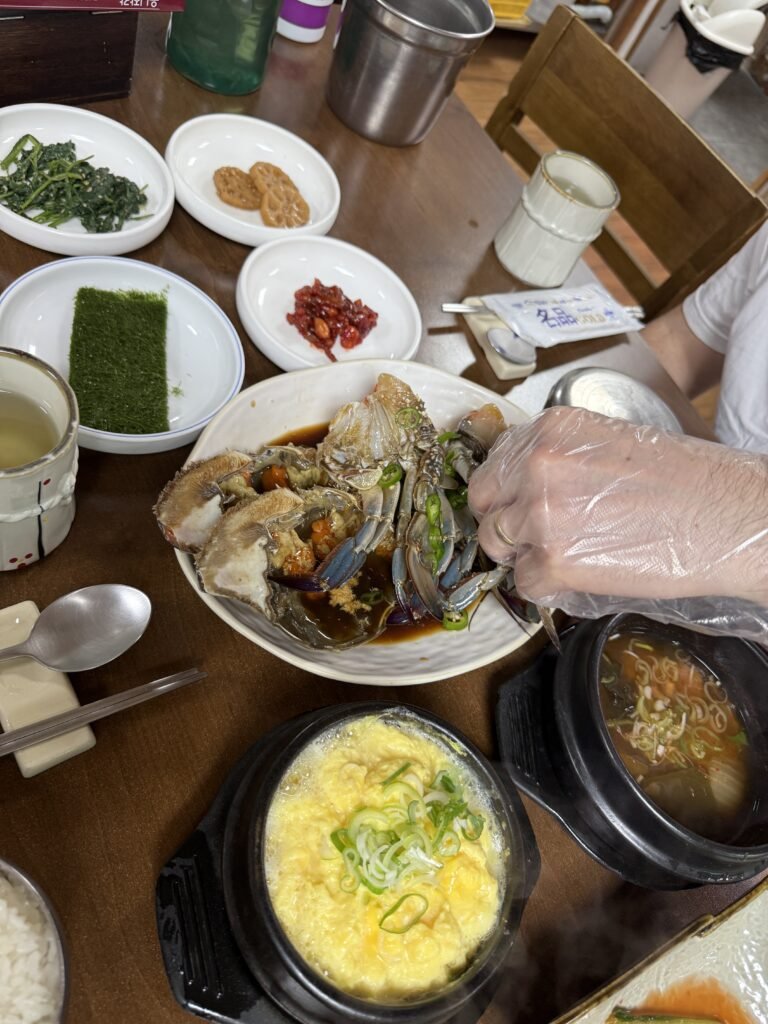
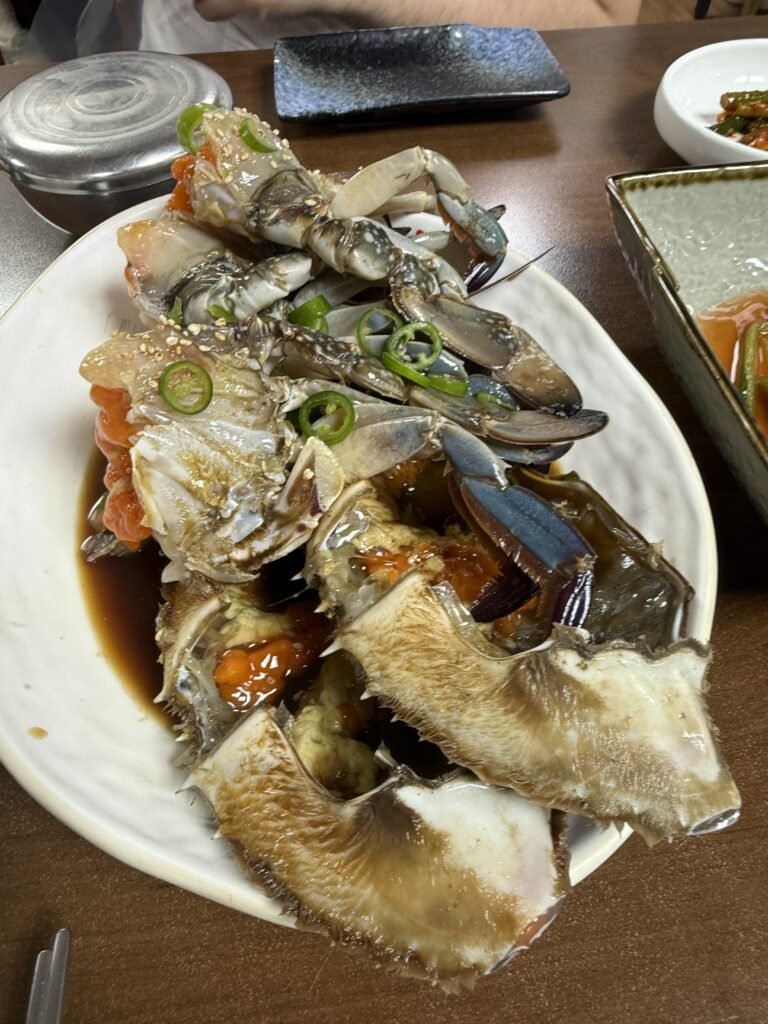
If you’re even slightly curious about ganjang gejang (raw crab marinated in soy sauce), this is the place to try it. Sinjindo Ganjang Gejang does it properly, with beautifully fresh crab and rich, umami-packed marinades. We actually tried a blue crab at Gwangjang Market and Grandma’s Recipe Restaurant, and they were absolutely rubbish in comparison. The experience is intense, messy, and not for the feint of heart, but wow what a flavour revelation. Go hungry, lean into it, and accept that your hands will be involved.
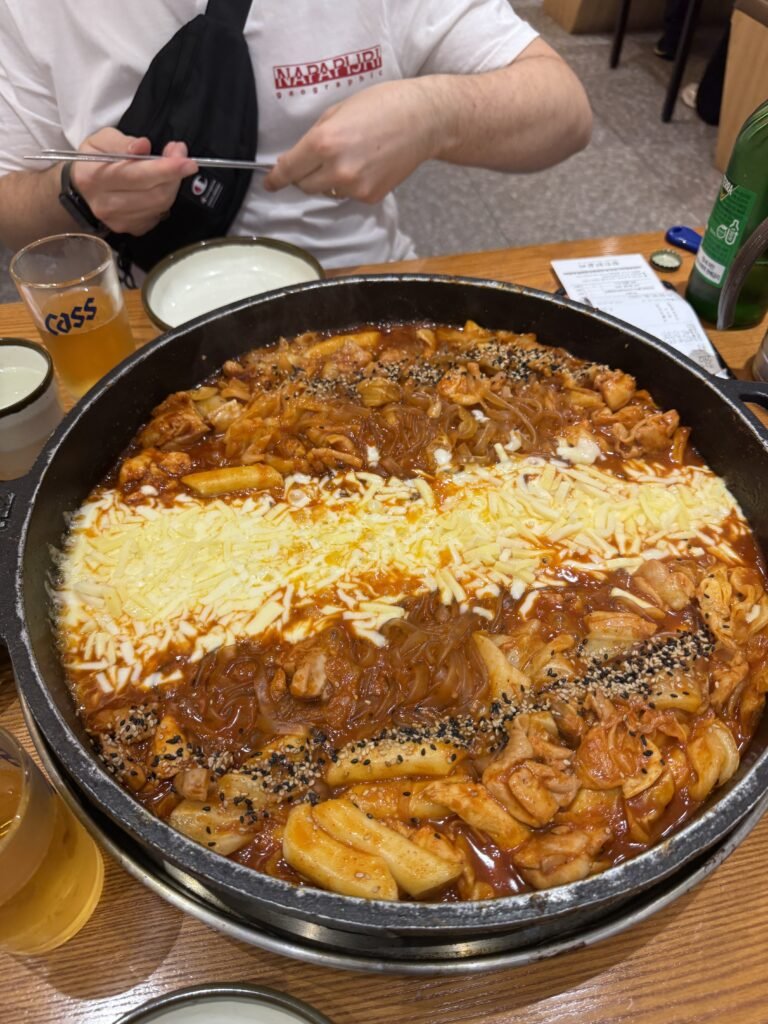
Jangin Dakgalbi Jongno
If you’re in the mood for something bold and filling, Jangin Dakgalbi Jongno is going to deliver. Spicy, savoury, and cooked right in front of you, this is proper comfort food with personality. It’s not the healthiest thing you’ll eat, but my God will you remember it forever.
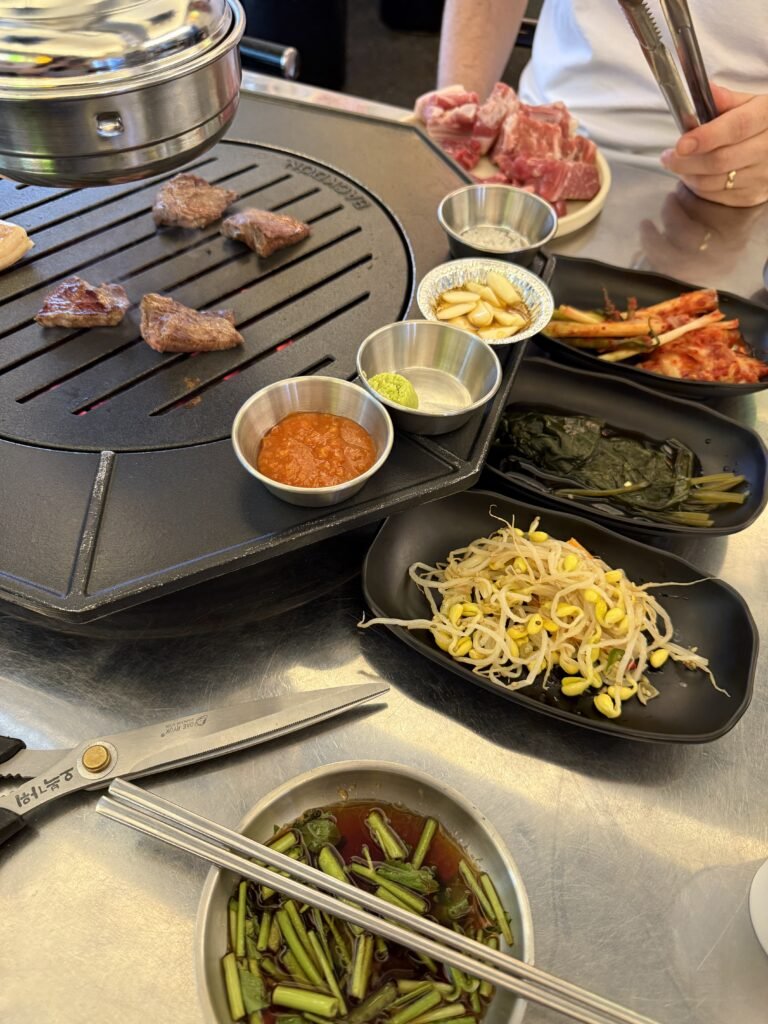
Korean BBQ Backdon Jongno 3-ga
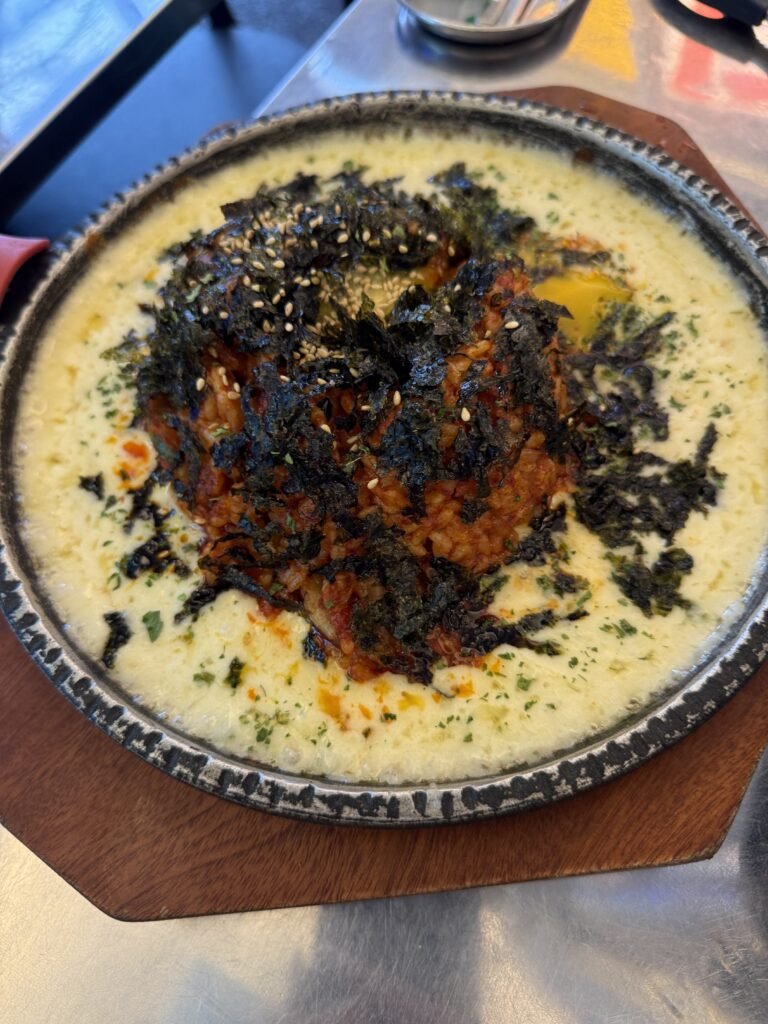
If you’re in the Jongno area and craving classic Korean BBQ, Backdon Jongno 3-ga is amazing. You’re guaranteed high-quality cuts of meat and gorgeous sides that’ll steal your heart. See this cheesy rice concoction below and you’ll know what I mean. This place was also filled with locals, so you know it’s good.
Olive Chicken
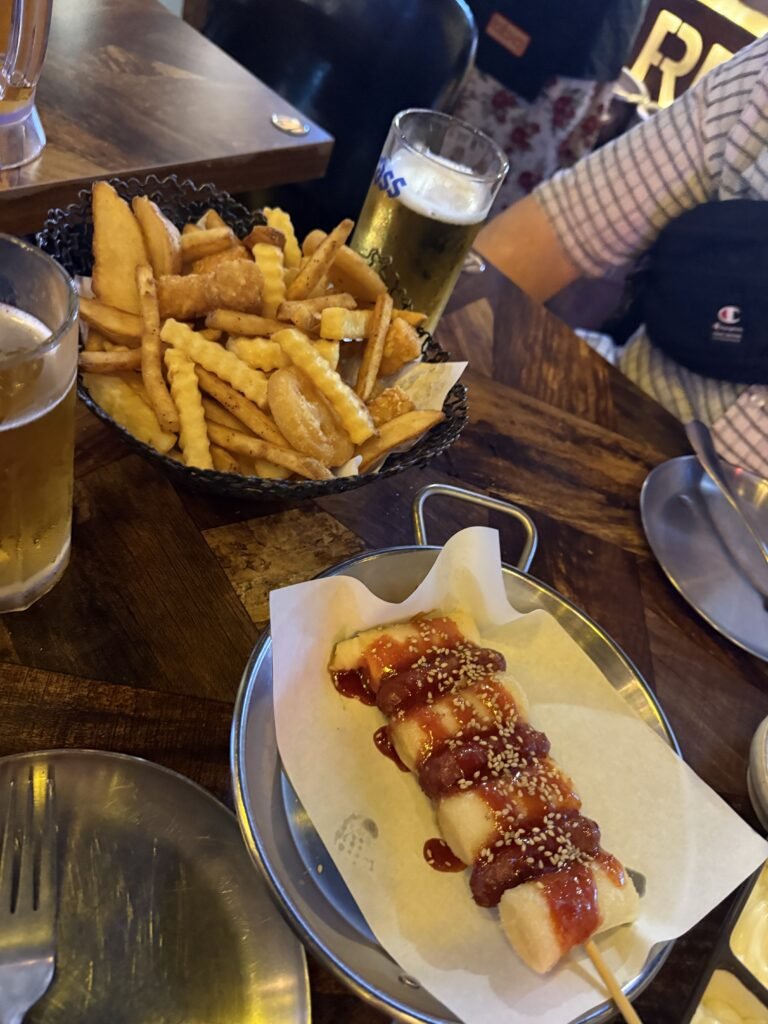
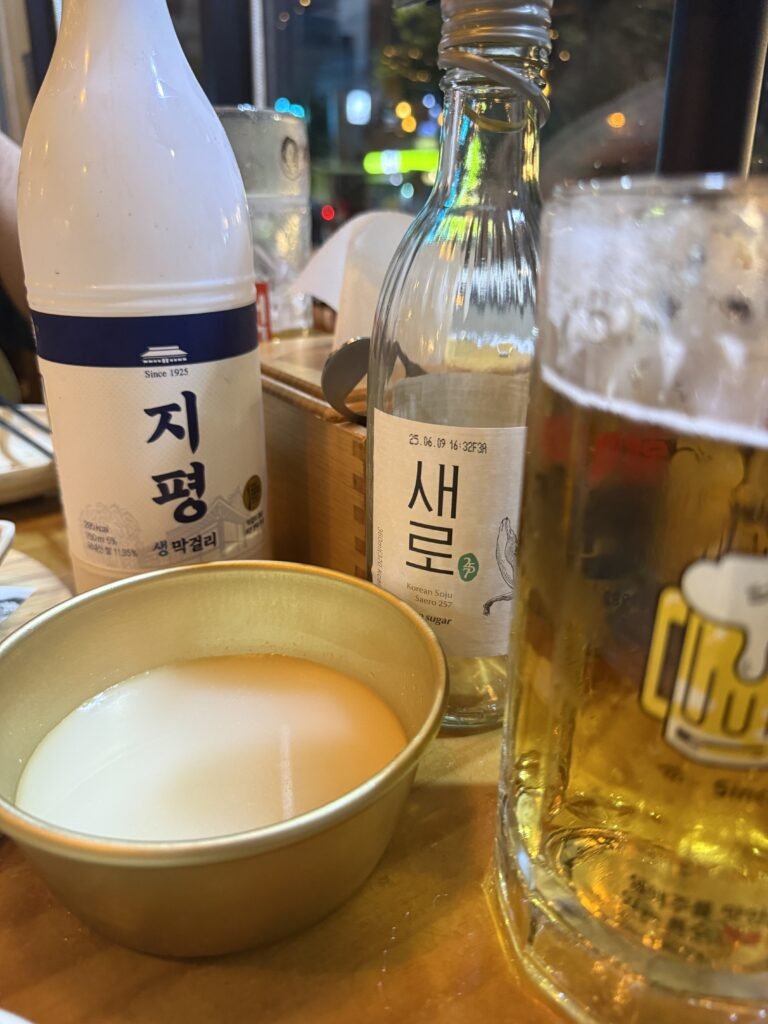
Going to Olive Chicken was a glorious experience. It’s casual, reliable, and does exactly what it says on the tin. Crisp, juicy chicken that somehow stays light, even when you’re several pieces in and questioning your own limits, and delicious cold beer to wash it all down. I wouldn’t miss it, and besides, it’s fried in olive oil, which basically makes it a health food…
ArtMonster
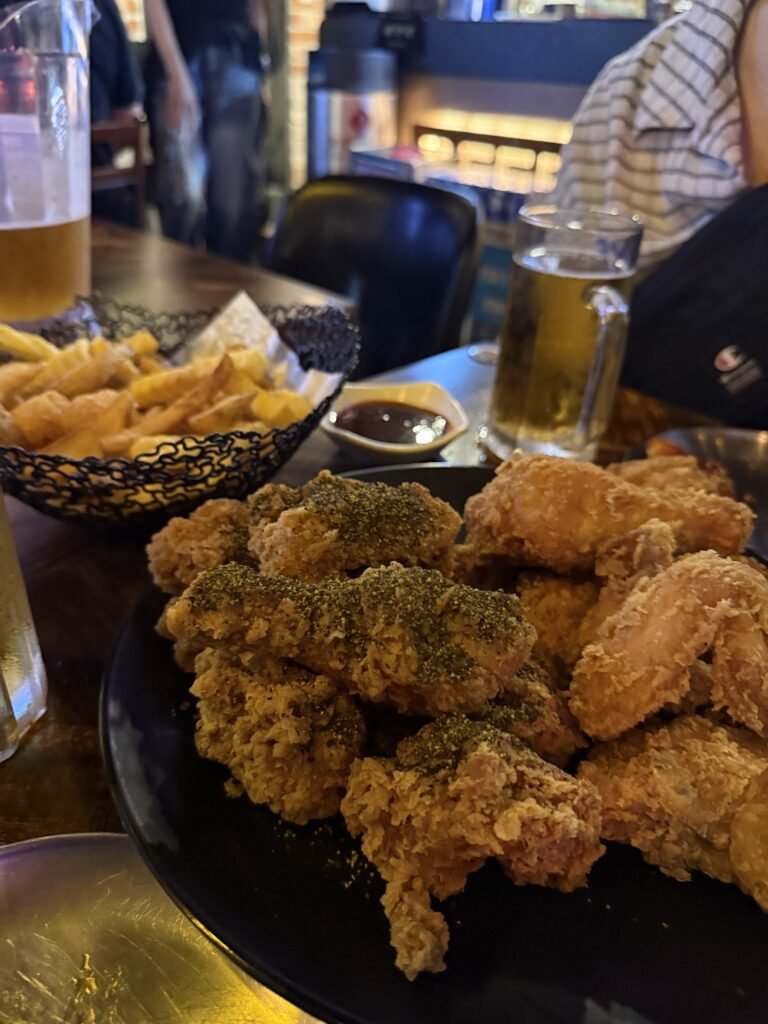
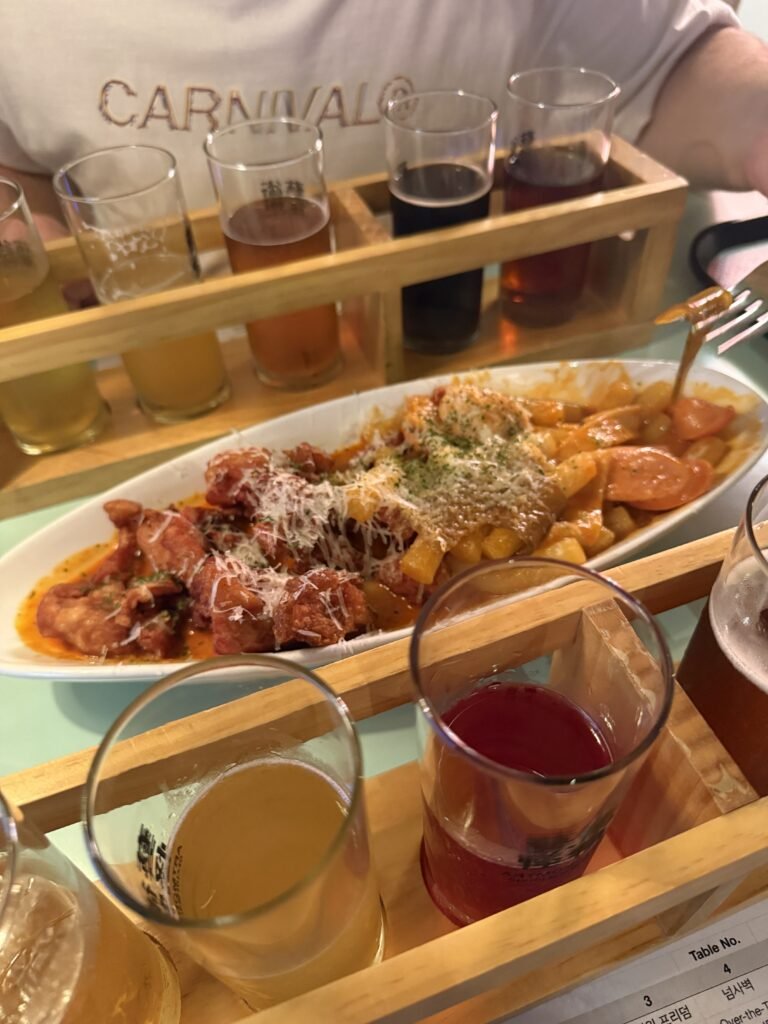
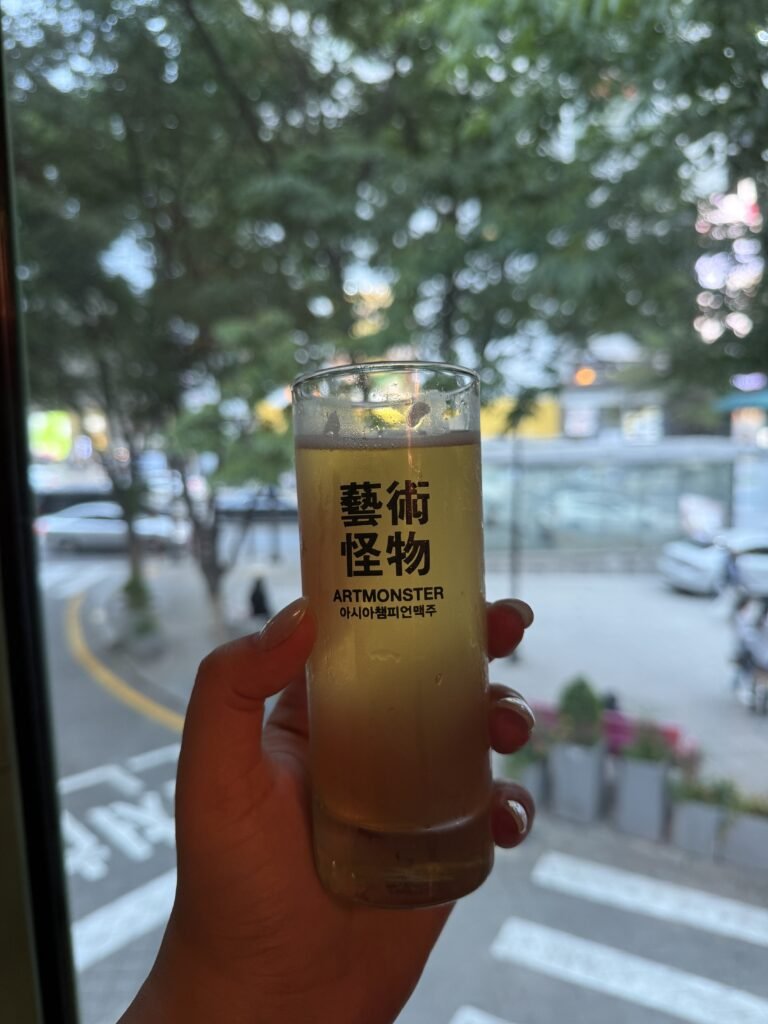
We stumbled upon ArtMonster because we were looking for a craft beer place, but we accidentally discovered what may have been the most delicious Korean fried chicken to ever grace our mouths. It was crispy, juicy, and had the tastiest tteokbokki dishes as accompaniment. We went back 3 times during our two week stay: it’s such a fun atmosphere, and a solid reminder that Korea does fried food extremely well.
Grandma’s Beer
If you want somewhere relaxed, buzzy, and very easy to like, Grandma’s Beer is a great shout. It’s casual in the best way, with comfort food, cold drinks, and a vibe that basically invites you to spend 6 hours there. This is the perfec for a low-key evening that’ll definitely turn into a long one, and the best part? It’s a chain… so you’ll find one everywhere.
Korean Street Food Markets
- Mangwon Market: brilliant everyday streetfood and far fewer tourists.
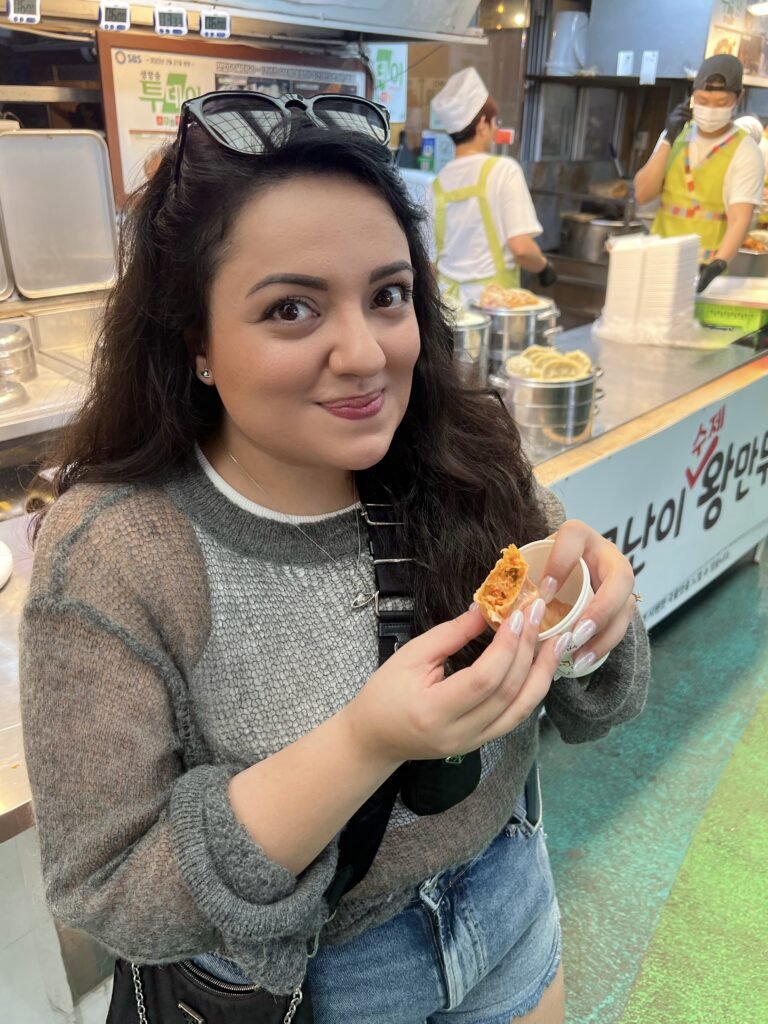
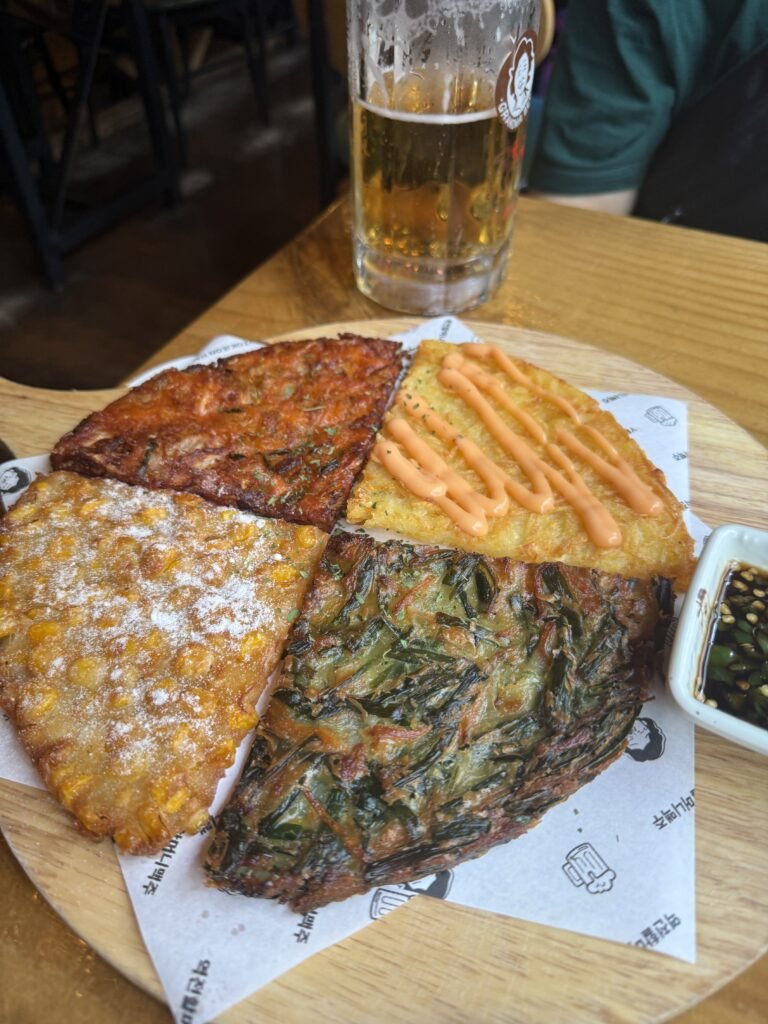
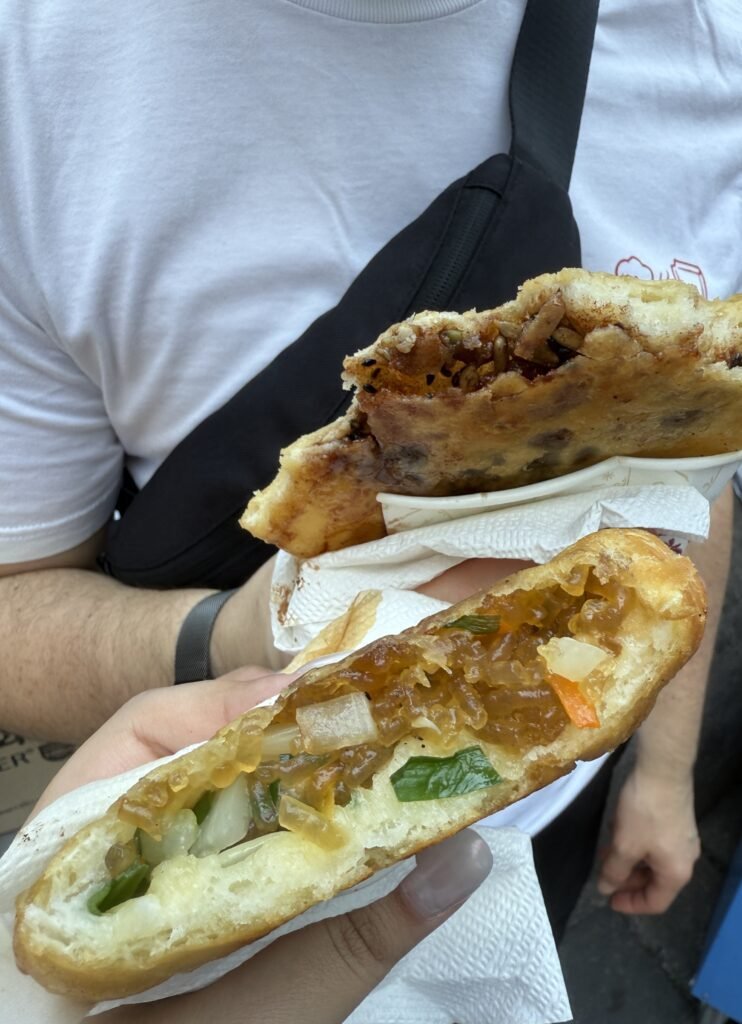
- Namdaemun Market: more local and less polished, which I preferred, and home to the famous glass noodle Hottoek, which is my fave snack.
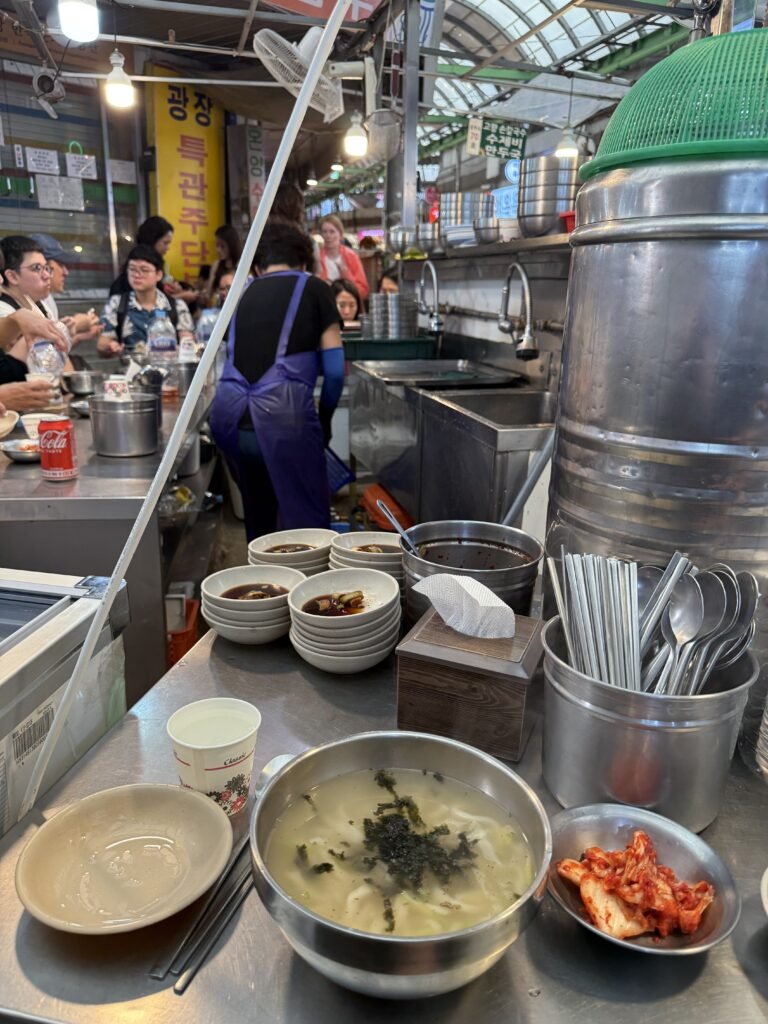
- Gwangjang Market: busy, chaotic, and great for trying lots of Korean street food in one go, but the prices are much higher and tourist trappy (also the Netflix noodle lady is there, and her noodles were mighty tasty).
Unmissable Dishes
Don’t leave without trying these dishes, which can be found in most traditional restaurants and the aforementioned street food markets (to any South Koreans reading this, I apologise if the Korean lettering is incorrect… I used Google):
- Kimchi Jjigae, 김치찌개 (Kimchi stew with pork or tuna, tofu, and spicy broth)
- Bulgogi, 불고기 (Marinated grilled beef, sweet-savory)
- Bibimbap, 비빔밥 (Mixed rice bowl with vegetables, egg, and gochujang)
- Dakgalbi, 닭갈비 (Spicy stir-fried chicken with rice cakes, cabbage, and gochujang)
- Sundubu Jjigae, 순두부찌개 (Spicy silken tofu stew with seafood or meat)
- Chimaek, 치맥 (Korean fried chicken with beer—BHC, BBQ, Kyochon etc.)
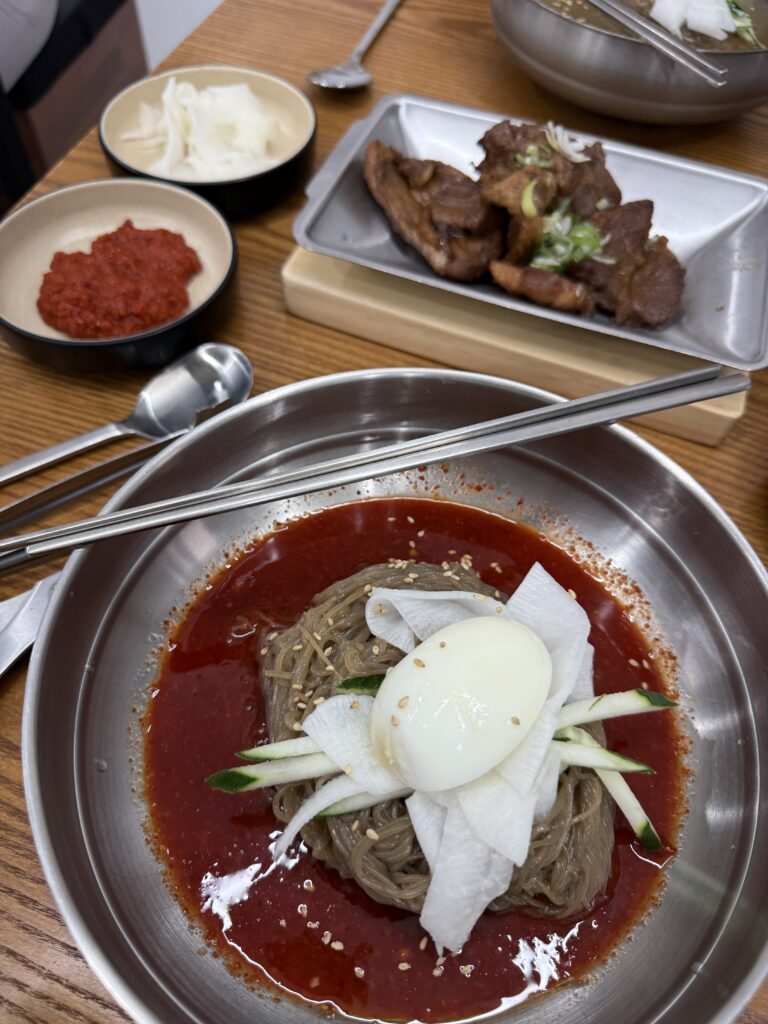
- Naengmyeon, 냉면 (Cold buckwheat noodles in icy broth, tangy and refreshing)
- Kalguksu, 칼국수 (Knife-cut noodle soup)
- Galbi-jjim, 갈비찜 (Soy-braised beef short ribs with vegetables)
- Japchae, 잡채 (Glass noodles stir-fried with vegetables and beef)
- Kongguksu, 콩국수 (Cold soy milk noodle soup, nutty and mild—summer only)
- Tteokbokki, 떡볶이 (Chewy rice cakes in spicy gochujang sauce)
- Hotteok, 호떡 (Sweet pancake filled with cinnamon, sugar, and nuts)
- Bungeoppang, 붕어빵 (Fish-shaped pastry filled with red bean paste)
- Gyeranppang, 계란빵 (Egg-topped muffin-like bread)
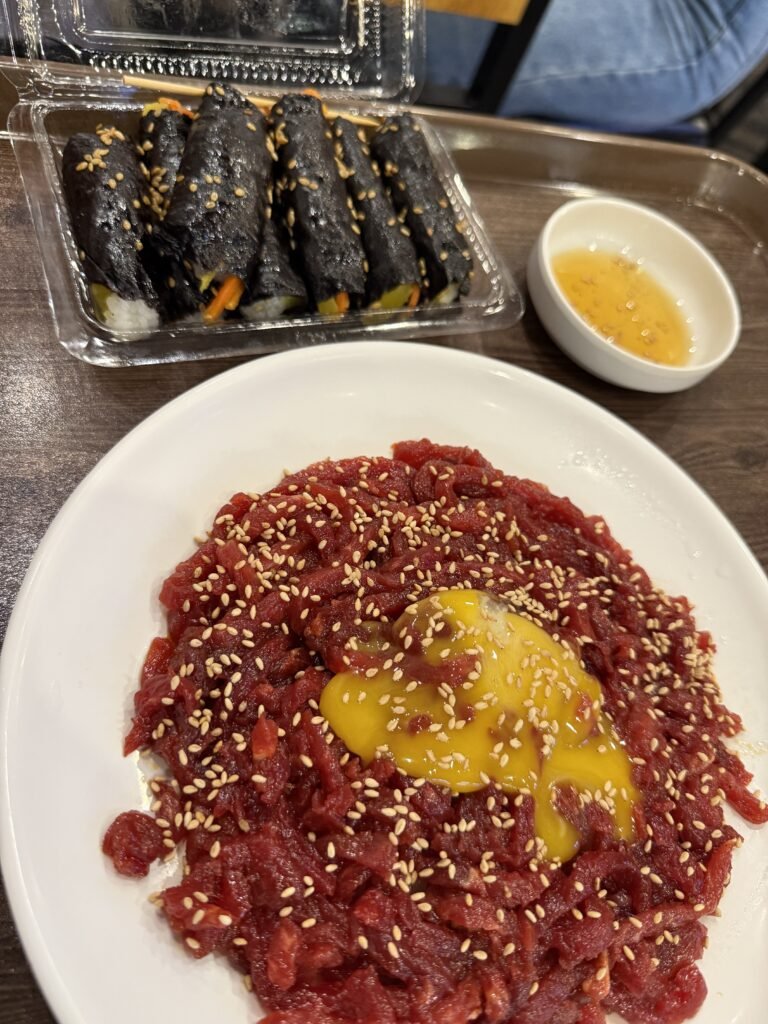
- Kimbap, 김밥 (Seaweed-wrapped rice roll, Korean-style sushi)
- Eomuk (Odeng), 어묵 / 오뎅 (Fishcake skewer served in hot broth)
- Dakgangjeong, 닭강정 (Sweet-spicy crispy fried chicken pieces)
- Kkwabaegi, 꽈배기 (Twisted sugar doughnut, chewy and golden)
- Samgyeopsal, 삼겹살 (Grilled pork belly, lettuce wraps with garlic, ssamjang, and kimchi)
Cafés & Bakeries in Seoul
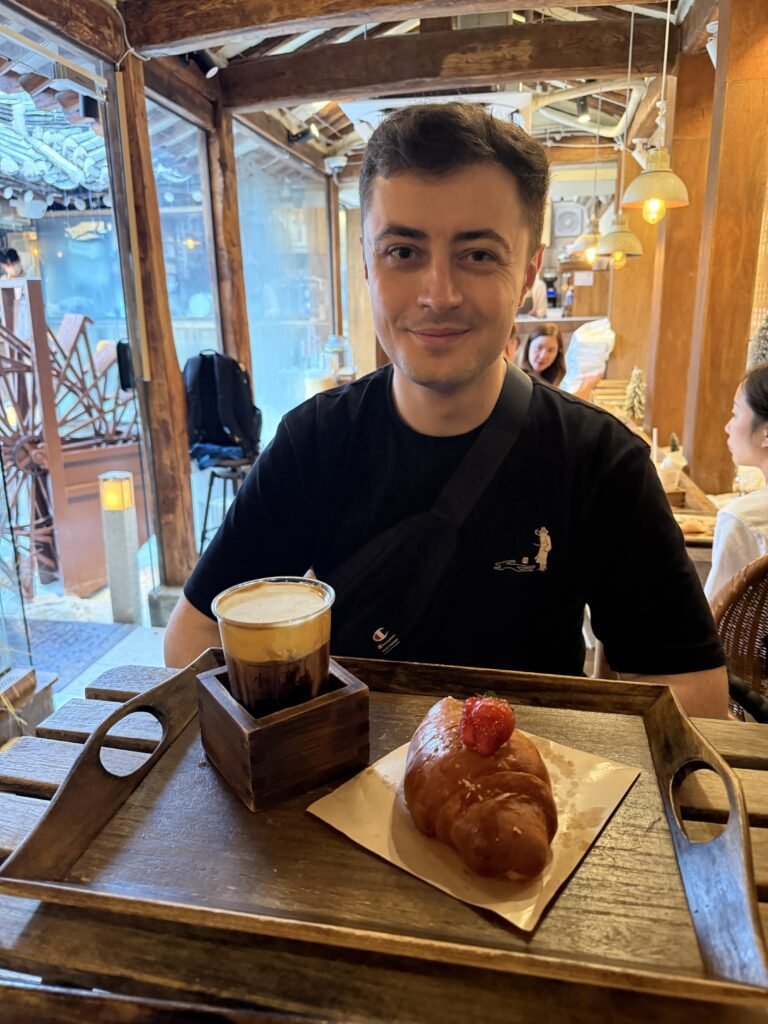
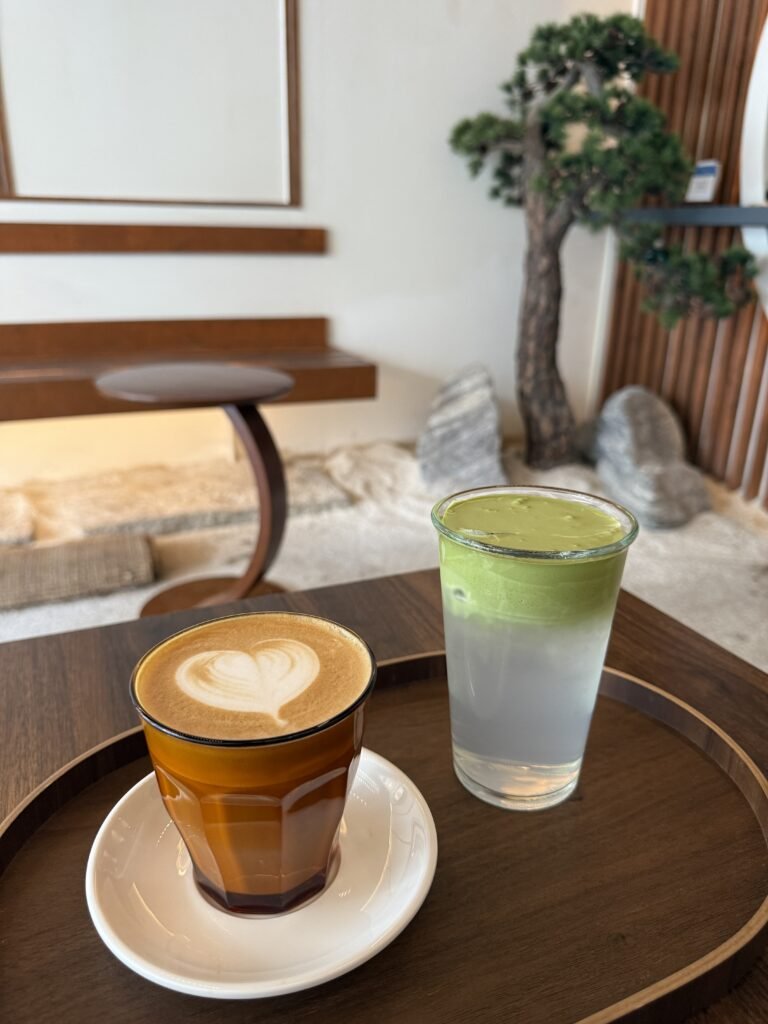
Seoul’s café scene is ridiculous. You can walk into a random spot or bakery and still get delicious coffee and mouth-watering pastries, which is obviously quite dangerous for the waistline. We went to quite a few, but the standout spots are below:
Cafés
- Bread & Coffee: opposite Gyeongbokgung Palace and absolutely lovely.
- Downt Espresso: delicious coffee and matcha near Myeongdong.
- Marmmo Coffee: excellent coffee, no gimmicks.
Bakeries
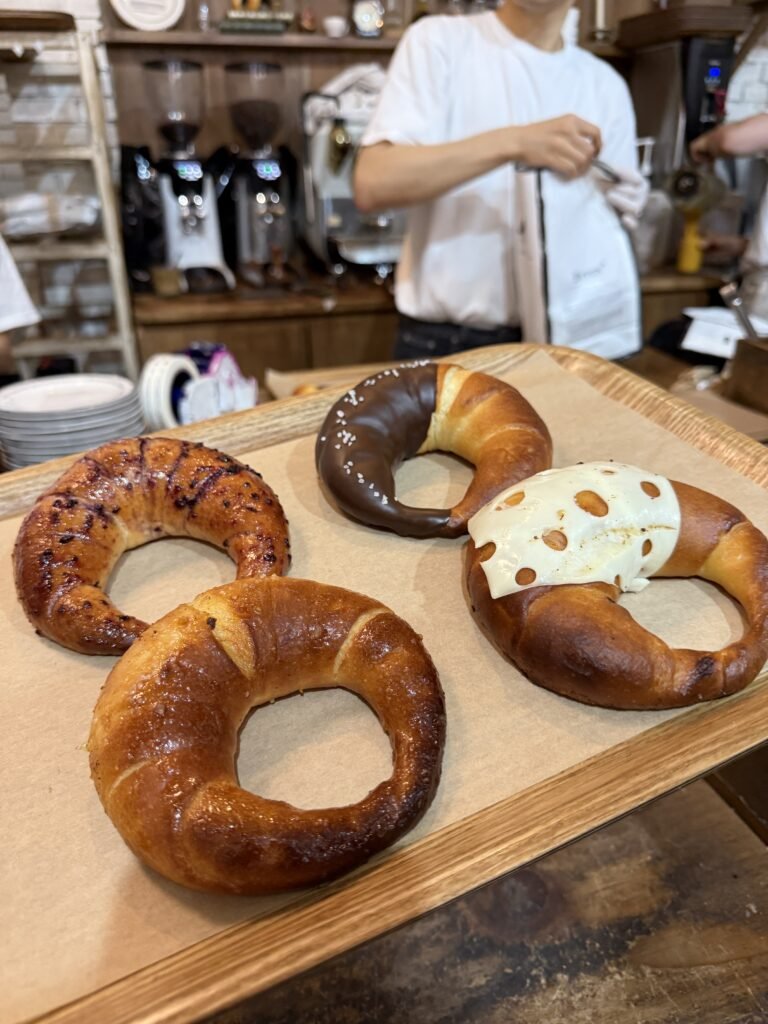
- Soha Salt Pond near Jongmyo Shrine: calm, beautiful, and ideal for incredible salt bread, pastries, and tasty coffee.
- Beton: we went here for a coffee, but didn’t realise it was famous for salt bread, so we got a bunch of flavours… they didn’t last long. Honestly, at this point I’m convinced you can’t get a bad salt bread in all of South Korea.
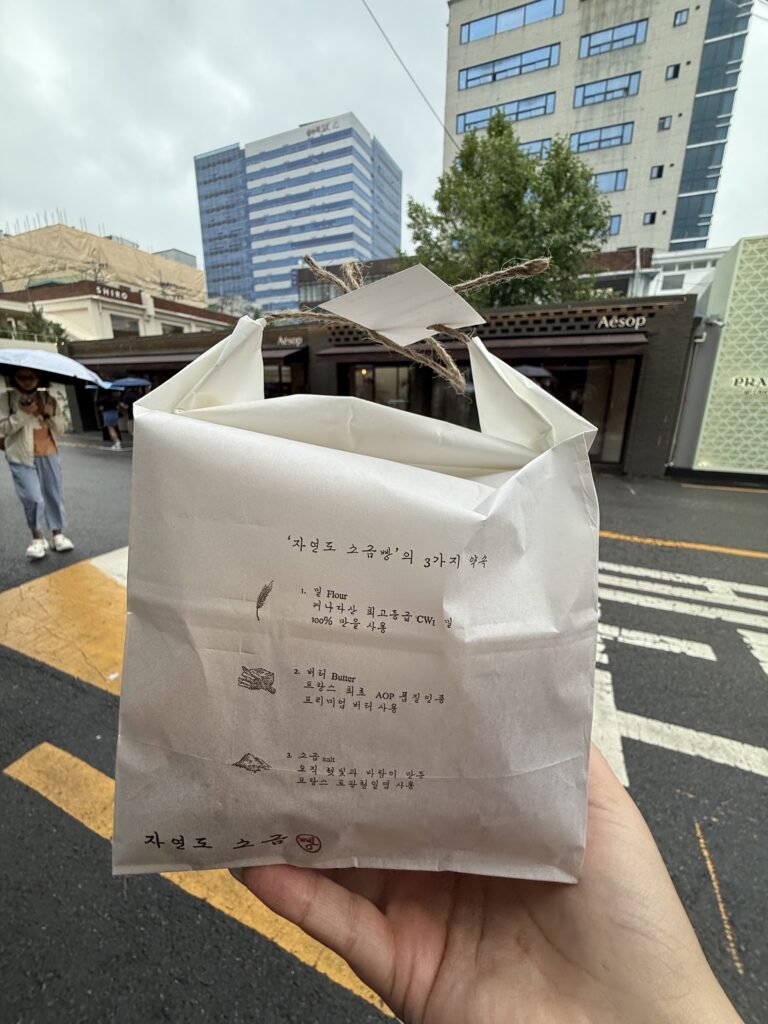
- Jayeondo Sogeumppang: that being said, the salt bread here is unreal. Insane levels of crisp, butter, and salty goodness… dare I say, worth the queue.
Maybe Skip This:
- Cafe Onion Anguk: this is definitely a Tiktok hype spot, which means that it’s ridiculously busy. Seoul has far better cafés if you wander five minutes in any direction pretty much anywhere. It’s nice, don’t get me wrong, just too crazy to be worth it.
Cocktail Bars
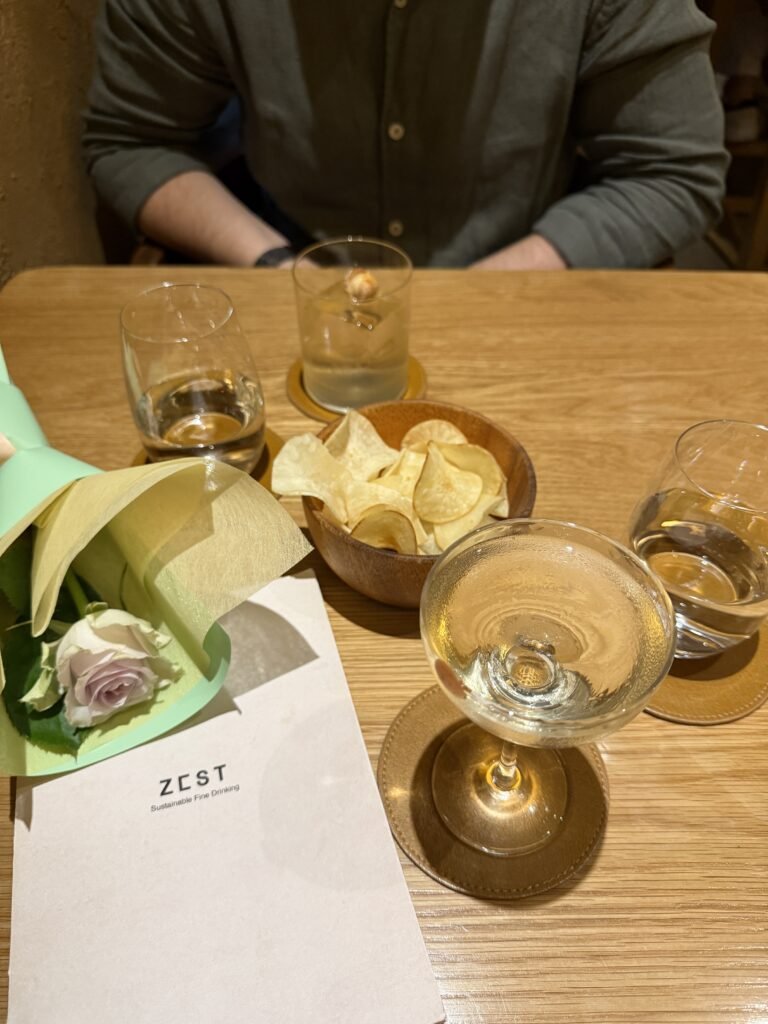
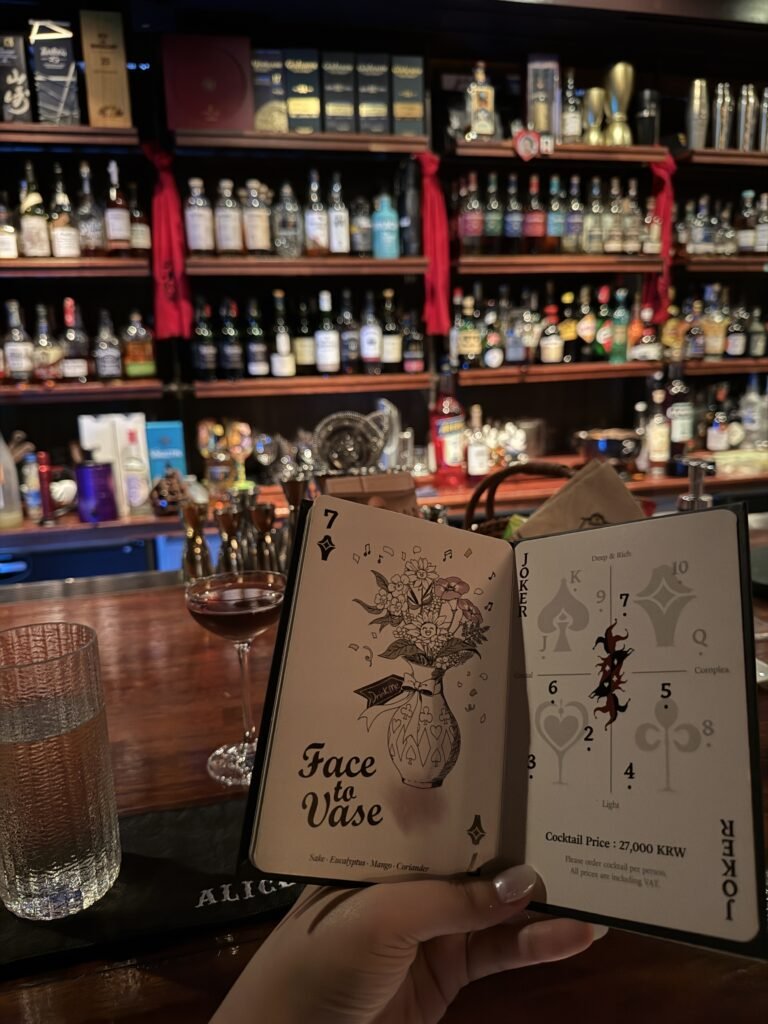
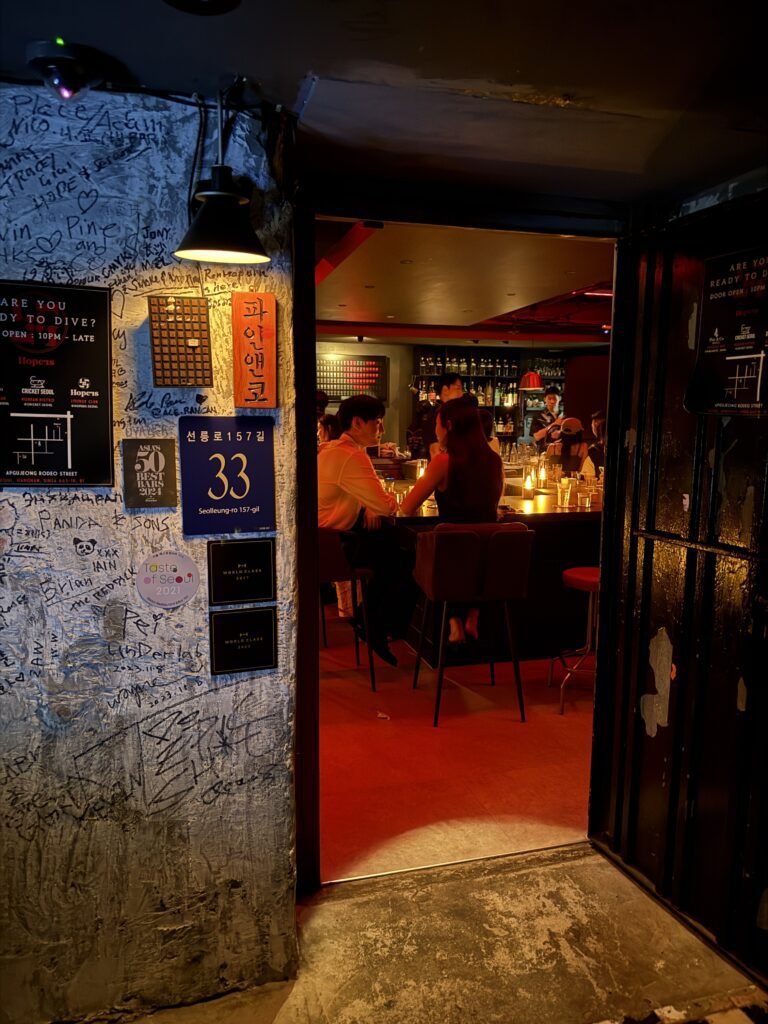
Seoul does cocktails well, but it’s as costly as going out in the UK and US. Whilst I usually really enjoy cocktail bars, Seoul has such a great pub-esque/bbq nightlife that it’s almost not needed, but of course for a special occasion these places are a treat. Do book these places in advance, or you’ll likely be turned away.
- Zest: creative craft cocktails and great atmosphere.
- Alice: playful, theatrical, and fun without being irritating.
- Pine & Co: lively, edgy, and a great late night spot.
Being a Digital Nomad in Seoul
Seoul was one of our stops on a longer trip around Asia, and going in, we weren’t totally sure how easy it would feel as a place to live rather than just visit.
Having now done it, I’d happily say Seoul is a really solid digital nomad base. Yes, rent is higher than places like Thailand or Vietnam, and you feel that fairly quickly if you’re staying somewhere central, but day-to-day life is surprisingly affordable. Transport is cheap, food is reasonable, coffee is way more affordable than in the West, and you can live very well if you take the time to get to know the city and avoid the touristy places (after you’ve done your touristing, of course).
What really makes it work is how easy everything is. The metro is brilliant, getting around is effortless, and there’s always something to do once you close the laptop for the day. It’s a city that feels stimulating without being too exhausting, which is a harder balance to strike than people realise!
If we’d felt more confident about South Korea before arriving, we probably would’ve stayed longer. Seoul feels like a place that rewards settling in, building a routine, and letting the city reveal itself slowly rather than trying to rush through it.
It wasn’t the cheapest stop on our Asia trip, but one of the easiest and most enjoyable places we’ve worked from and that counts for a lot! Next time, we hope to spend longer there and take the train system down the country to explore cities less travelled, and I can’t wait.
cok guzel